

Nan Tien Temple
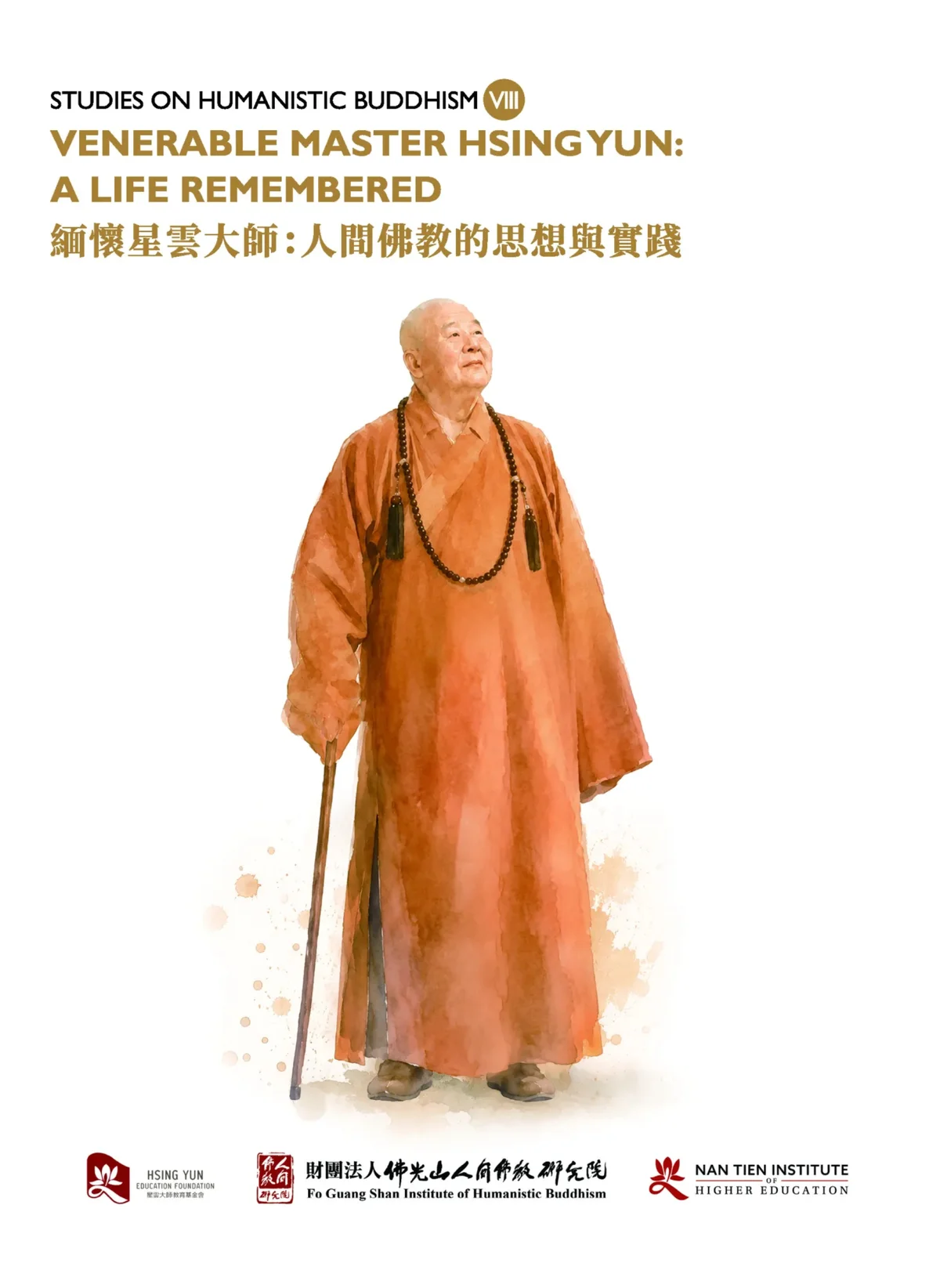
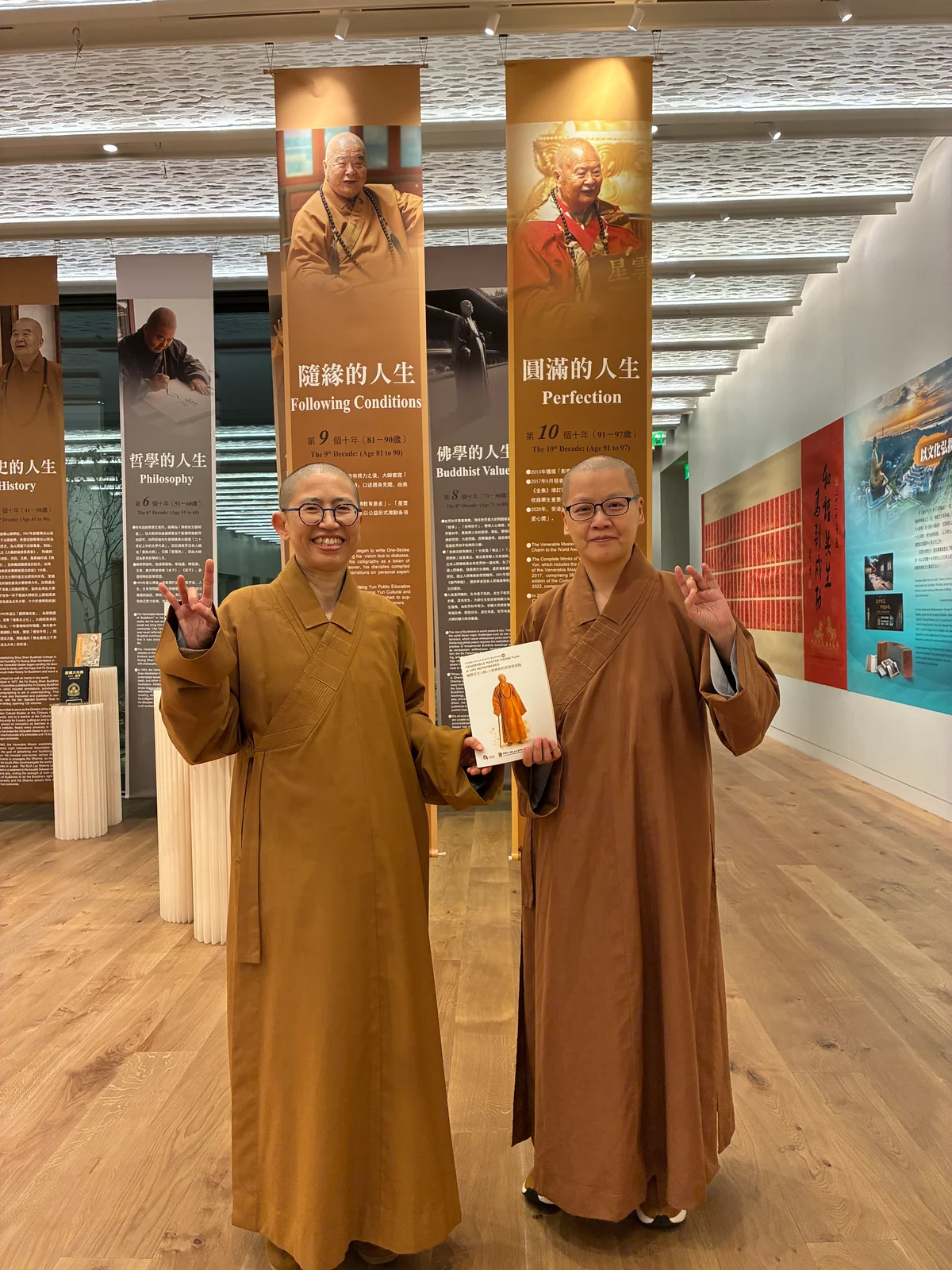
The eighth volume of “Studies on Humanistic Buddhism”, produced through a collaboration between the Fo Guang Shan Institute of Humanistic Buddhism Taiwan and Nan Tien Institute Australia, with support from the Australia Hsing Yun Education Foundation, was published in October. Coinciding with the 60th anniversary of Fo Guang Shan and the centenary of Venerable Master Hsing Yun’s birth, the volume aligns with Fo Guang Shan’s commemorative theme, “Passing on the Lamp for 60 Years: Looking Up in Reverence at a Century of Wisdom.” Titled “Venerable Master Hsing Yun: A Life Remembered”, it revisits the Master’s life journey through academic research, personal recollections and explorations of his thought, highlighting his aspiration to propagate the Dharma and the spirit of Humanistic Buddhism in practice.
The volume contains 14 articles contributed by monastics, disciples of the Master, scholars, practitioners and members of Fo Guang Shan. Drawing on diverse perspectives, including philosophy, institutional studies, ethnography and personal experience, the collection reveals the depth and vitality of the Humanistic Buddhist tradition shaped by Venerable Master Hsing Yun, offering readers deeper insights into his teachings and exemplary conduct.
The collection opens with “An Honest Revelation—An Open Letter”, written by Venerable Master Hsing Yun himself. In candid and magnanimous prose, the Master expresses a spirit free from self-aggrandisement and attachment. He writes, “All my life, many have thought of me as rich, but the truth is, staying poor has always been my motto” He further observes, “The Buddha’s Way pervades the entire universe, and truth fills the Dharma realm. Everything in this Dharma realm belongs to me, yet the phenomenon of impermanence also tells me that nothing is mine.”
The Master encourages practitioners of Humanistic Buddhism to cherish the world without becoming overly preoccupied with it or making excessive distinctions. He urges them to regard the wellbeing of all as their own and the Dharma as their life’s purpose, finding their footing and fulfilling their aspirations on the Buddhist path. He also calls on his disciples to carry forward the mission of propagating the Dharma, declaring, “The banner of Dharma cannot be toppled. The lamp of wisdom must never be extinguished,” so that the lifeblood of Humanistic Buddhism may continue through the generations.
In his contribution, Most Venerable Hsin Bau, abbot of Fo Guang Shan Monastery, expresses his profound reverence for the Master. He observes that Venerable Master Hsing Yun dedicated his life to Buddhism with the aspiration to attain Bodhi, translating his great vows into more than eight decades of propagating the Dharma. Guided by the principle that “benefiting others is benefiting oneself,” the Master integrated altruism into everyday life, exemplifying the true meaning of the Bodhisattva path.
In “Encountering the Extraordinary: Meeting Master Hsing Yun”, Lewis R. Lancaster, Professor Emeritus at the University of California, Berkeley, recalls three unforgettable encounters with the Master over more than 30 years. During their final meeting, despite having suffered several strokes that had severely affected his eyesight and speech, the Master reached out spontaneously to hold Lancaster’s hand. Without words, he conveyed a profound sense of connection and affection. Through this encounter, Lancaster gained a deeper appreciation of the Master’s understanding of life and the strength he drew from abiding in the wisdom of the Prajnaparamita Sutras. He describes the experience as an “extraordinary encounter.”
Venerable Jue Wei, director of the Humanistic Buddhism Centre at Nan Tien Institute, explores the Master’s thought in her article “Embodying Emptiness, Manifesting Wonder”. Examining the concept of “wondrous existence arising from emptiness,” she explains that the Master was concerned not only with the philosophical significance of emptiness but also with its practical implications. Through the principles of dependent origination and the absence of inherent self-nature, he demonstrated how all phenomena arise through interdependent conditions, thereby opening up limitless possibilities.
In “Hsing Yun’s Humanistic Buddhism: An Ethics of Care in the VUCA World,”, Venerable Miao Guang, deputy director of the Fo Guang Shan Institute of Humanistic Buddhism, and Professor Maria Majorie R. Purino, chair of the Department of Philosophy at the University of San Carlos, bring the Master’s teachings into dialogue with contemporary ethics and social issues. They argue that in the VUCA era, characterised by volatility, uncertainty, complexity and ambiguity, the compassion, empathy and care embodied in Humanistic Buddhism offer essential ethical guidance. The principles of “Three Acts of Goodness” and “Four Giving” further translate the Bodhisattva spirit into everyday practice, nurturing moral character, social responsibility and care for others.
Venerable Jue Wei said the publication of the eighth volume of “Studies on Humanistic Buddhism” was not merely an occasion to commemorate Venerable Master Hsing Yun, but also an important milestone in carrying forward his teachings and putting Humanistic Buddhism into practice. She expressed deep gratitude for the opportunity to work alongside scholars from different disciplines, members of the Buddhist community and devotees of Fo Guang Shan, bringing together diverse perspectives to explore the Master’s philosophy, aspirations and lifelong efforts to propagate the Dharma.
She hopes the collection will enable more people to discover the wisdom embodied in the Master’s life and translate compassion, wisdom and altruism into their daily lives, ensuring that the Dharma waters of Humanistic Buddhism continue to flow far and wide.
評論(0)
目前沒有評論,歡迎分享您的看法。
登入會員後即可發表評論、回覆及讚。