


By Merit Times Correspondent Shih Hsiao-hua, Manila, Philippines
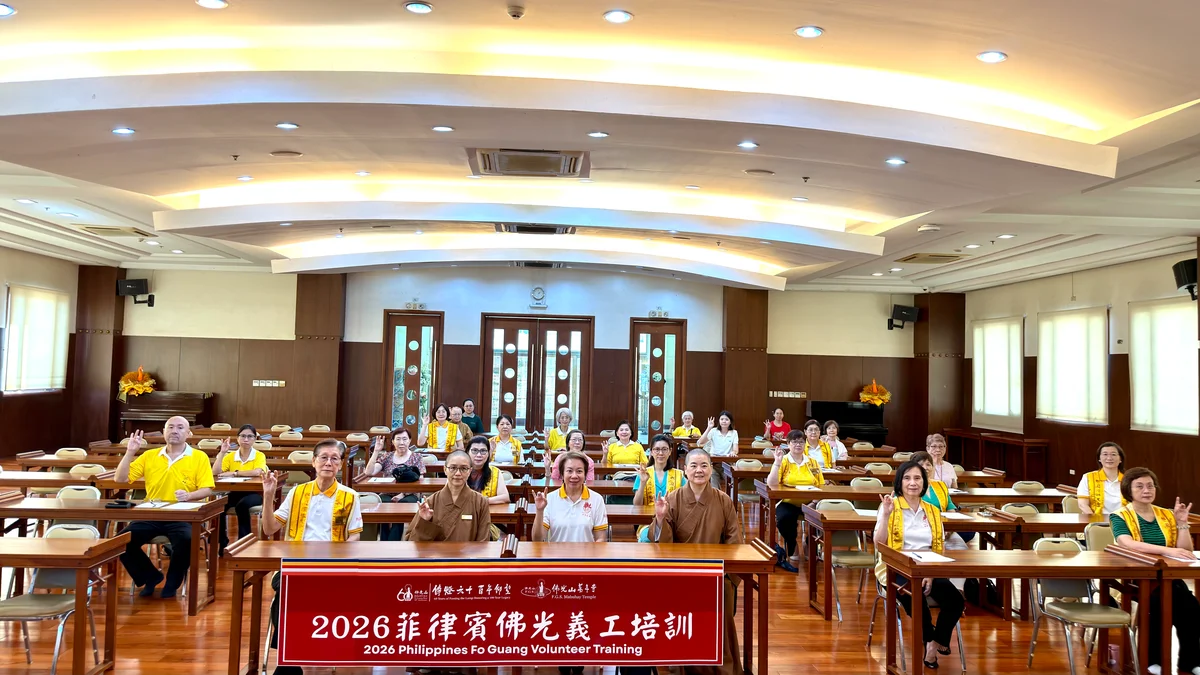
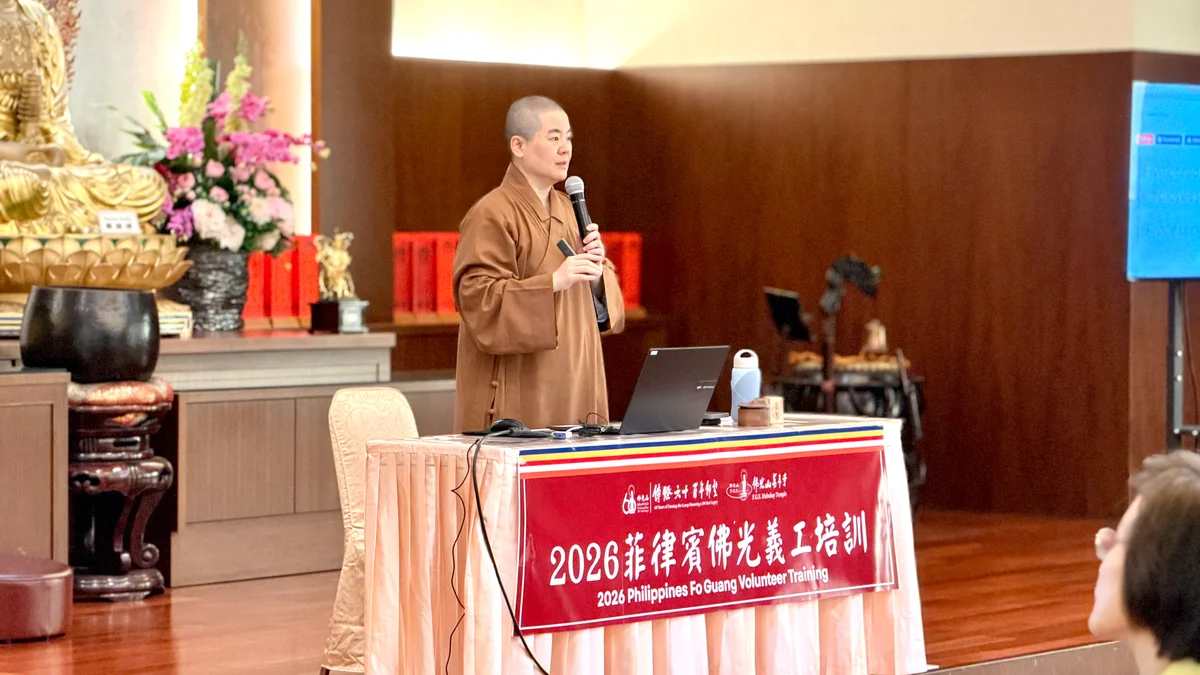
To deepen volunteers' understanding of proper temple service and cultivate a spirit of practicing in accordance with Buddhist etiquette and traditions, Fo Guang Shan Mabuhay Temple in the Philippines launched a Volunteer Training Series. The first session, "From the Boss Mindset to the Bodhisattva Mindset," was taught by Venerable Ru Qing and attended by more than 30 volunteers. The course encouraged participants to transform their attitudes and learn to serve the temple with the compassionate heart of a bodhisattva, integrating the Dharma into every aspect of daily temple service.
At the opening of the session, Mabuhay Temple Abbess Venerable Miao Jing encouraged the volunteers to take this opportunity to learn Buddhist monastic etiquette and temple terminology. She emphasized that understanding how a monastery operates not only enhances volunteers' knowledge but also enables them to serve with reverence, joy, and in accordance with proper Buddhist conduct, thereby supporting the temple while cultivating themselves and benefiting others.
Speaking on the theme "From the Boss Mindset to the Bodhisattva Mindset," Venerable Ru Qing explained that volunteers come to the temple not as guests or merely to accomplish tasks, but to learn and practice the Bodhisattva Path. Every duty performed in the temple is itself a place of cultivation. She guided participants to redefine their role—from someone who manages or takes ownership to a guardian of the Dharma—letting go of attachment to personal gains, losses, and opinions, and instead serving with purity, humility, and respect.
Venerable Ru Qing further explained that having a Bodhisattva mindset does not simply mean giving endlessly. Rather, it means learning to respect the monastery's system, follow Buddhist discipline, and transform personal preferences into collective harmony. Instead of acting according to "what I think," volunteers should learn to act according to "the temple's guidelines and the Dharma." In doing so, they cultivate both merit and wisdom through service.
She also compared the "boss mindset" with the "Bodhisattva mindset," inviting participants to reflect on their own attitudes. A boss mindset often leads to calculation, discrimination, attachment, and self-centeredness. In contrast, a Bodhisattva mindset places the well-being of the community first, always considering the monastery, the team, and all sentient beings. When faced with differing opinions or various responsibilities, volunteers are encouraged to practice tolerance, cooperation, responsibility, gratitude, and joyful service in completing every task.
The training also introduced commonly used Buddhist monastic terminology and temple service etiquette, helping participants become familiar with Buddhist customs, the culture of the monastery, and the procedures and key points of various service duties. Through this, volunteers strengthened their teamwork and enhanced the quality of their support for the temple.
Participant Angela Lin shared that the course helped him better understand the true meaning of temple service and inspired him to reexamine his original aspiration for volunteering. She expressed her hope of replacing the "boss mindset" with the "Bodhisattva mindset," constantly reflecting on his own mind while supporting the monastery and serving others, so that every act of service becomes an opportunity to cultivate both merit and wisdom and advance along the Bodhisattva Path.
Through this series of training programs, Mabuhay Temple hopes to nurture volunteer bodhisattvas who possess right understanding, right views, and proper Buddhist conduct. Together they aspire to create a pure and harmonious environment for learning and practice, enabling every volunteer who supports the temple to grow through service, cultivate through dedication, and embody the spirit of Humanistic Buddhism.
評論(0)
目前沒有評論,歡迎分享您的看法。
登入會員後即可發表評論、回覆及讚。