

Sioh-Yang Tan
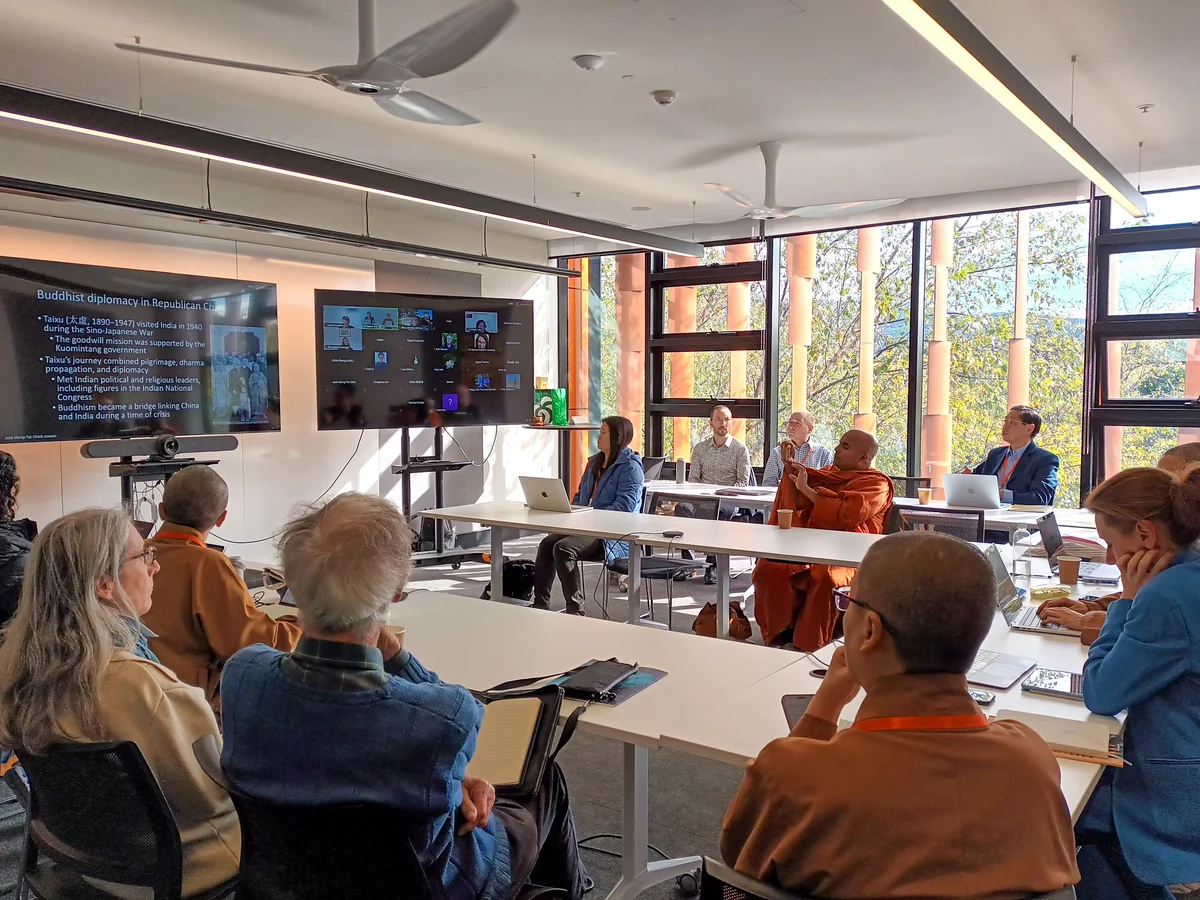
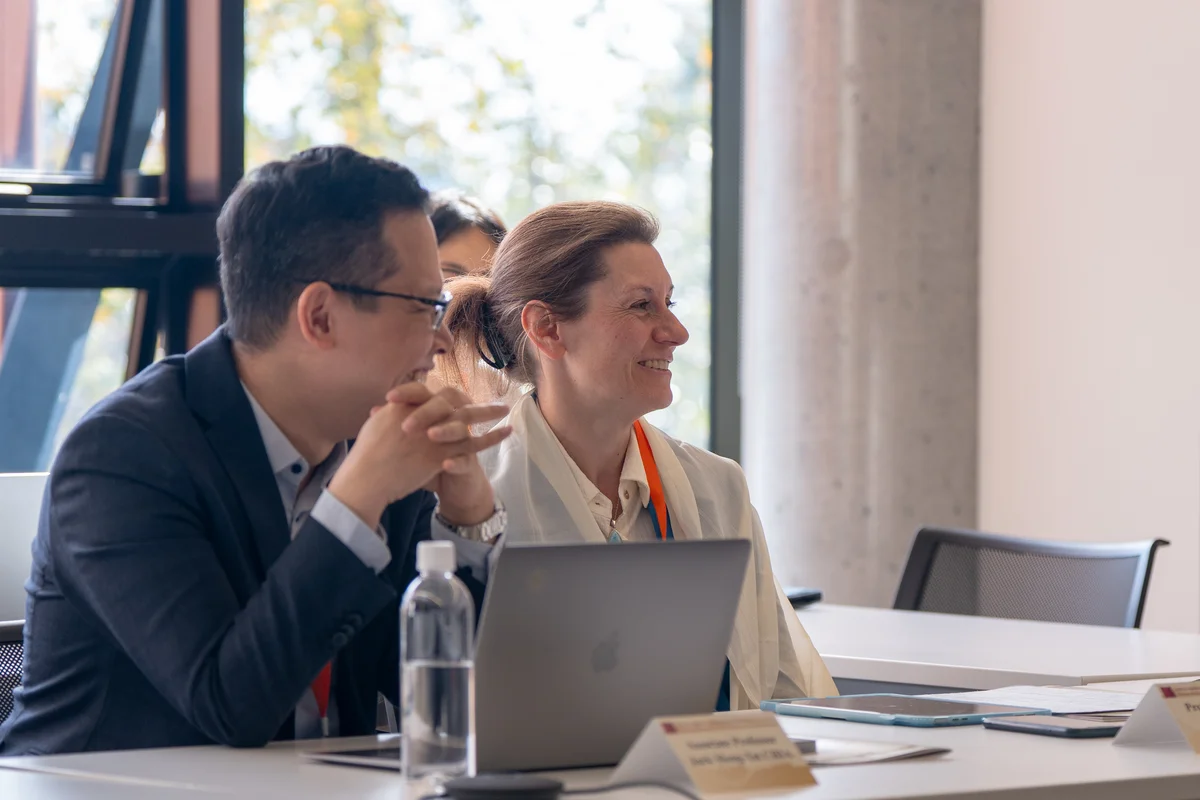
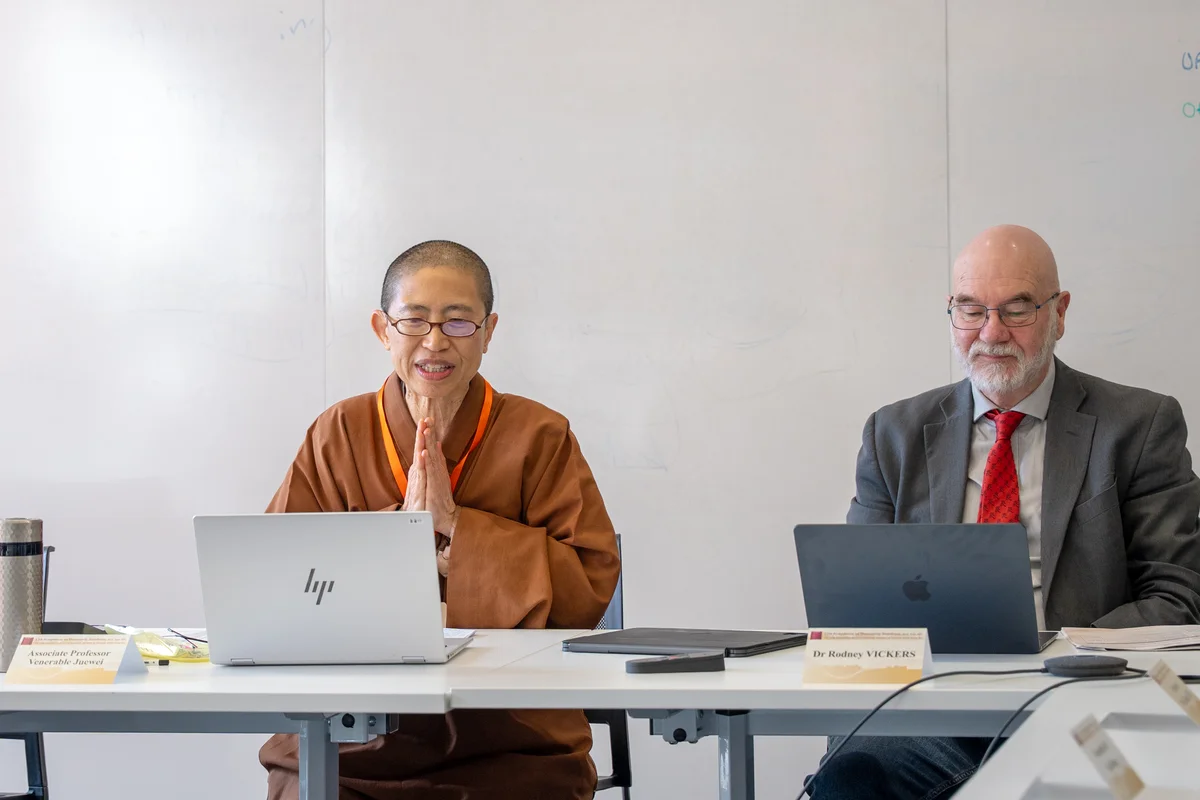
Organized by Nan Tien Institute (NTI), the panel discussion “Buddhism in a Changing World” on June 23 invited Associate Professor Jack Meng-Tat Chia from the National University of Singapore and Professor Stefania Travagnin from SOAS, University of London for a dialogue, chaired by Venerable Juewei, Director of NTI’s Humanistic Buddhism Centre. The event was part of the NTI Conversations series, aiming to bring scholars, practitioners, and the public into dialogue; it attracted nearly 50 in-person and online participants from home and abroad.
Chia opened with the topic of “Buddhist diplomacy,” noting that Buddhist symbols and objects have long been strategically used by various actors including Buddhists, non-Buddhists, and political figures to pursue formal and informal state objectives.
This is not a new phenomenon: from early trade and political exchanges between China, India, and Indian Ocean regions, through Cold War-era open and covert operations, to postwar Sino-Japanese diplomatic rebuilding, Buddhism has played a significant role. Republican-era examples include Master Yuan-Ying’s fundraising in Southeast Asia to support the anti-Japanese effort, Master Taixu’s pilgrimage and Dharma propagation in India, Zhao Puchu’s bridge-building across East and Southeast Asian Buddhist communities, and Singapore’s Venerable Hong- Choon’s Pacific Buddhist network that linked Singapore and China prior to formal diplomatic ties, each contributing to Buddhist revival and the transmission of Humanistic Buddhism back to China. In recent years, Buddhism has also served as a shared cultural language across the Taiwan Strait: when official channels are limited, religious and cultural exchanges among temples, monastics, and laypeople create important opportunities for dialogue.
Chia referenced Venerable Master Hsing Yun’s 2013 visit to Beijing and meeting with Chinese leader Xi Jinping, who reportedly said, “I read all the books the Master gave me” to underscore Fo Guang Shan’s constructive role under the Venerable Master’s leadership in fostering cross‑strait goodwill. He urged scholars to study further the relationship between Humanistic Buddhism and Buddhist diplomacy. Answering the audience’s questions in the Q&A session, he cautioned awareness of the political instrumentalization of Buddhist symbols in diplomatic actions.
Travagnin then spoke on “Buddhism and AI,” citing examples such as Longquan Temple’s robot monk “Xian-er” in Beijing, the robot Kannon “Mindar” at Kodaiji Temple in Kyoto, and the recent ordination ceremony for the robot “Gabi” at Seoul’s Jogye Temple. Drawing on canonical reflection and plural religious, regional, and cultural perspectives, she examined human–AI relations and invited the audience to question whether AI should be treated as a tool or a partner, raising questions about conceiving AI as a Kalyanamitra (a virtuous spiritual friend). She argued that Buddhism is already being reshaped by AI and called for guiding AI’s use with Buddhist wisdom, while also considering whether AI might help humans rediscover their uniqueness.
Online participant Andy Au asked whether AI is already shaping our understanding of reality. Travagnin acknowledged this influence and emphasized the importance of AI literacy and using AI with wisdom, noting AI can be highly useful or harmful.
Venerable Juewei thanked the speakers. The dialogue demonstrated that Buddhism can be an intellectual resource for public discourse and for addressing global challenges.
評論(0)
目前沒有評論,歡迎分享您的看法。
登入會員後即可發表評論、回覆及讚。