


Humanistic Buddhism Centre, Nan Tien Institute
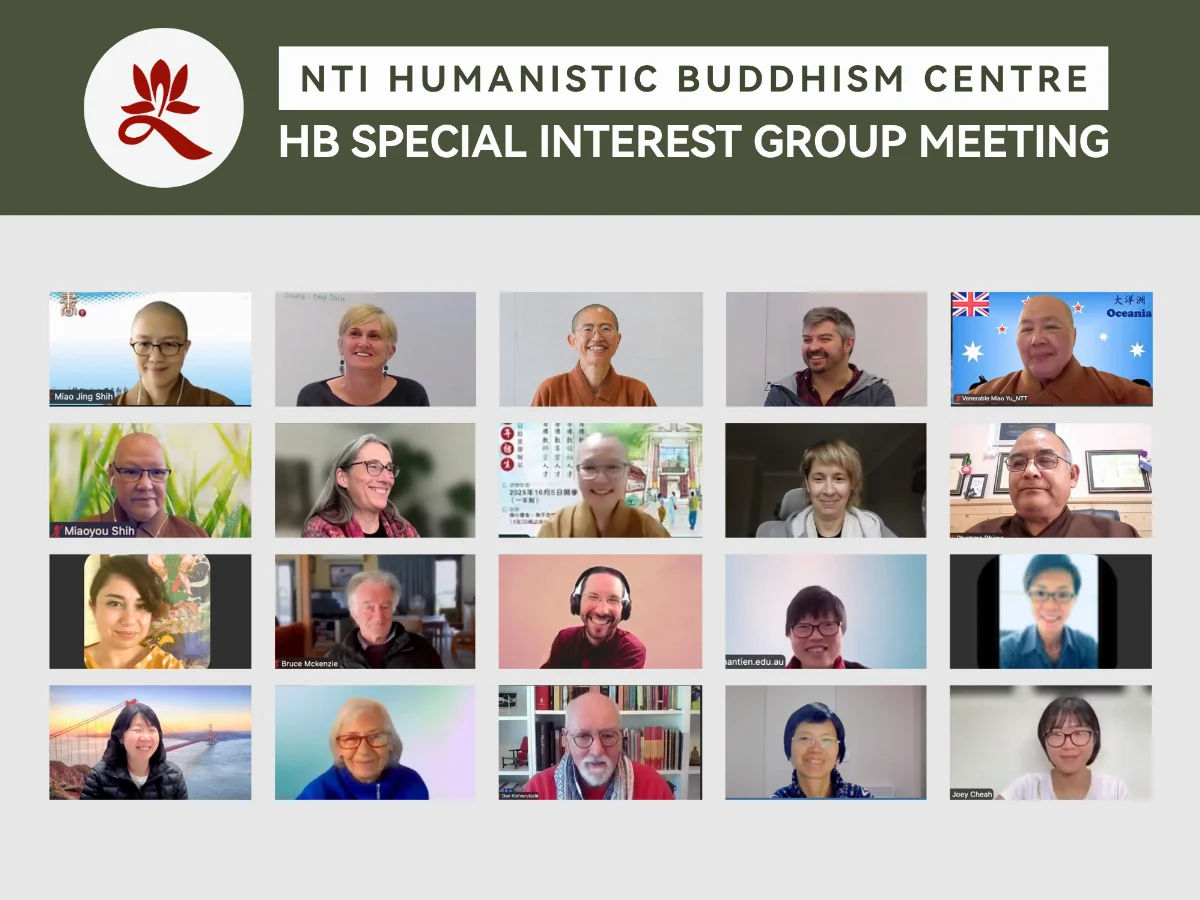
The Humanistic Buddhism Centre at Nan Tien Institute hosted its 11th Humanistic Buddhism Special Interest Group (SIG) meeting on 14 July 2026 via Zoom. The online seminar brought together 21 scholars and practitioners from Australia, New Zealand, Malaysia, the United States, India and other countries to explore contemporary issues spanning human agency in spiritual practice, mindfulness in education, and the emerging challenges of artificial intelligence in healthcare.
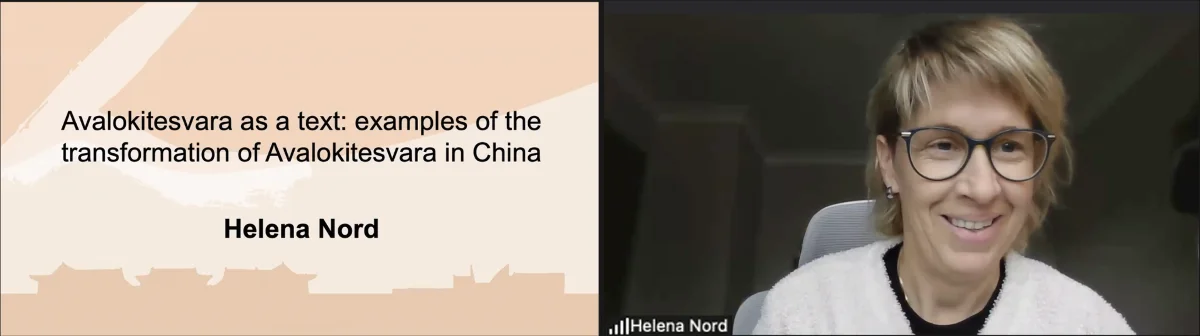
The first presentation, "Avalokitesvara as a Text: Examples of the Transformation of Avalokitesvara in China" was delivered by Helena Nord, an alumna of Nan Tien Institute. Drawing on cultural studies and the framework of Active Audience Theory, she examined Avalokitesvara (Guanyin) as a dynamic "text" that continues to be reinterpreted through scriptures, oral traditions, visual representations and religious experiences. She argued that changing social and spiritual needs have continually reshaped understandings of Guanyin. Drawing on Humanistic Buddhist doctrines, the concept of spiritual resonance (ganying) in the Confucian tradition, and Active Audience Theory, she highlighted human agency in spiritual practice.
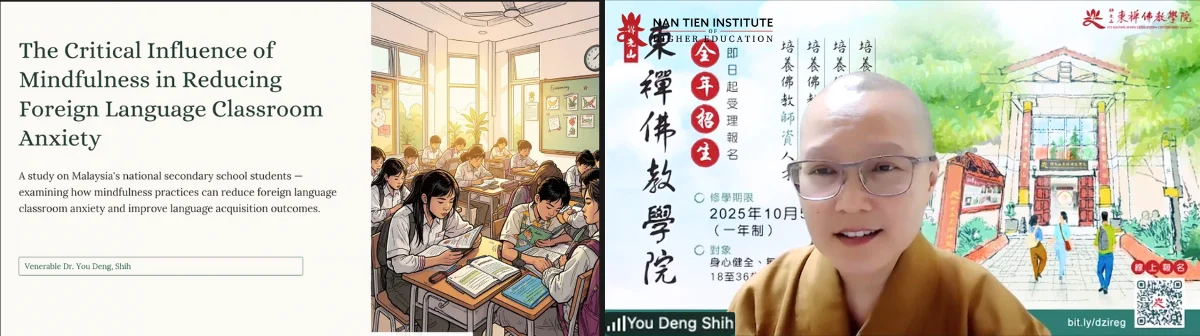
Venerable Dr You Deng, Research Advisor at the Humanistic Buddhism Research Centre, University of Malaya, then presented findings from her study on mindfulness and foreign language learning anxiety. Based on a survey of more than 400 secondary school students across 32 schools in Selangor, Malaysia, the research found that while fear of negative evaluation emerged as the greatest source of stress, mindfulness had a mediating influence in alleviating foreign language anxiety. She highlighted the importance of mindfulness-informed teaching, supportive learning environments, growth mindsets, counselling services, and diverse learning strategies to foster students' confidence and language acquisition.
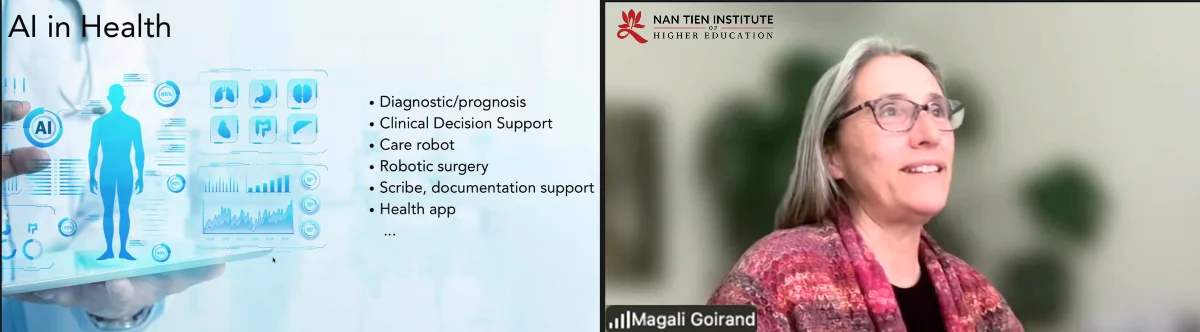
Dr Magali Goirand from the Australian Institute of Health Innovation at Macquarie University spoke on "Human Uniqueness in the Face of AI in Healthcare." She outlined the growing applications of artificial intelligence in healthcare, including diagnosis, clinical decision support, robotic surgery, medical documentation and health applications. She coined the term "karma mixer" to emphasise the aggregative nature of data used in AI and discussed the ethical challenges associated with AI in healthcare, including its potential to reinforce existing socioeconomic inequalities and biases against underrepresented populations. She also noted that the introduction of AI into healthcare creates a new physician–AI–patient triad that reshapes the doctor-patient relationship through changing levels of health literacy, privacy concerns and patient expectations. She invited participants to reflect on what remains uniquely human and whether Buddhist ethics can contribute to the design and governance of AI technologies.
In the Q&A session, Professor Kylie Seymour, Academic Dean of Nan Tien Institute, shared her observation that students today appear increasingly anxious about being evaluated and speaking in class, prompting discussion with Venerable Dr You Deng on the possible causes of this trend. Participants also considered how AI medical scribes may reshape doctor-patient relationships, whether compassionate AI chatbots genuinely support spiritual development, and how Buddhist understandings of compassion might inform AI design.
NTI graduate Bruce McKenzie cited recent examples from tertiary education where students had come to expect their teachers to behave like chatbots by providing clear, direct answers rather than encouraging critical thinking through discussion and reflection. This raised important questions about how human beings may be shaped, directly or indirectly, as the use of AI expands across all aspects of society.
Concluding the meeting, Venerable Associate Professor Juewei, Director of the Humanistic Buddhism Centre, noted that although the presentations addressed diverse topics, they were united by common themes of compassion, mindfulness, education and technology. She emphasised that while AI inevitably influences human behaviour, people retain the agency to decide how these technologies are used. From the Buddhist perspective of collective karma, humanity has created AI and therefore shares responsibility for guiding its future development.
The Humanistic Buddhism Special Interest Group is one of the initiatives of the Humanistic Buddhism Centre, supported by the Hsing Yun Education Foundation. The next meeting will be held on 13 October and will feature presentations in commemoration of the 100th birth anniversary of Venerable Master Hsing Yun.
評論(0)
目前沒有評論,歡迎分享您的看法。
登入會員後即可發表評論、回覆及讚。