


By Xi Chen, Life News Agency | Manila, Philippines | August 9, 2026
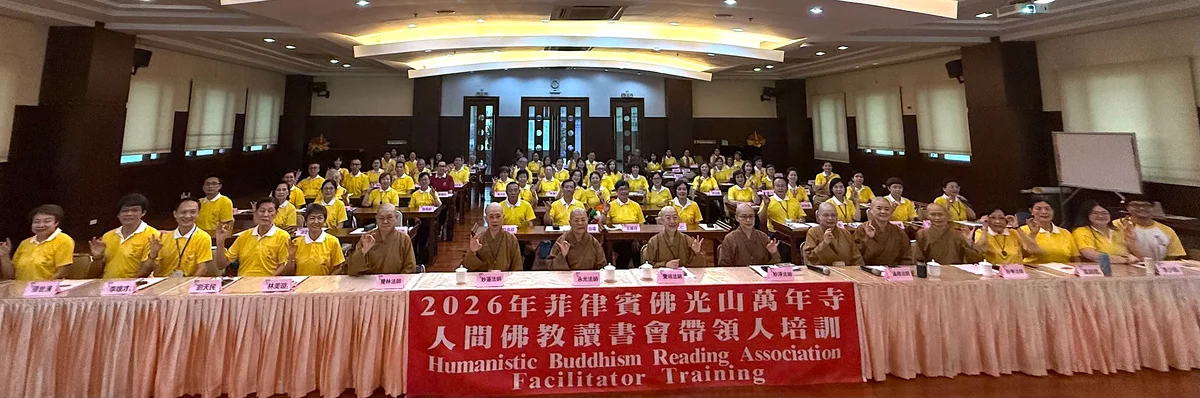
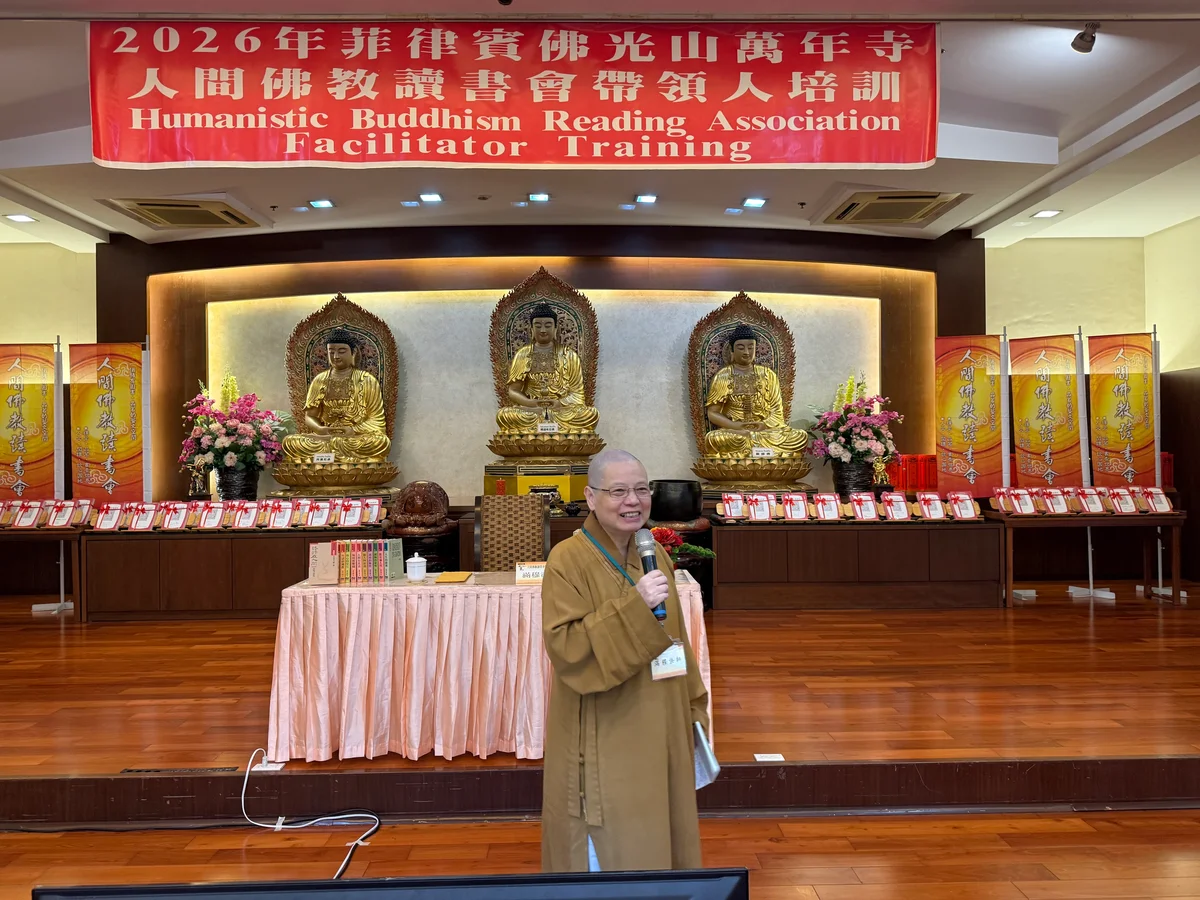
FGS Mabuhay Temple held the 2026 Humanistic Buddhism Reading Facilitator Training on August 8, bringing together more than 150 BLIA leaders and reading enthusiasts at the Prajna Lecture Hall. Through a full day of training, participants strengthened their facilitation skills and gained renewed inspiration to promote a culture of reading throughout the community.
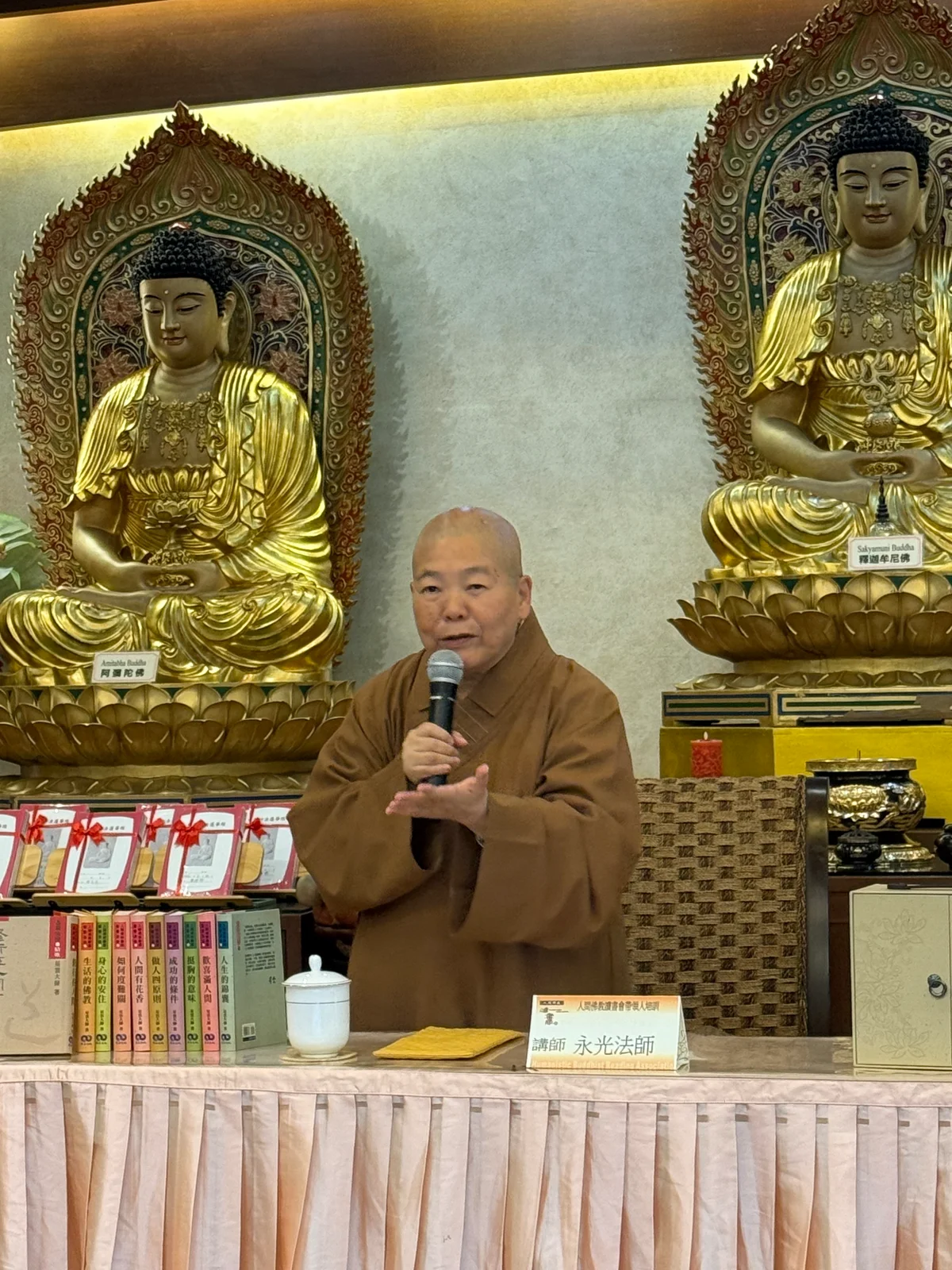
The program was emceed by Shi Xiao-Hua, Secretary-General of BLIA Philippines. In his opening Dharma talk, Venerable Yung Guang, Head Abbess of Fo Guang Shan Philippines, encouraged participants to cultivate four qualities: respect, joy, a sense of mission, and the ability to put teachings into practice. She emphasized that after listening to the Dharma, one should learn to reflect, respond, and guide others. Participants were also encouraged to share what they had learned with their families so that more people could benefit from the Dharma.
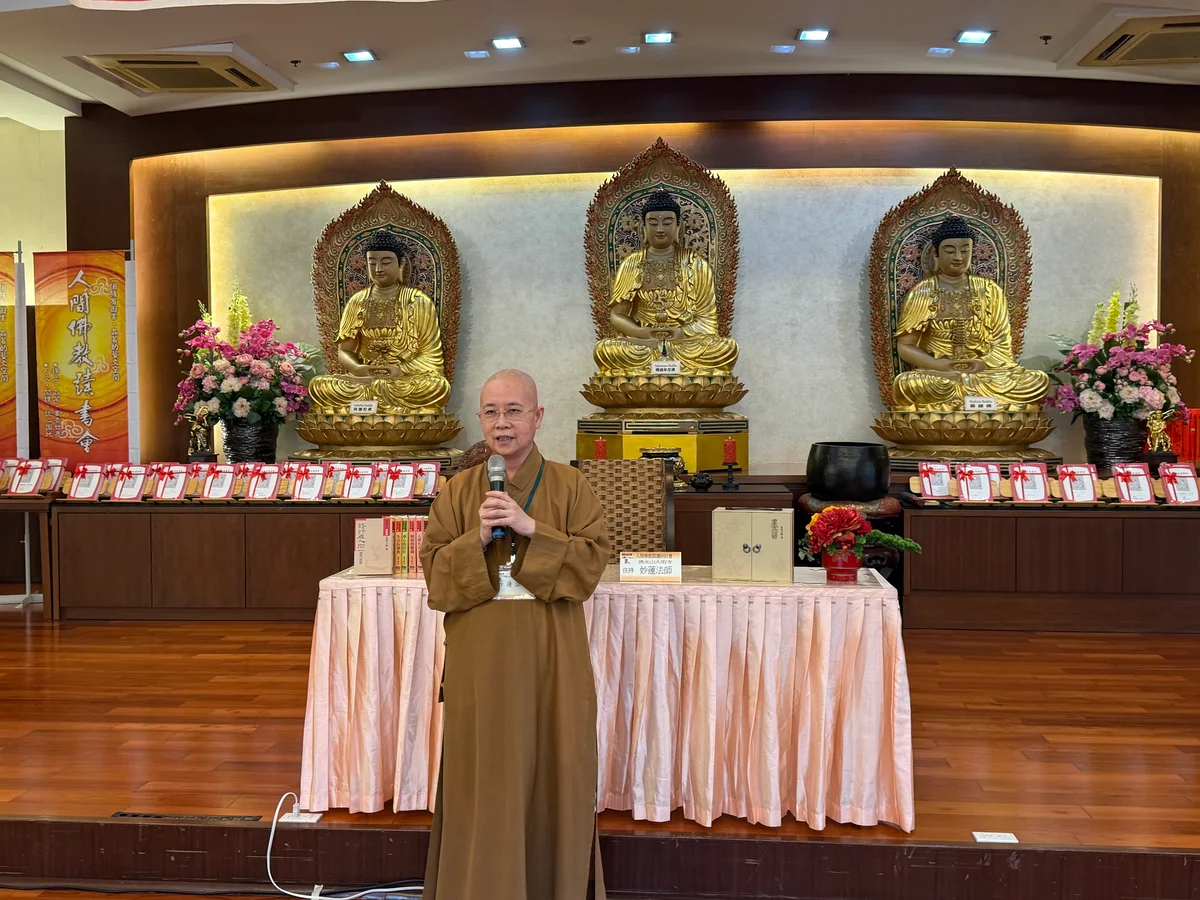
Venerable Miao Lian, Abbess of FGS Da Ming Temple, drew upon the “Story of the Papaya” from the Sutra of One Hundred Parables to remind participants not to pursue short-term gains at the expense of a broader vision. She recalled visiting Fo Guang Shan at the age of 20 and being deeply moved by the grandeur of the Main Shrine. Through its architecture, she perceived the breadth of vision and wisdom of its founder, an experience that eventually inspired her to enter monastic life. She encouraged participants to cultivate depth and perseverance in Buddhist practice, withstand challenges, and thereby achieve genuine growth.
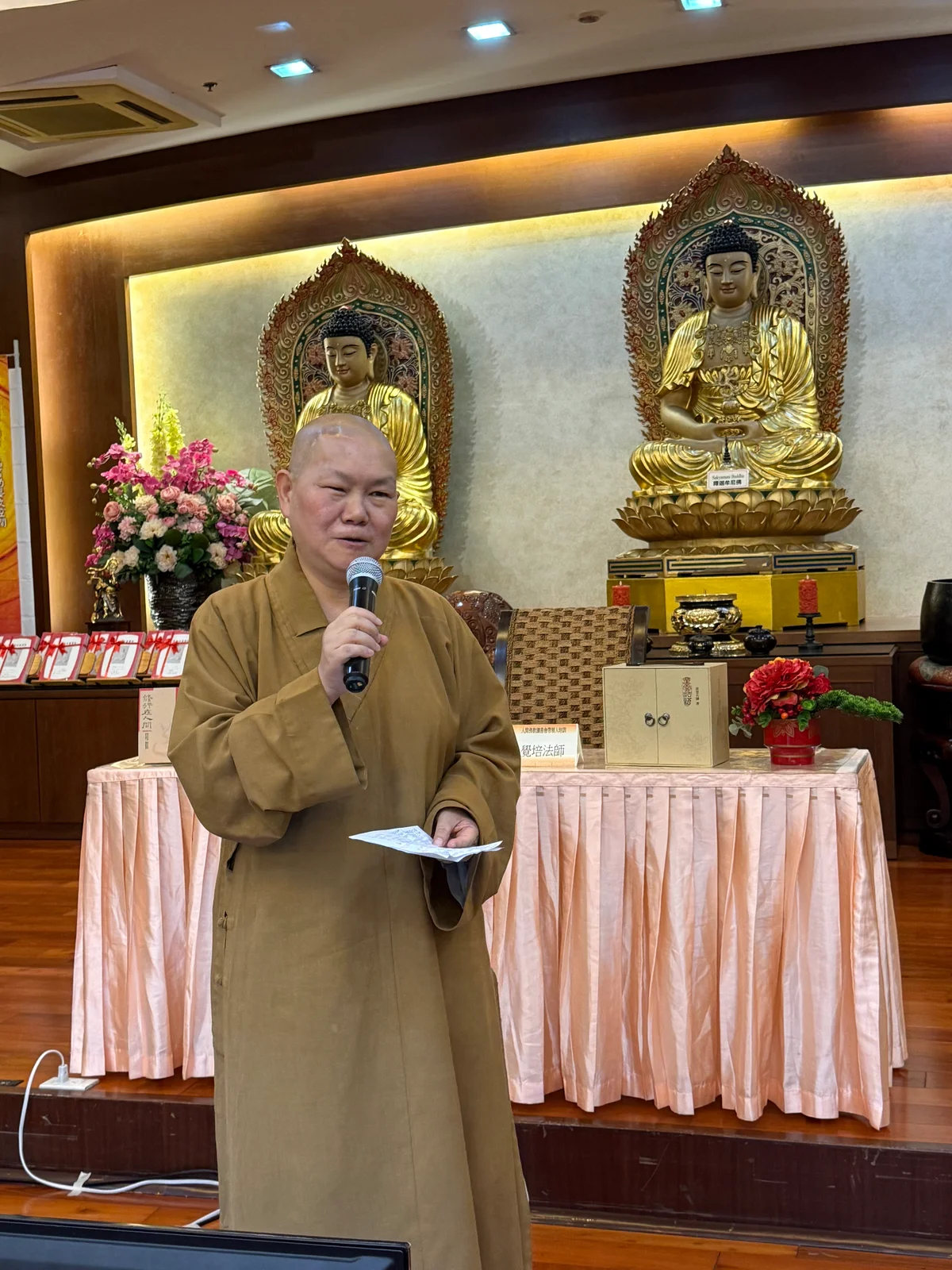
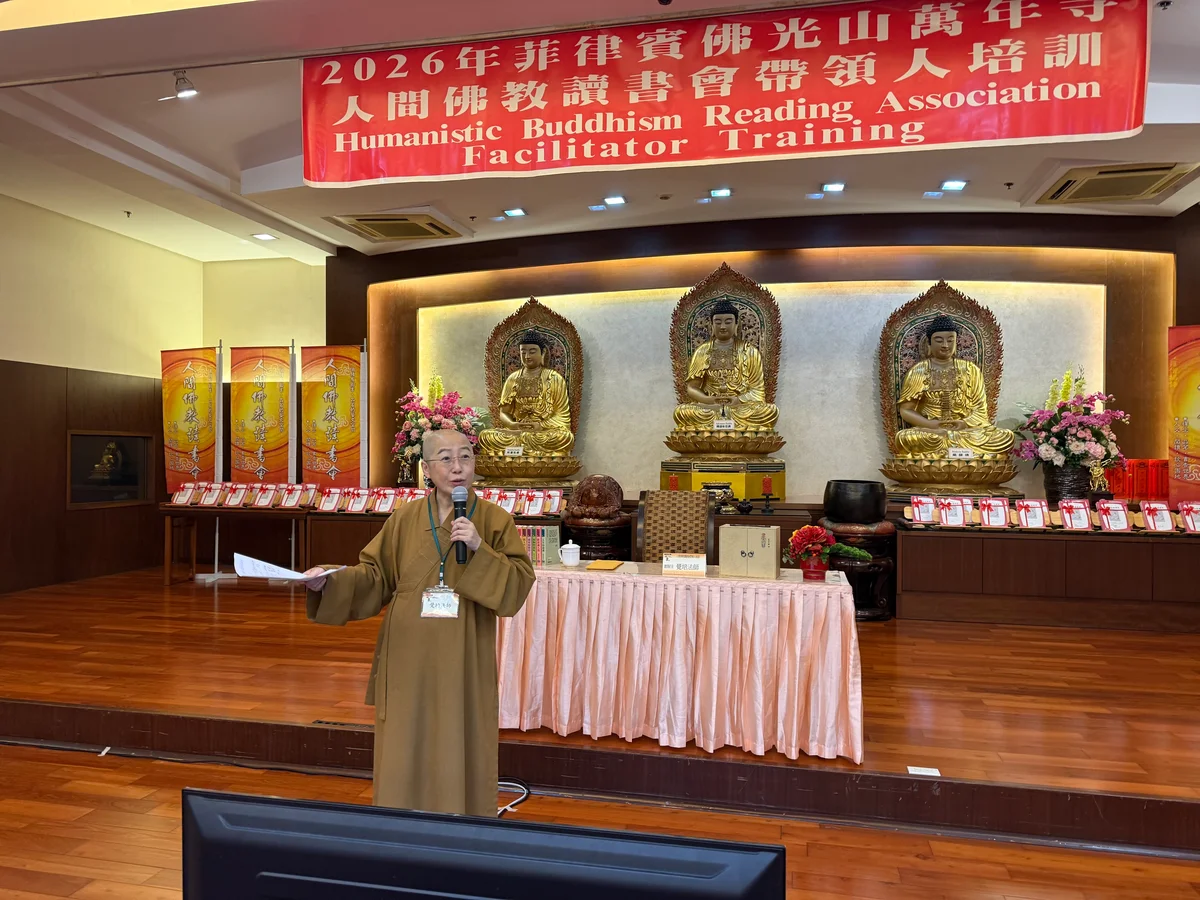
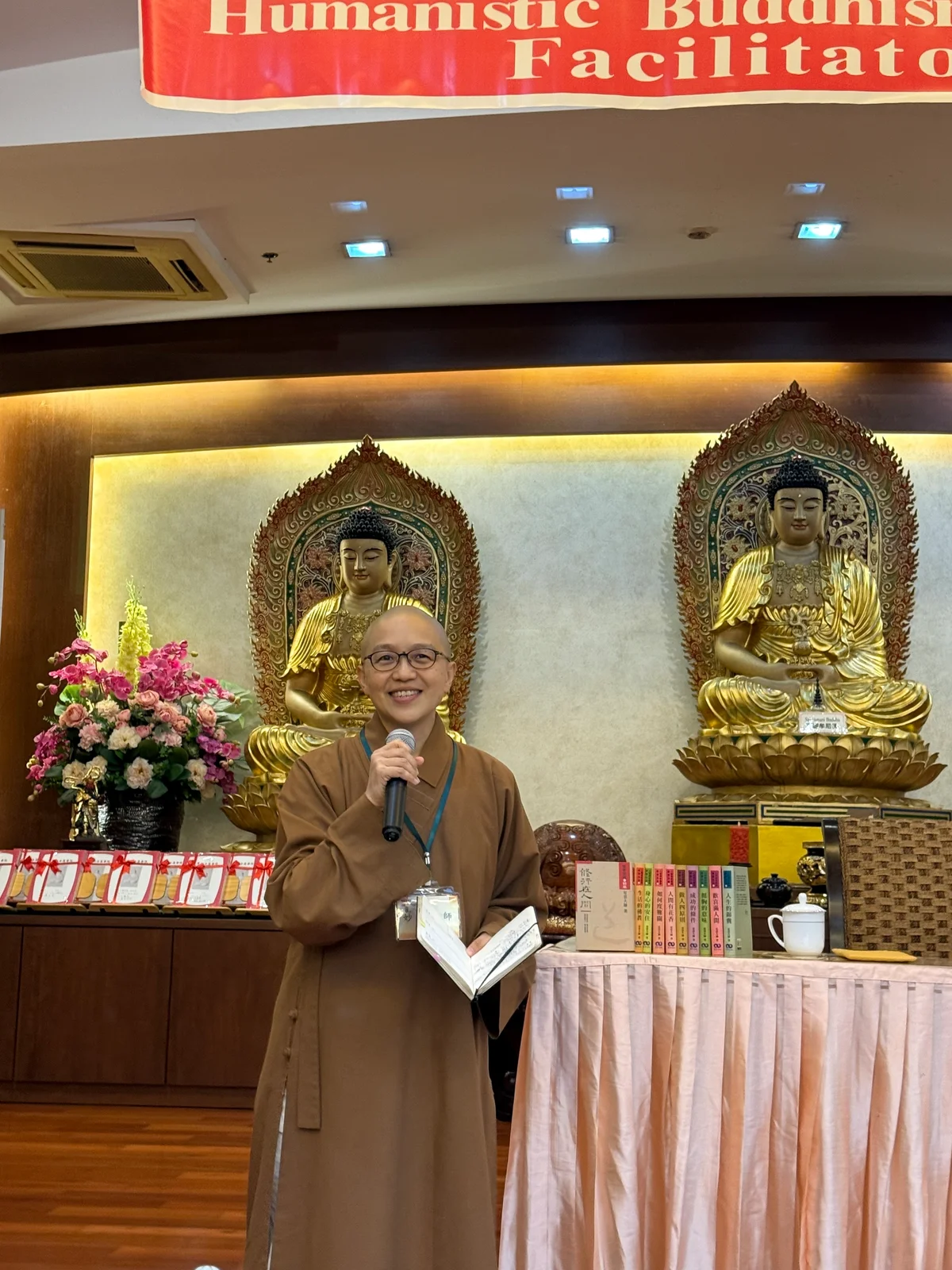
Venerable Jue Pei, Executive Director of the Humanistic Buddhism Reading Association Headquarters, then gave a live demonstration of how to facilitate a reading-group discussion. Using the four progressive dimensions of hearing, reflection, practice, and realization, she guided participants to revisit the story, share their feelings, consider different perspectives, and arrive at the insight that one should view situations with greater depth and perspective rather than focusing only on immediate gains.
Participants responded enthusiastically. Their discussion ranged from practical questions such as “How can papayas be transported while keeping them fresh?” to deeper reflections on Buddhist practice, including the importance of finding a wholesome spiritual community and committing oneself to sustained cultivation.
Venerable Man Mu, the guiding monastic, explained that “hearing, reflection, practice, and realization” should be understood as a spiraling process of continual growth, rather than a rigid sequence. Facilitators need not be constrained by formal procedures. A reading group should provide space for participants to speak freely; with timely encouragement and thoughtful restatement of key points, meaningful discussion can unfold naturally. She also reminded participants that even a short talk of ten or fifteen minutes can become material for discussion, and that a reading group can begin with as few as three people.
Learning to Tell Stories That Inspire
The training also included a session for Dharma speakers centered on listening to stories and learning how to tell them.
Venerable Yung Guang recalled the many natural disasters and political upheavals she encountered during her early years in the Philippines. Guided by the conviction that “when the garden is well tended, butterflies will naturally come,” she devoted herself to cultivating Humanistic Buddhism locally. Her perseverance eventually bore fruit and received the recognition and encouragement of Fo Guang Shan Founder Venerable Master Hsing Yun during his visit to the Philippines.
Venerable Miao Jing, Abbess of FGS Mabuhay Temple, shared her experience of taking on the major responsibility of helping establish Guang Ming College. By trusting the direction of the team and remaining steadfast in her commitment, favorable conditions gradually came together and made the vision possible.
Venerable Chueh Lin, Superintendent of FGS Mabuhay Temple, reflected on the challenges of establishing the musical Siddhartha. In its early years, the production encountered religious barriers, skepticism, and numerous difficulties, at times leading her to question whether the journey could continue. Yet she transformed Venerable Master Hsing Yun’s teaching—“Do what is difficult to do, endure what is difficult to endure, and accomplish what is difficult to accomplish”—into an inner source of strength.
Over the past 19 years, Siddhartha has taken root and grown in the Philippines. In 2027, the production will mark its 20th anniversary, carrying forward a remarkable journey of faith, perseverance, education, and cross-cultural understanding.
Venerable Man Mu then introduced a three-part method for Dharma speaking. The first part should faithfully summarize and introduce the central meaning of Venerable Master Hsing Yun’s writings. The second should connect the teaching with a personal life experience, honestly presenting moments of uncertainty, struggle, and transformation. The third should conclude with the inspiration, insight, or lesson gained from that experience.
She emphasized that an experience does not need to be extraordinary to touch others. Even ordinary moments can become powerful stories when their inner transformations are expressed sincerely and meaningfully connected with the theme of the reading.
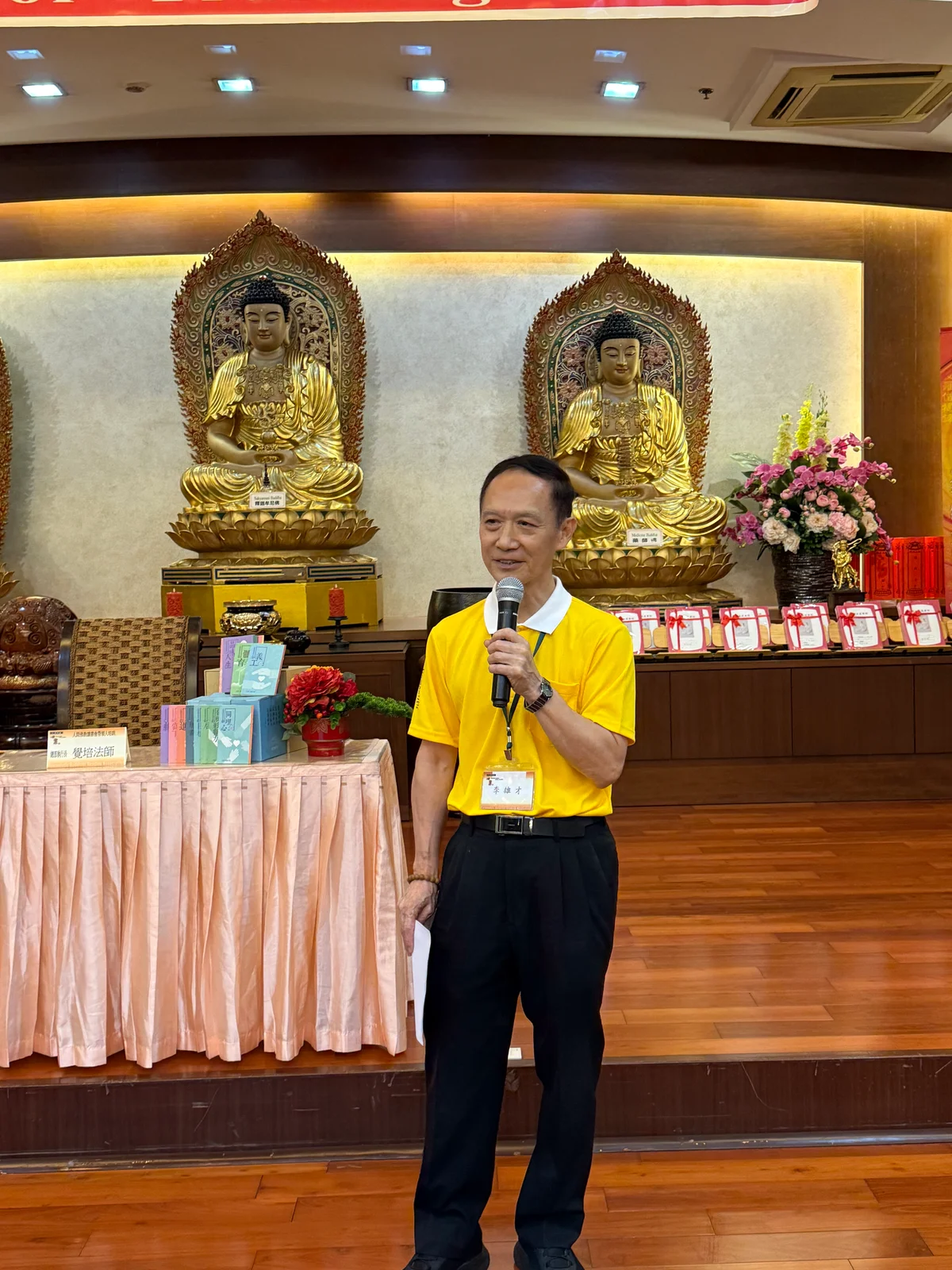
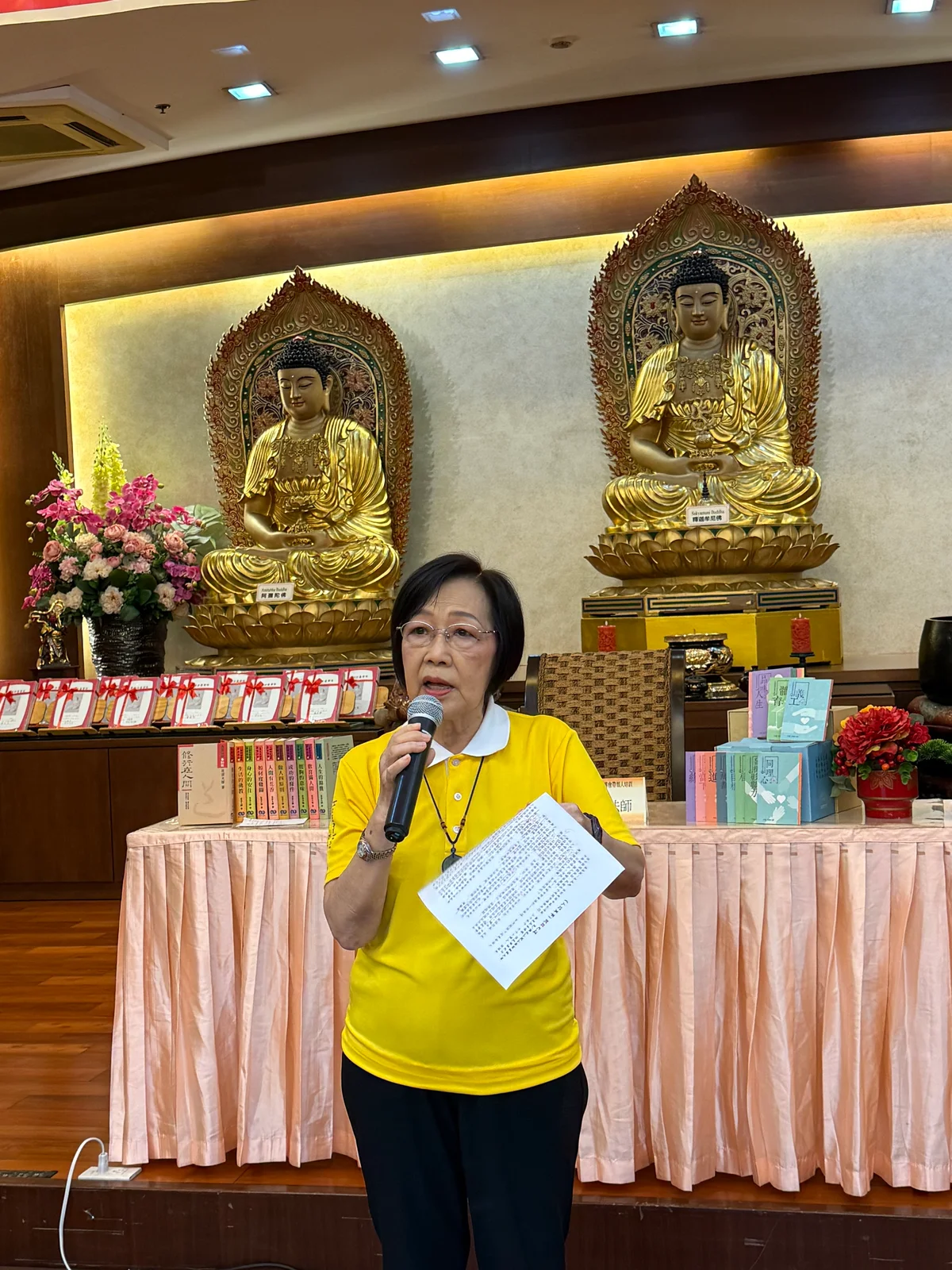
BLIA Lay Dharma Lecturers Ye Jin-Ying and Li Xiong-Cai then demonstrated Dharma speaking, while Venerable Jue Pei highlighted the importance of creating a genuine connection between the written teachings and one’s own life experiences.
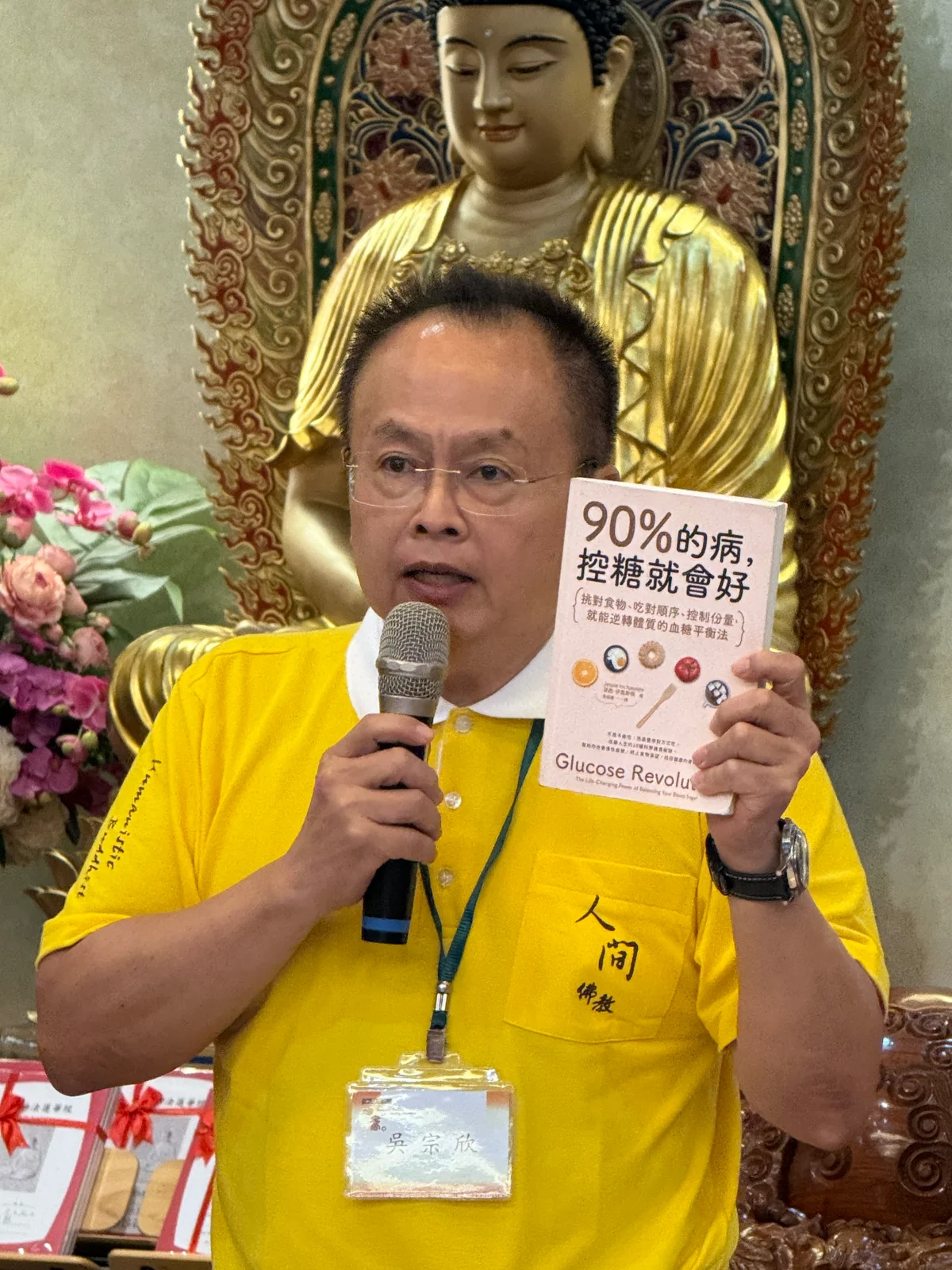
The day’s program concluded with a health lecture by Professor Wu Zong-Xin, who encouraged participants to care for their health with aspiration and mindfulness so that they may continue serving others and fulfilling their vows.
Participants enthusiastically shared their reflections and experiences, bringing the training program to a successful conclusion. They were encouraged to bring what they had learned back to their respective BLIA chapters, allowing the culture of reading to spread throughout the Philippines and putting into practice Venerable Master Hsing Yun’s vision of “bringing the fragrance of books into everyday life.”
Through reading and sharing, the program seeks to introduce more people to the Dharma, inspire wisdom, and bring confidence and hope into their lives.
Coinciding with the 33rd anniversary of FGS Mabuhay Temple, the gathering came to a joyful close as everyone joined together in singing “Happy Birthday,” celebrating both the temple’s anniversary and another meaningful step in carrying forward the light of Humanistic Buddhism.
評論(0)
目前沒有評論,歡迎分享您的看法。
登入會員後即可發表評論、回覆及讚。