


By Jeanne H. Tuan
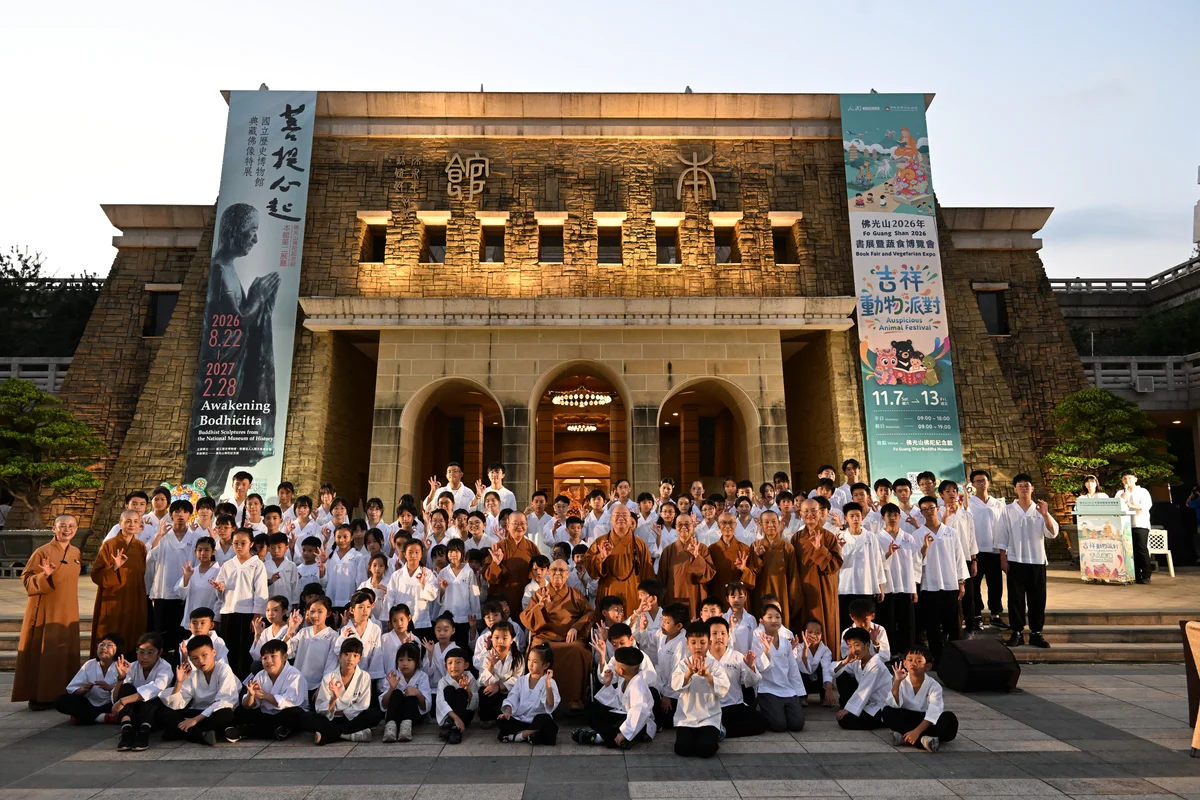
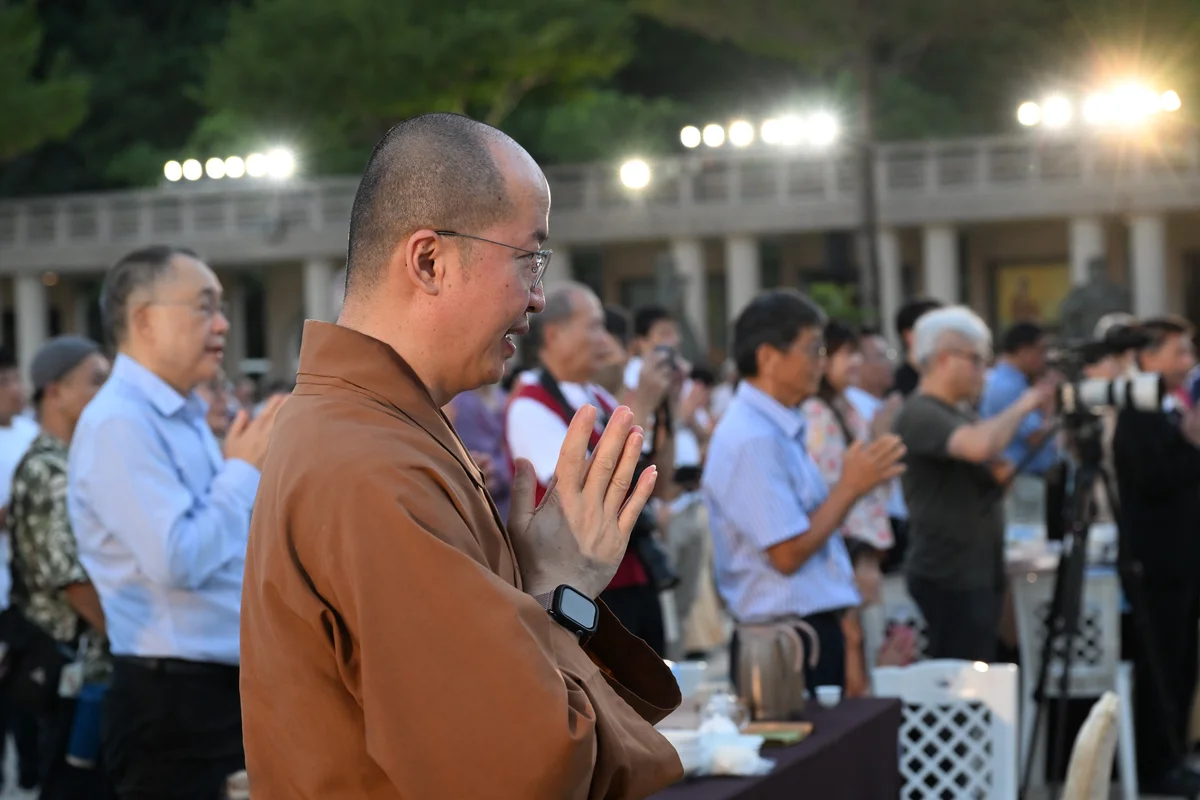
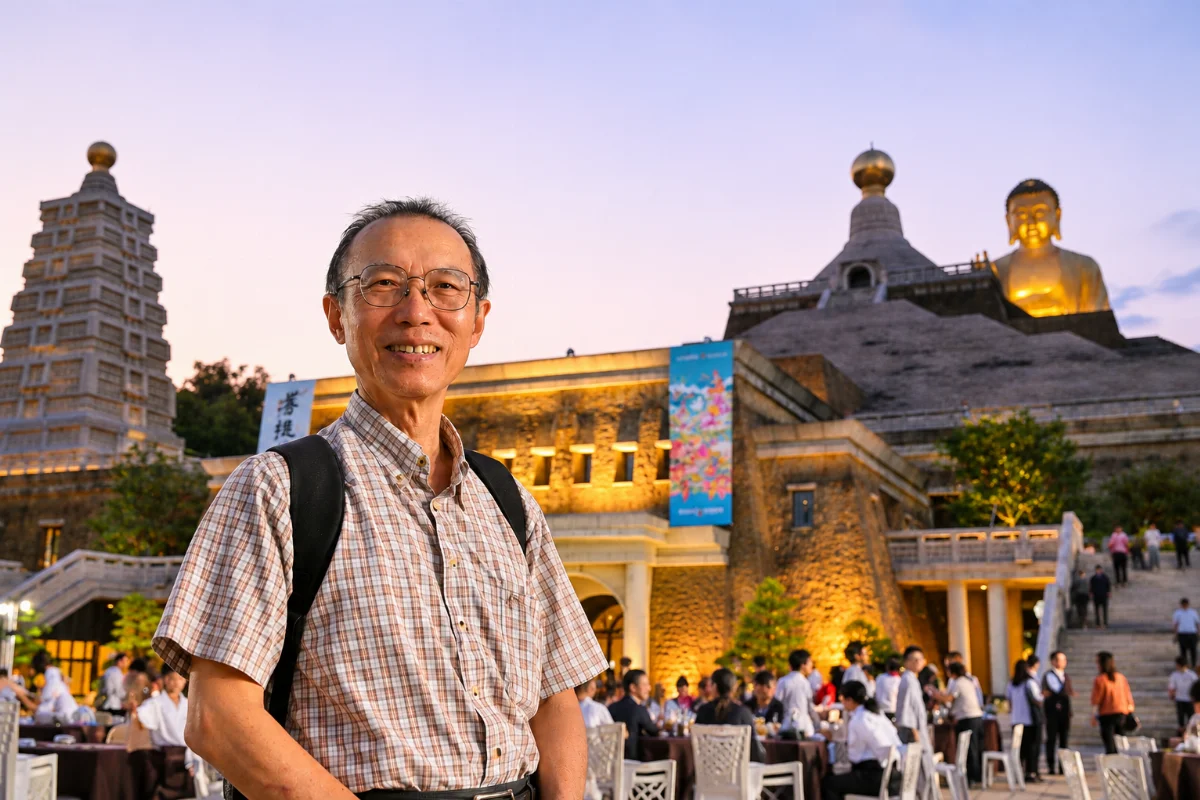
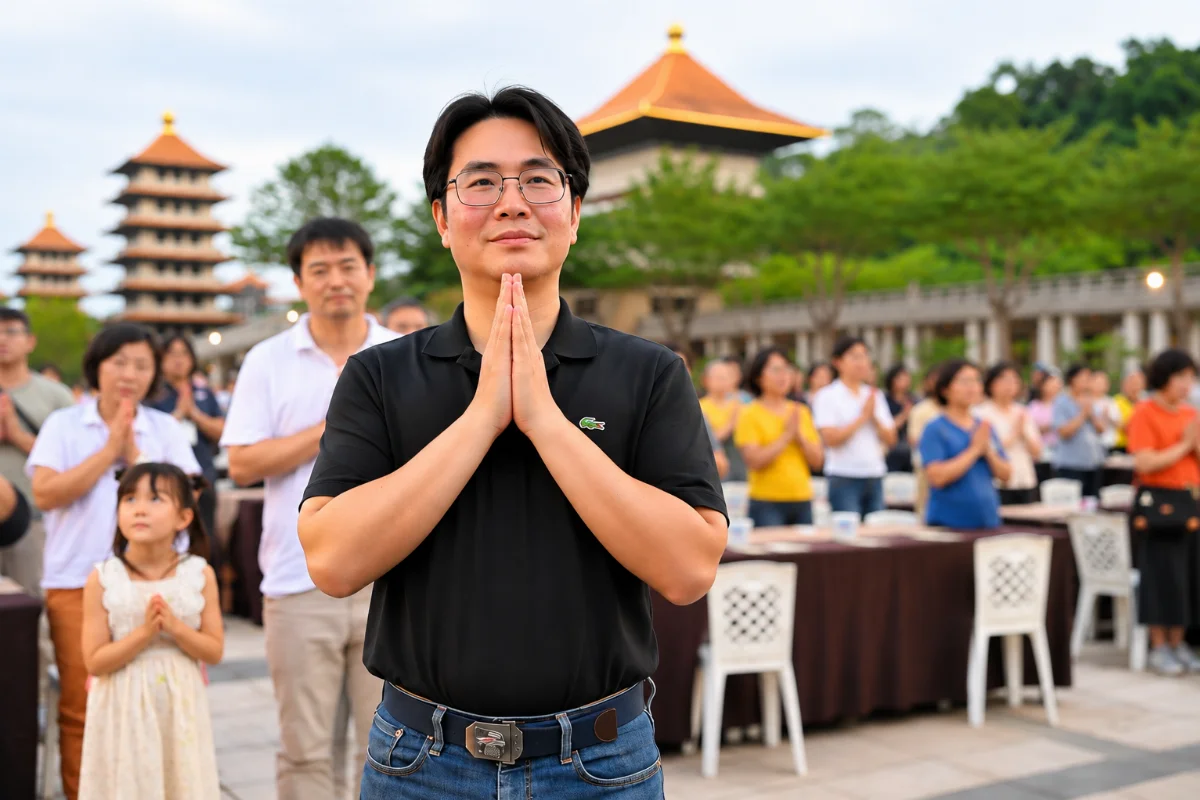
With Lidong, the Beginning of Winter, ushering in the season, the aroma of tea drifted across Bodhi Wisdom Concourse at the Buddha Museum, creating an atmosphere of serenity and cultural warmth. On November 7, 2026, the Buddha Museum welcomed more than a thousand people to its Chan Tea gathering, where guests explored the wisdom of Chan through serving tea, savoring its delicate flavors, and sitting in meditation.
Held alongside Fo Guang Shan's 2026 Book Fair and Vegetarian Food Expo, the occasion brought together people of different nationalities, faiths, and generations. Around the tea tables, visitors exchanged stories, shared traditions, and discovered common ground, lending a special sense of warmth to the arrival of winter.
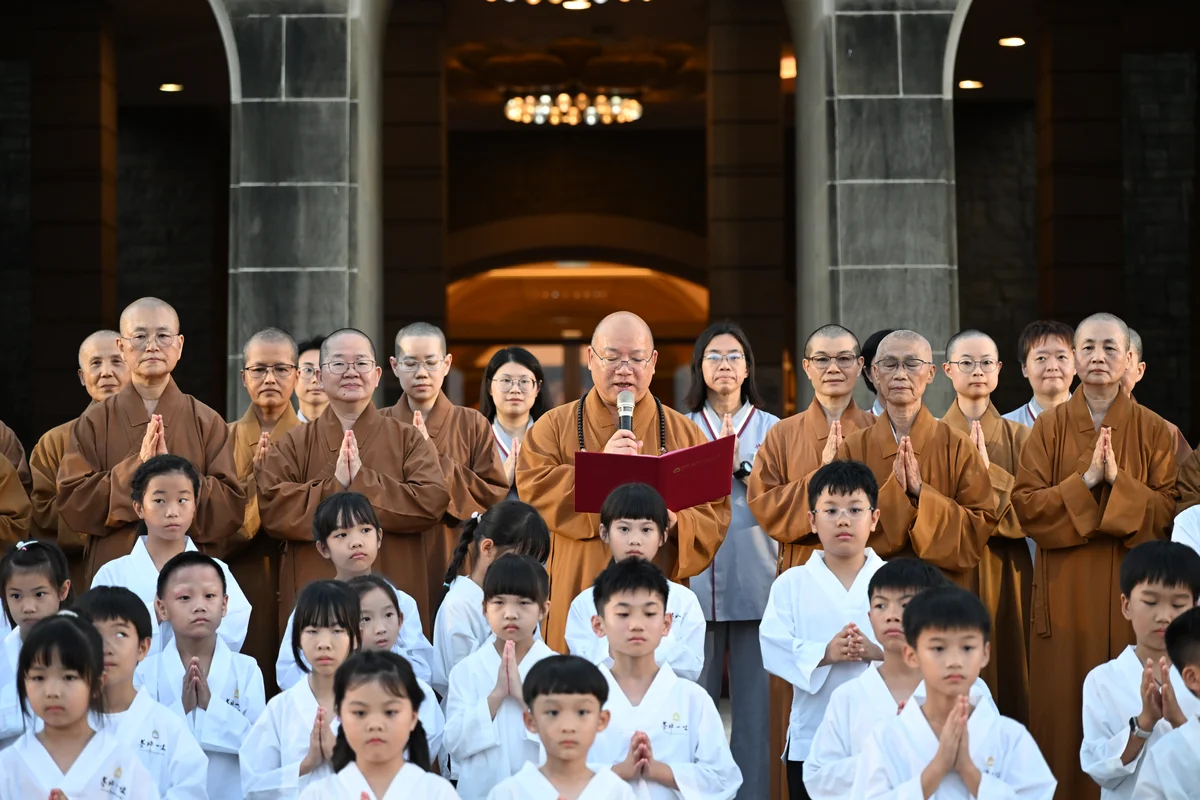
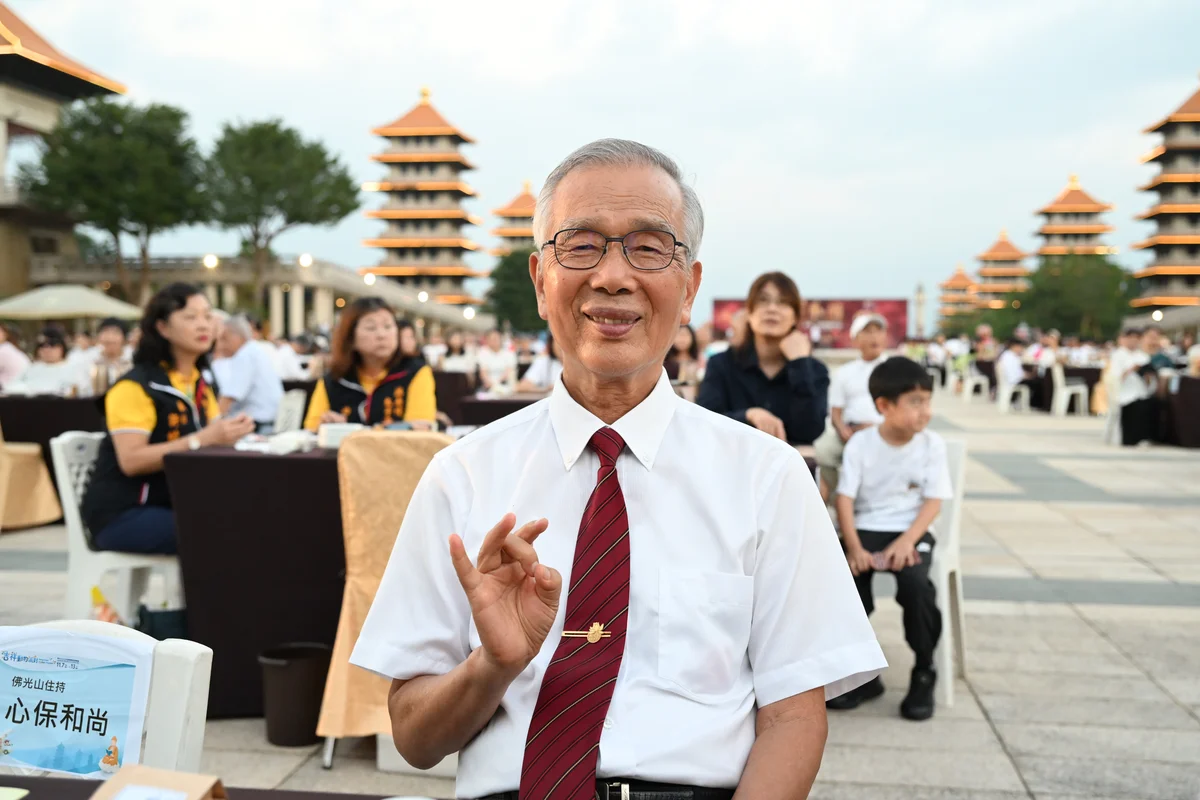
Distinguished guests included Venerable Tzu Jung and Venerable Yi Lai, senior monastics of Fo Guang Shan; Most Venerable Hsin Bau, Abbot of Fo Guang Shan; and Venerable Ru Chang, Director of the Buddha Museum.
Following a communal reading of Venerable Master Hsing Yun's Prayer of Blessing, Most Venerable Hsin Bau delivered a Dharma talk. He explained that everything in the world comes into being through the coming together of causes and conditions. Even the aroma and flavor of a cup of tea depend on many elements, including water, soil, sunlight, and the efforts of all those involved in bringing it to the table.
He went on to explain the importance of forming wholesome connections with others, encouraging everyone to approach life with gratitude and compassion. By turning good intentions into action, he said, we can pass kindness from one person to another and allow its influence to grow.
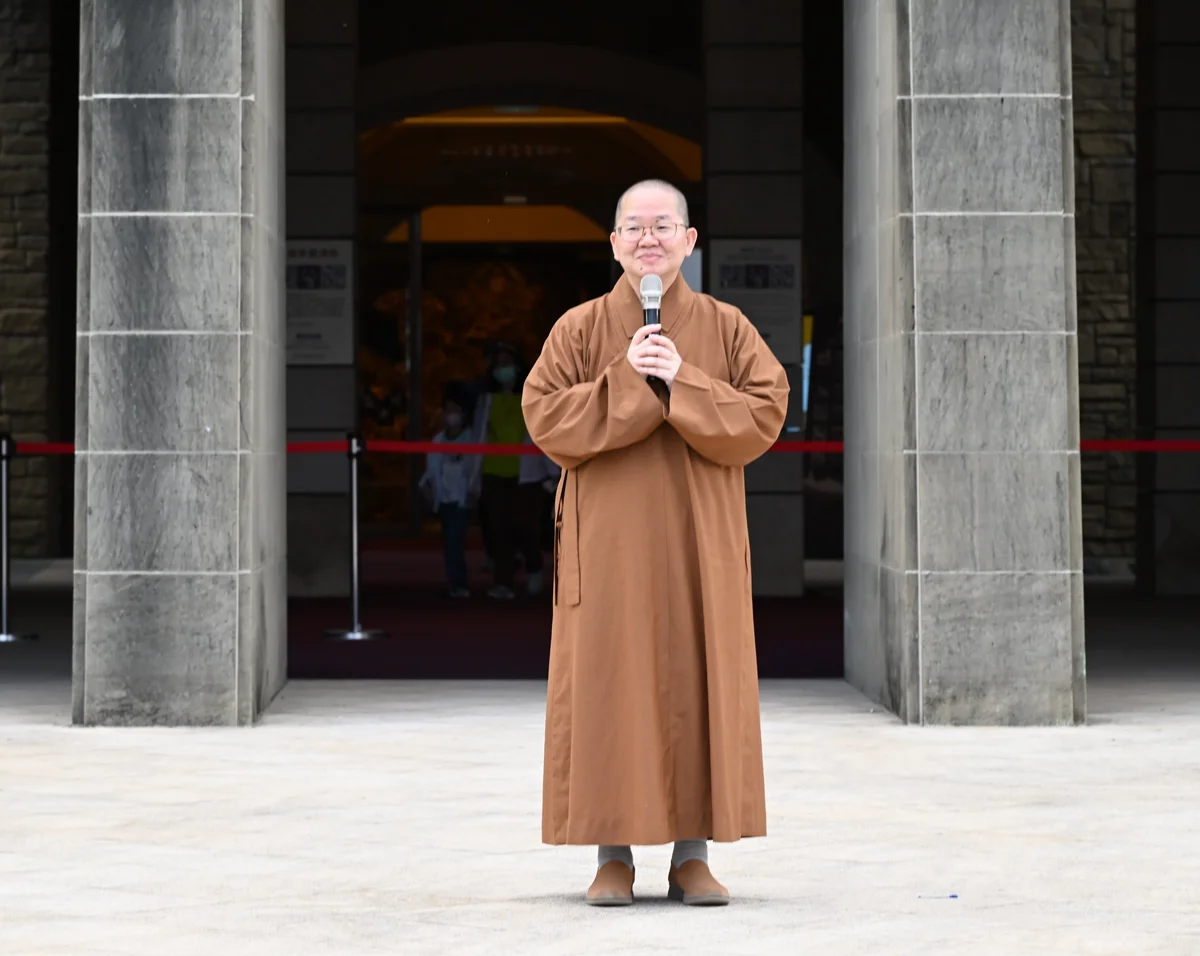
In the opening remarks, Venerable Ru Chang quoted a Chan verse: "Everyone has a sacred mountain within; cultivate your mind at the foot of that mountain." The verse served as a reminder to look inward and discover peace and wisdom through meditation and the simple act of offering tea.
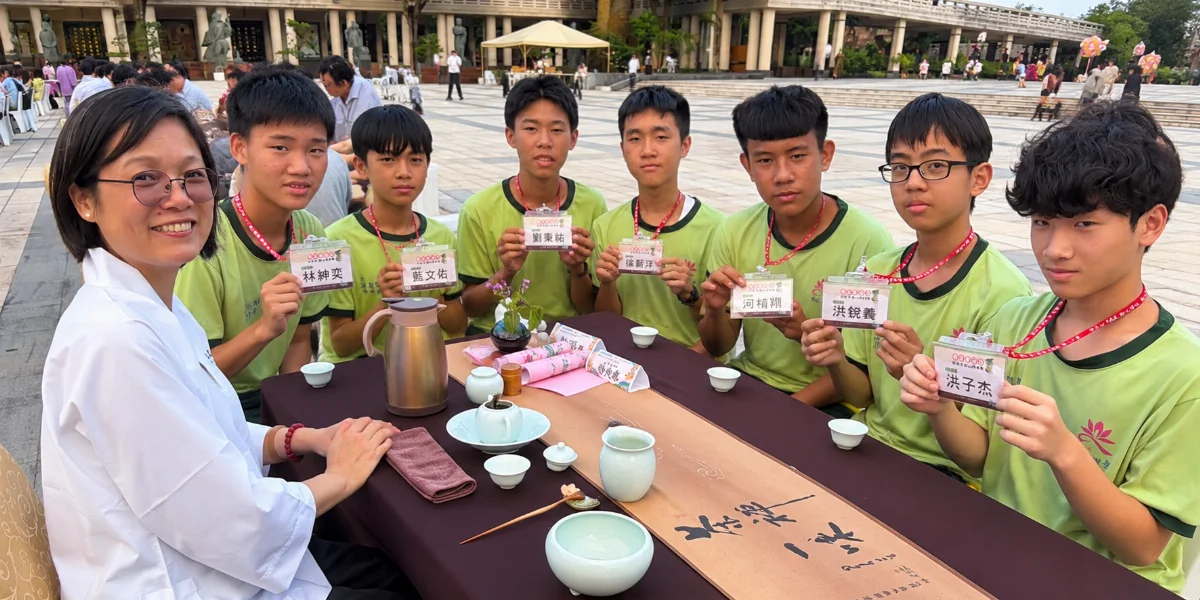
Venerable Ru Chang also praised the young tea servers, who had spent considerable time practicing their skills to prepare a good cup for their guests. Their dedication was deeply moving and reminded everyone to appreciate the care and effort behind even the simplest gestures.
Referring to the story of the Chan master Zhaozhou, who continued traveling on pilgrimage at the age of eighty, Venerable Ru Chang encouraged everyone to make good use of their time rather than let precious moments slip away. Instead of constantly searching for answers elsewhere, people can discover life's deeper meaning in the fragrance of tea and the quiet moments that allow the mind to settle.
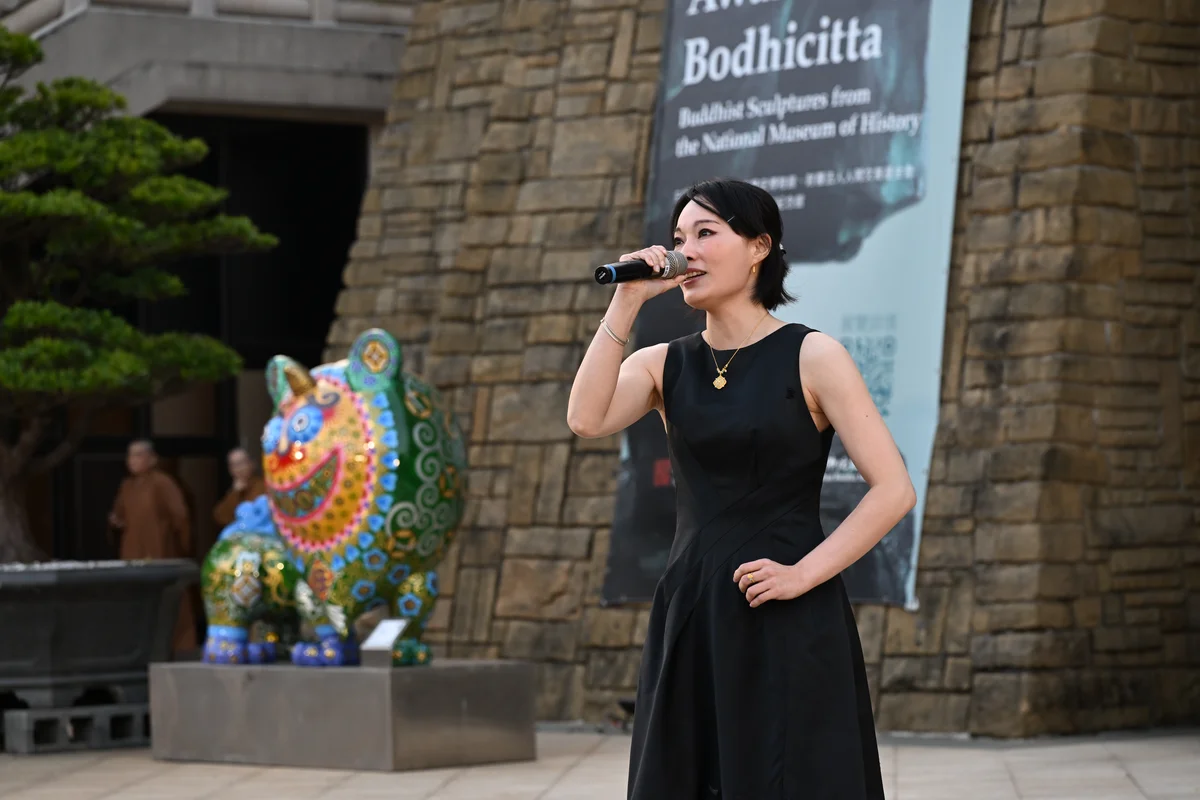
The program also featured a musical performance by Ms. Hsieh Wen-chi, a qingyi (young female role) performer with the Taiwan Bangzi Opera Company under the National Center for Traditional Arts, Ministry of Culture, and an accomplished ethnic vocalist. She performed three songs: Suddenly Awakening, Flowers Bloom in Spring, and Watching Flowers Bloom in the Morning. Her clear, graceful voice added an artistic dimension to the occasion, weaving music and tea into an atmosphere of contemplative beauty.
Beyond Cultural and Religious Boundaries: Discovering Buddhism Through Chan Tea
A cup of tea can open different doors for people from different backgrounds. For some, it provides a first glimpse into Buddhism. Others recognize familiar philosophical ideas, while some discover the value of Chan through meditation and the mindful preparation and serving of tea.
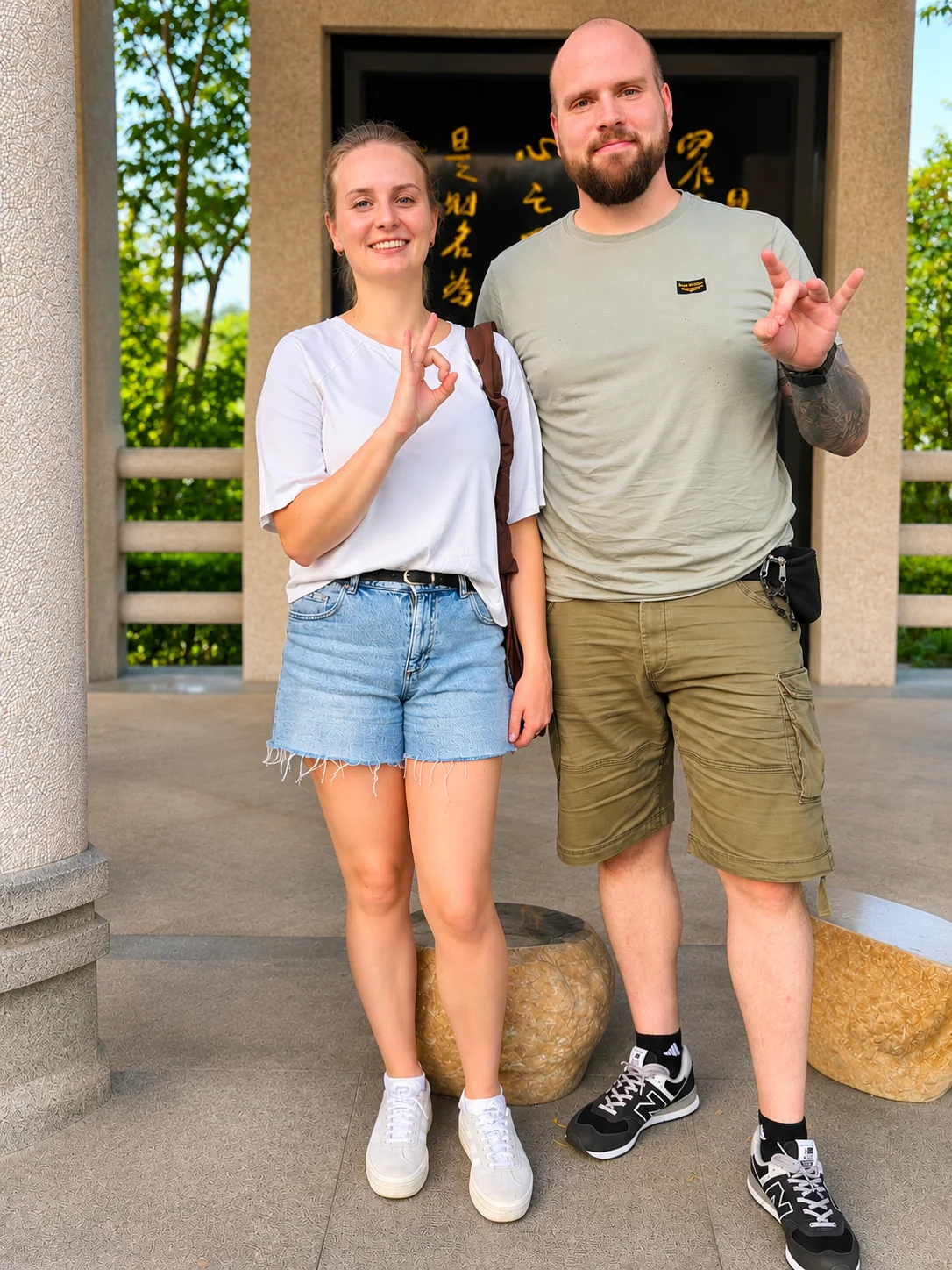
Marx and Nandine, a Christian couple from Berlin, Germany, were visiting the Buddha Museum for the first time. They described the visit as a rare and meaningful encounter with a rich cultural and historical tradition. Having had little previous exposure to Buddhism, they were unfamiliar with concepts such as Buddhas, bodhisattvas, and the belief that everyone possesses Buddha-nature. Neither had any previous experience with meditation.
As they explored the museum, they watched visitors quietly enjoying tea together. They were particularly impressed by the magnificent and solemn Fo Guang Great Buddha and appreciated the peaceful atmosphere that surrounded the museum in autumn.
The visit offered them a fresh perspective on Buddhist traditions through art, history, and daily practices, allowing them to appreciate a spiritual heritage different from their own.
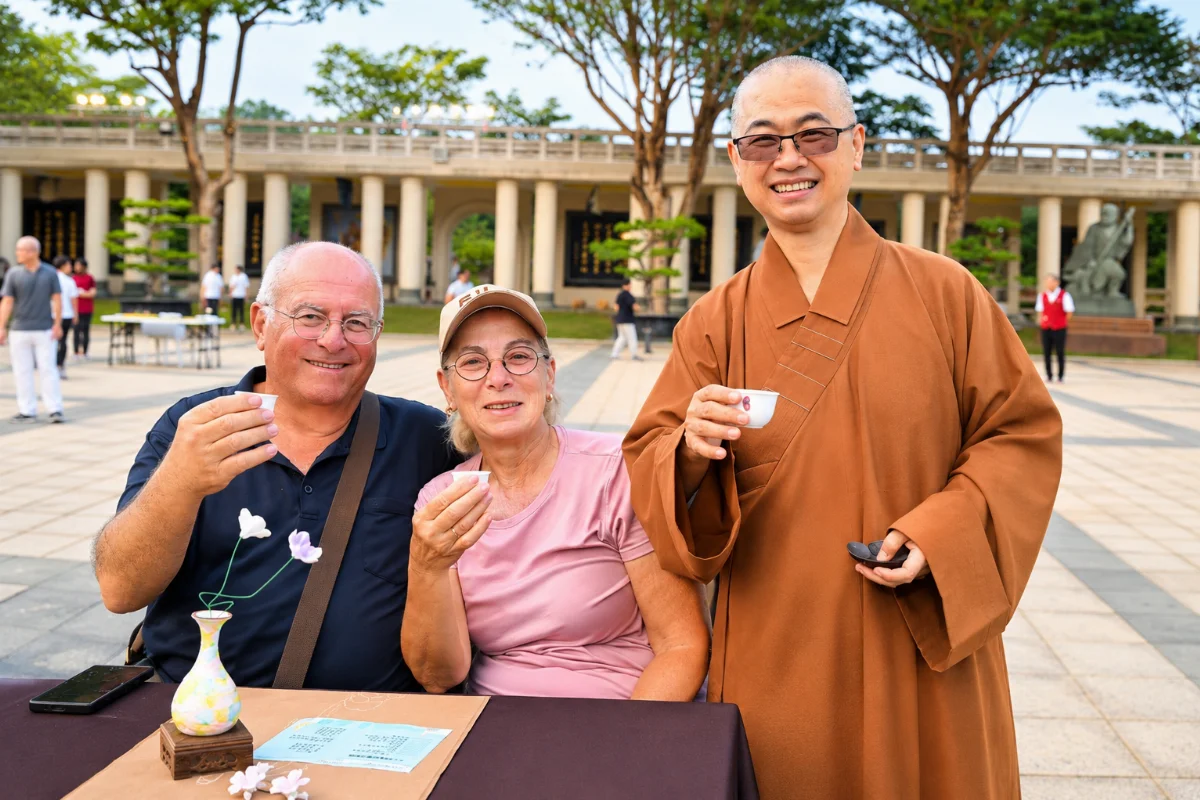
An Israeli couple of Jewish background, currently traveling around the world, shared a keen interest in discovering the cultures, traditions, and creative expressions of different societies. Both joined the Chan Tea gathering and were touched by the Buddha Museum's warm and welcoming atmosphere. They particularly appreciated how Humanistic Buddhism brings spiritual teachings into ordinary life.
Through this encounter, they discovered a more personal and approachable side of Buddhist culture and experienced the warmth of human connection beyond religious and cultural boundaries.
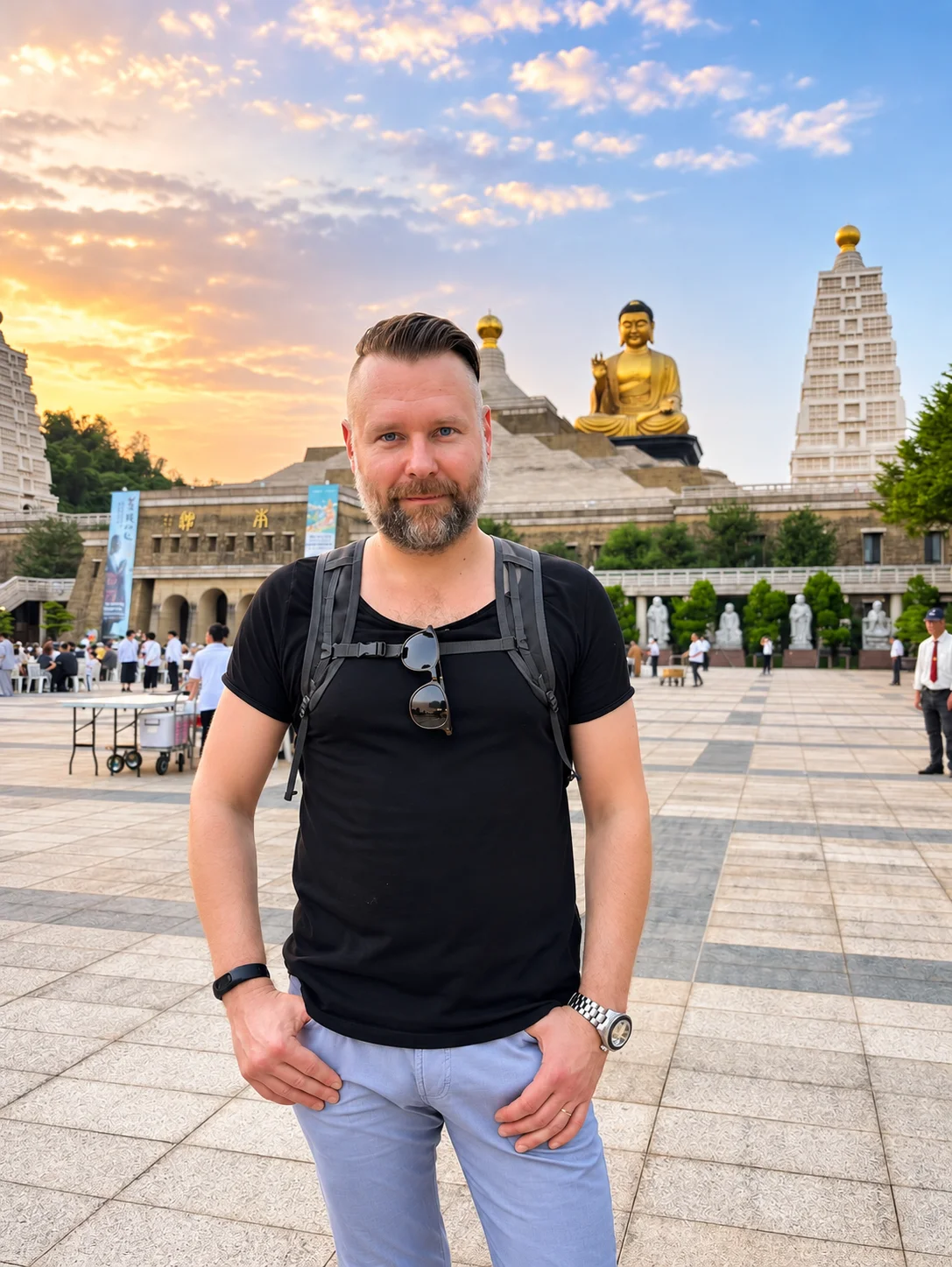
For Daniel, who had previous experience with meditation, Buddhist philosophy offered another way of looking at life. Originally from Russia and now living in Finland, he works in information technology in the semiconductor industry. While in Taiwan on a business trip, he took the opportunity to visit the Buddha Museum over the weekend.
Although he identifies as an atheist, Daniel feels a strong connection with Buddhist philosophy. He finds many similarities between Buddhist thought and Stoicism, particularly the idea that all beings are interconnected and the importance of understanding and observing one's desires.
He was especially interested in the concept of "letting go" in meditation, including releasing attachment to thoughts and to the self. He believes this practice can help people face the pressures of modern life with greater openness and composure.
Garcia, a visitor from Madrid, Spain, who also identifies as an atheist, found his own connection with Chan Tea through direct participation. The meditation session before the ceremony gave him an opportunity to put aside external distractions and reconnect with his inner calm.
Having previously visited the Fo Guang Shan Berlin Monastery, Garcia was already somewhat familiar with Buddhist traditions. During the event, he paid close attention to each step of the tea ceremony. He particularly admired the servers' calm, unhurried movements and graceful manner. Their careful preparation and presentation showed him how the aesthetics and wisdom of Chan can find expression in daily routines.
From Christian and Jewish visitors encountering Buddhism for the first time to atheists finding common ground through philosophy and meditation, each person brought a different perspective to the occasion. The tea tables became a welcoming space for cultural exchange, where people could connect and reflect on life without sharing the same religious beliefs.
From the Tea Table to Everyday Life: Passing on Education and Kindness
The event also highlighted the educational value of tea culture and its role in nurturing young people.
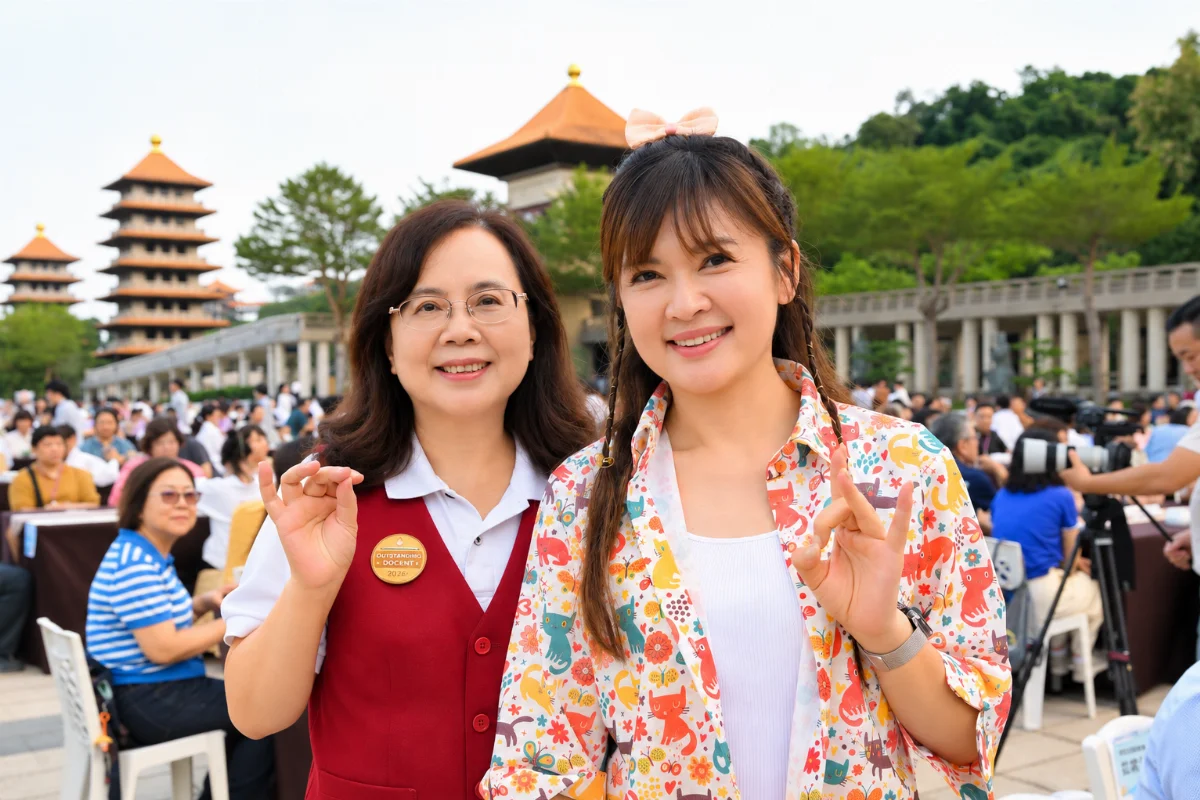
Wang Shu-li, a lay Buddhist and weather forecaster with EBC News, the news division of Eastern Broadcasting Company, was particularly impressed by the young tea servers' dedication and enthusiasm. She observed that learning tea service helps children develop concentration, courtesy, and communication skills. Older students can also guide their younger peers, creating opportunities to share knowledge and pass on their skills.
For Wang, whose professional life is often demanding, the meditation and tea appreciation sessions offered a welcome chance to slow down, clear her mind, and regain balance.
Seven students from Pumen Senior High School—He Kai-xiang, Hong Rui-yi, Hong Zi-jie, Liu Bing-you, Xu Xin-yang, Lin Shen-yi, and Lan Wen-you—also spoke about their involvement. They said the occasion had taught them patience and concentration while providing a refreshing change from their busy school routines. They looked forward to returning next year.
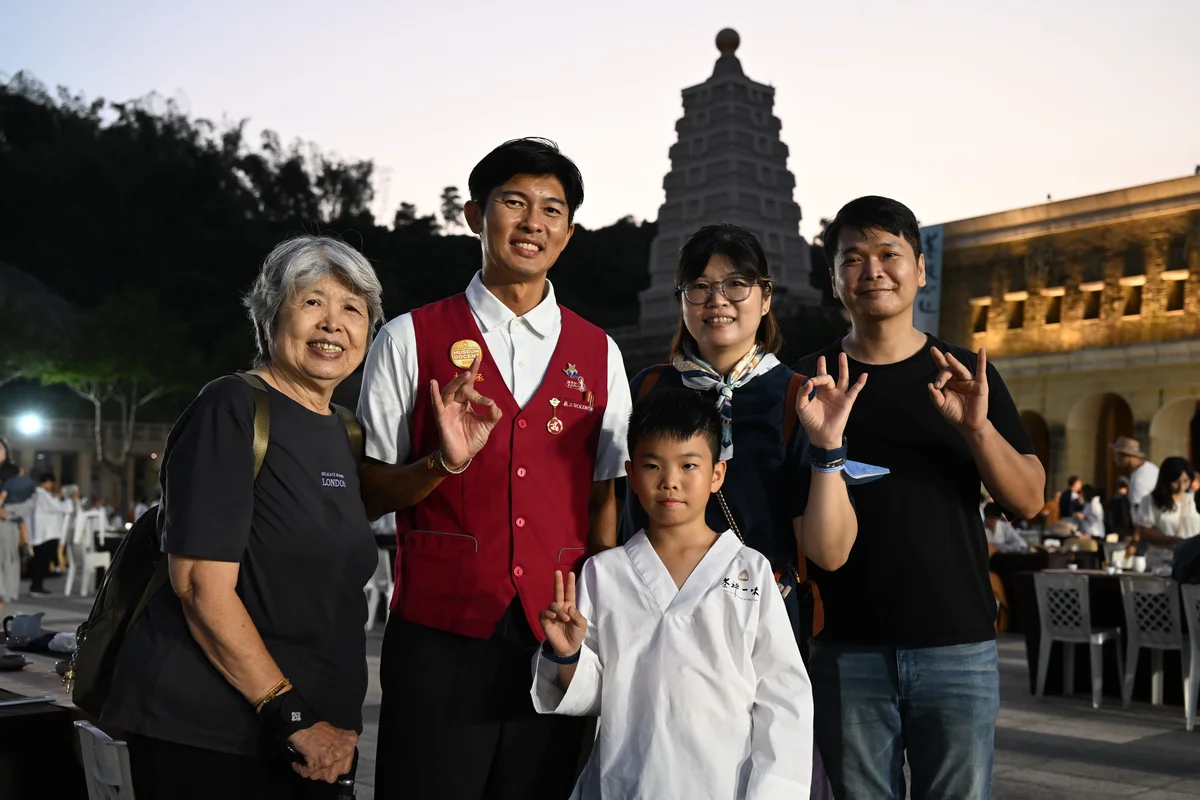
Huang Rui, a fourth-grade elementary school student, had been learning tea service for only two days before confidently taking on the role of a young tea server. He said he was not nervous when serving guests but paid special attention to the hot water and utensils to prevent accidents.
When asked about Fo Guang Shan's Three Acts of Goodness, Huang explained the values in his own simple way: serving tea is doing good deeds, praising others is speaking good words, and sincerely wishing others happiness is thinking good thoughts.
His uncle, Kurt Ko, who accompanied him, is a long-time volunteer with the Buddha Museum's International Affairs Department. With encouragement from his family and the opportunity to put the teachings into practice, Huang demonstrated how the Three Acts of Goodness can be passed on naturally through simple actions.
From Wang's observations on tea education and the students' reflections to young Huang's thoughtful interpretation of the Three Acts of Goodness, the event illustrated how traditional practices can nurture people of all ages. The tea table became a classroom for concentration, courtesy, and consideration for others, where values were learned through participation rather than words alone.
The Aesthetics of Tea and Reflections on Life
Beyond its educational value, the tea ceremony offered an opportunity to appreciate the finer details of traditional aesthetics and contemplate the nature of life.
Hong Cai-xiu, vice chairperson of the BLIA Branch at Fo Guang Shan’s Fushan Temple in Nantou, admired the color of the tea, as well as the shapes and arrangements of the teapots and cups. She felt that the thoughtful selection and arrangement of the utensils reflected the artistic sensibility of tea culture. Even the smallest details, she observed, can reveal the beauty of daily life.
Wang Hong-yu, a volunteer tutor at the Fo Guang Shan Pingtung Vihara, found inspiration in the changing nature of the tea ceremony. Watching tea gradually cool and seeing a gathering eventually come to an end reminded him that all things arise and change through causes and conditions. This led him to reflect on the Buddhist teaching of dependent origination and emptiness.
He also connected the occasion with the theme of "Awakening Bodhicitta." He explained that drinking tea and calming the mind can encourage people to observe their lives and reflect on their thoughts. Such awareness can inspire genuine concern for others and a wish to benefit all sentient beings. Through his volunteer work tutoring schoolchildren, Wang puts this spirit of altruism into practice.
Guqin musician Chu Yu-hsien shared his reflections on the relationship between traditional Chinese music and contemplative practice. He observed that modern people are often racing against time, while the unhurried nature of guqin music offers an opportunity to slow down and listen to their inner voices.
Playing the guqin, he explained, is an encounter with the present moment. Each note is fleeting, and only through complete concentration can one appreciate the subtle beauty of the music as it unfolds.
Chu also cited Cheng Yu-jian, a musician during the Song Dynasty, who described the practice of playing the qin as akin to Chan meditation: "Approach the qin as you would practice Chan." He further drew on the Diamond Sutra and its teaching, "Abide nowhere, and let the mind arise," to explain the meaning of non-attachment.
Whether playing music or enjoying tea, he said, there is no need to pursue a particular outcome or cling to sounds that have already faded or those yet to come. Even when external distractions arise, one can remain calm and aware.
Through the sounds of the guqin and the fragrance of tea, people can loosen their grip on the constant race against time and rediscover the natural rhythm of life.
From the beauty of tea utensils and Buddhist reflections on existence to the connection between traditional music and meditation, each speaker approached the subject from a different area of interest. Together, their insights revealed how tea culture can serve as a meeting point for aesthetics, philosophy, and spiritual practice.
A Gathering Around Tea: Building Good Connections
Liu Zhao-ming, vice president of the Chinese General Conference of the Buddha's Light International Association (BLIA), shared his view that both tea and Chan can become part of daily routines. Whether drinking tea, sharing a meal, or interacting with others, people can cultivate a sense of Chan through mindfulness and sincere attention.
He also spoke about the value of friendship and human connection, encouraging everyone to approach others with gratitude and compassion and to cherish the relationships formed through every encounter.
His message echoed Most Venerable Hsin Bau's teaching on forming wholesome connections. A Chan Tea gathering brings people from different backgrounds together, creating opportunities to share respect and goodwill through the simple exchange of serving and receiving tea. Every thoughtful gesture can become the beginning of a lasting connection.
As the event drew to a close, monastics, tea masters, and young tea servers took to the stage to commemorate the 100th birth anniversary of Venerable Master Hsing Yun and the 60th anniversary of Fo Guang Shan. Together, they sang songs based on the master's poetry, with people throughout the concourse joining in.
Their voices and the gentle melodies resonated across Bodhi Wisdom Concourse, bringing the occasion to a warm and moving conclusion. From the quiet exchanges around the tea tables to the collective singing of Venerable Master Hsing Yun's poetry, the celebration created cherished memories in honor of these two significant anniversaries.
People of different nationalities, faiths, and generations had come together over a simple cup of tea. Through the beauty of the ceremony, the meditative quality of traditional music, and moments of quiet reflection, each found a personal way to connect the experience with life beyond the museum.
The Buddha Museum brought the values of respect, gratitude, and sharing into focus through this special occasion. With every breath and every sip, visitors were invited to settle their minds and rediscover inner stillness. Chan thus became more than a contemplative practice; it emerged as a source of wisdom, balance, and grace that can accompany us through the rhythms of daily life.
As winter began, the Chan Tea gathering left behind a lasting impression of friendship, cultural understanding, and the quiet beauty of finding peace within a cup of tea.
評論(0)
目前沒有評論,歡迎分享您的看法。
登入會員後即可發表評論、回覆及讚。