


Fo Guang Shan Institute of Humanistic Buddhism
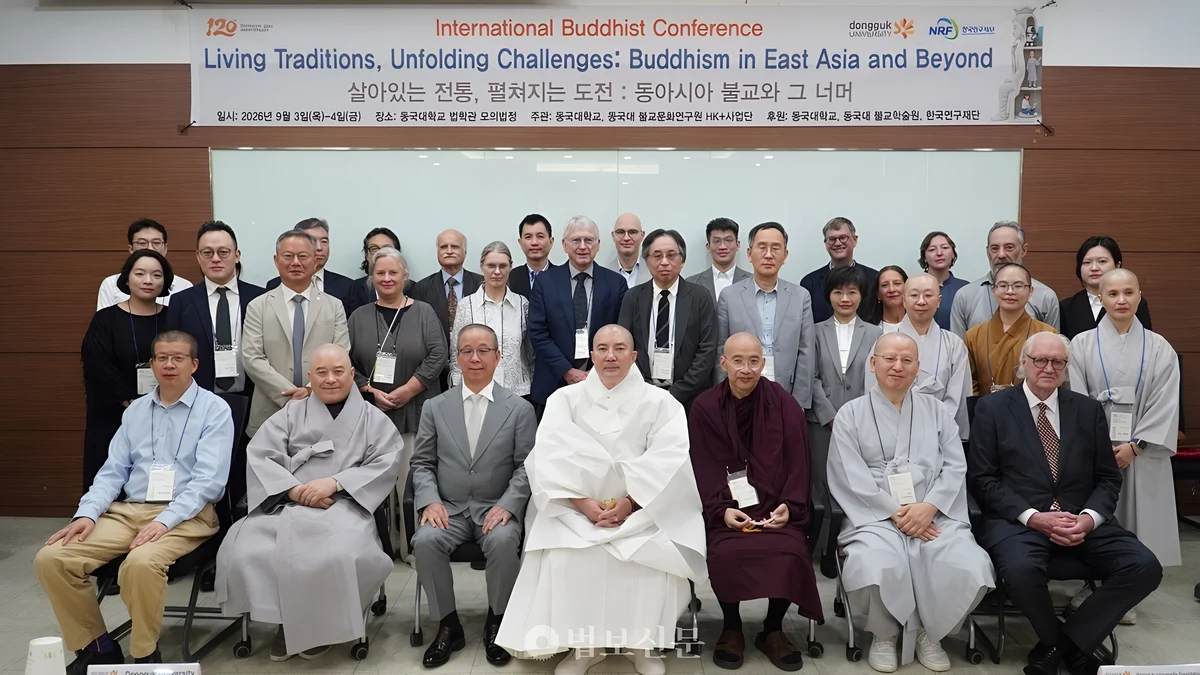
The International Buddhist Conference Celebrating Dongguk University’s 120th Anniversary was held in Seoul, South Korea, from September 3 to 4, 2026. Venerable Zhi Yue Shih, Specialist of the International Center at the Fo Guang Shan Institute of Humanistic Buddhism and Editor of the Fo Guang Dictionary of Buddhism (FGDB) English Translation Project, was invited to present and share the practical achievements of applying Artificial Intelligence to the FGDB English translation. Prof. Teng-Hsiang Chen, Adjunct Assistant Research Fellow of the Institute and Assistant Professor at Nanhua University, was also invited to present at the conference.
Themed “Living Traditions, Unfolding Challenges: Buddhism in East Asia and Beyond,” the conference brought together 22 scholars from South Korea, the United States, the United Kingdom, Austria, and Taiwan, among other regions. Yoon Jae-woong, President of Dongguk University, and Ven. Don-gwan, President of the School Corporation of Dongguk University, delivered welcoming and opening remarks at the ceremony.
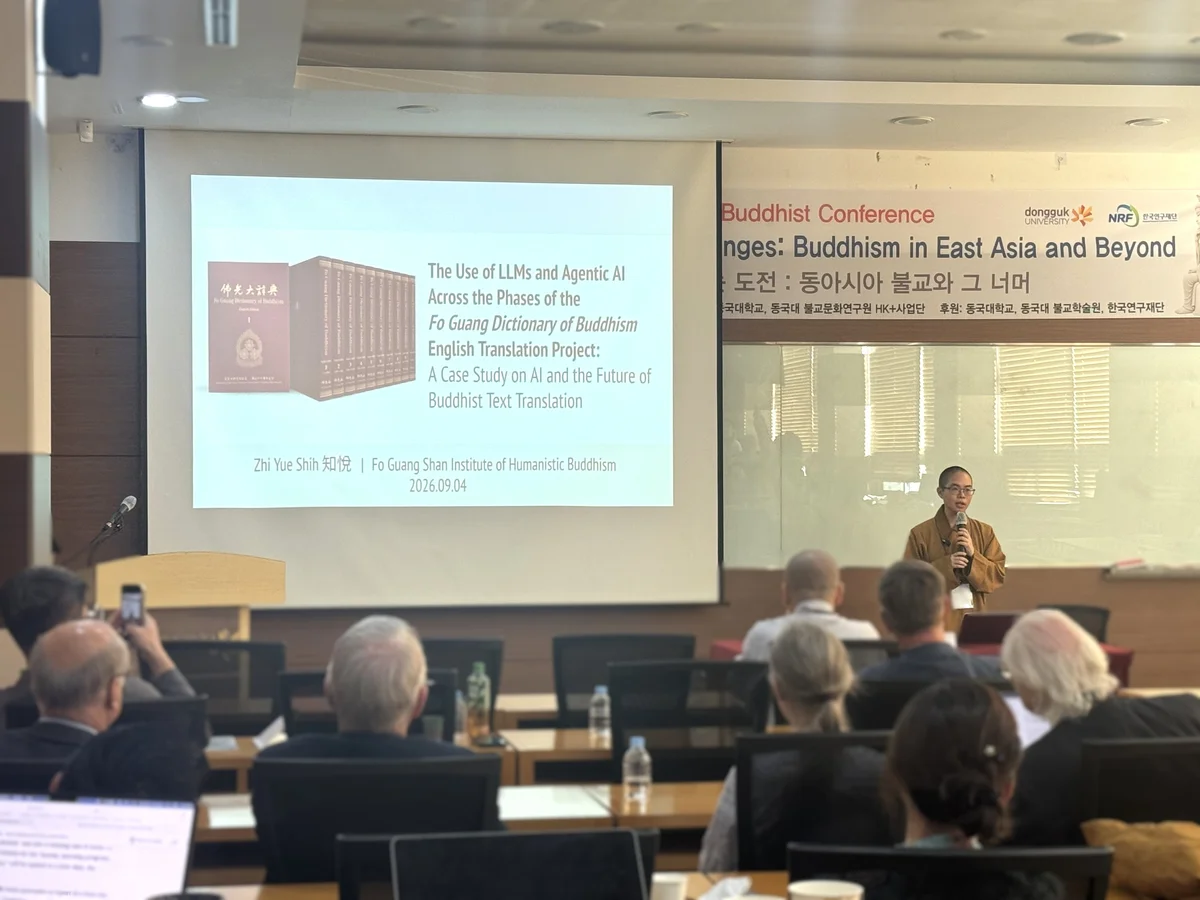
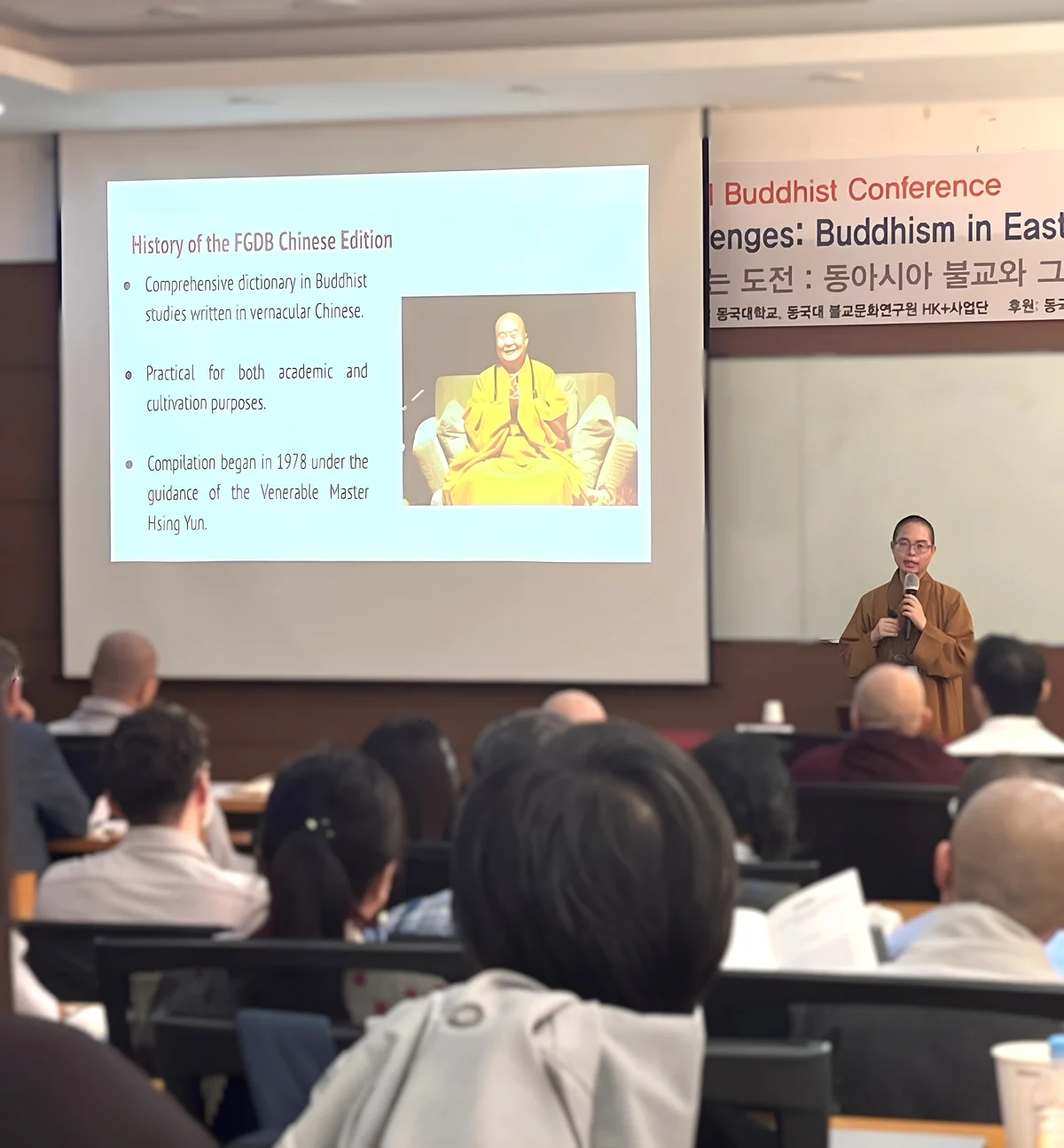
On September 4, during the “AI & Buddhist Studies” session, Ven. Zhi Yue delivered her presentation titled "The Use of LLMs and Agentic AI Across the Phases of the Fo Guang Dictionary of Buddhism English Translation Project: A Case Study on AI and the Future of Buddhist Text Translation." She shared the practical applications of Large Language Models (LLMs) and Agentic AI across various stages of Buddhist lexicographical translation and explored the impact of AI on the future of translating and researching Buddhist texts.
The FGDB English Translation Project was launched at the end of 2014. The English paper edition is currently in print and scheduled to be officially released in November 2026. Ven. Zhi Yue remarked that throughout this monumental translation undertaking, the team transitioned from early manual translation to utilizing generative AI to assist with initial drafts. They further developed custom translation tools through "vibe coding," allowing the system to evaluate translations across five key dimensions: accuracy, fluency, grammar, Buddhist terminology, and terminological consistency. Furthermore, they utilized Agentic AI to directly annotate PDF files to assist with proofreading and formatting.
As AI integrates into the translation workflow, its role has shifted from “translation production” to "translation evaluation and management." However, when dealing with complex Buddhist doctrines, context, and specialized terminology, the project still relies heavily on human translators and editors for further research and verification. In the next stage, the team plans to utilize existing FGDB translations to continue training FoGuangAI, a domain-specific model for Buddhism, to serve as an auxiliary tool for future Buddhist text translation and research.
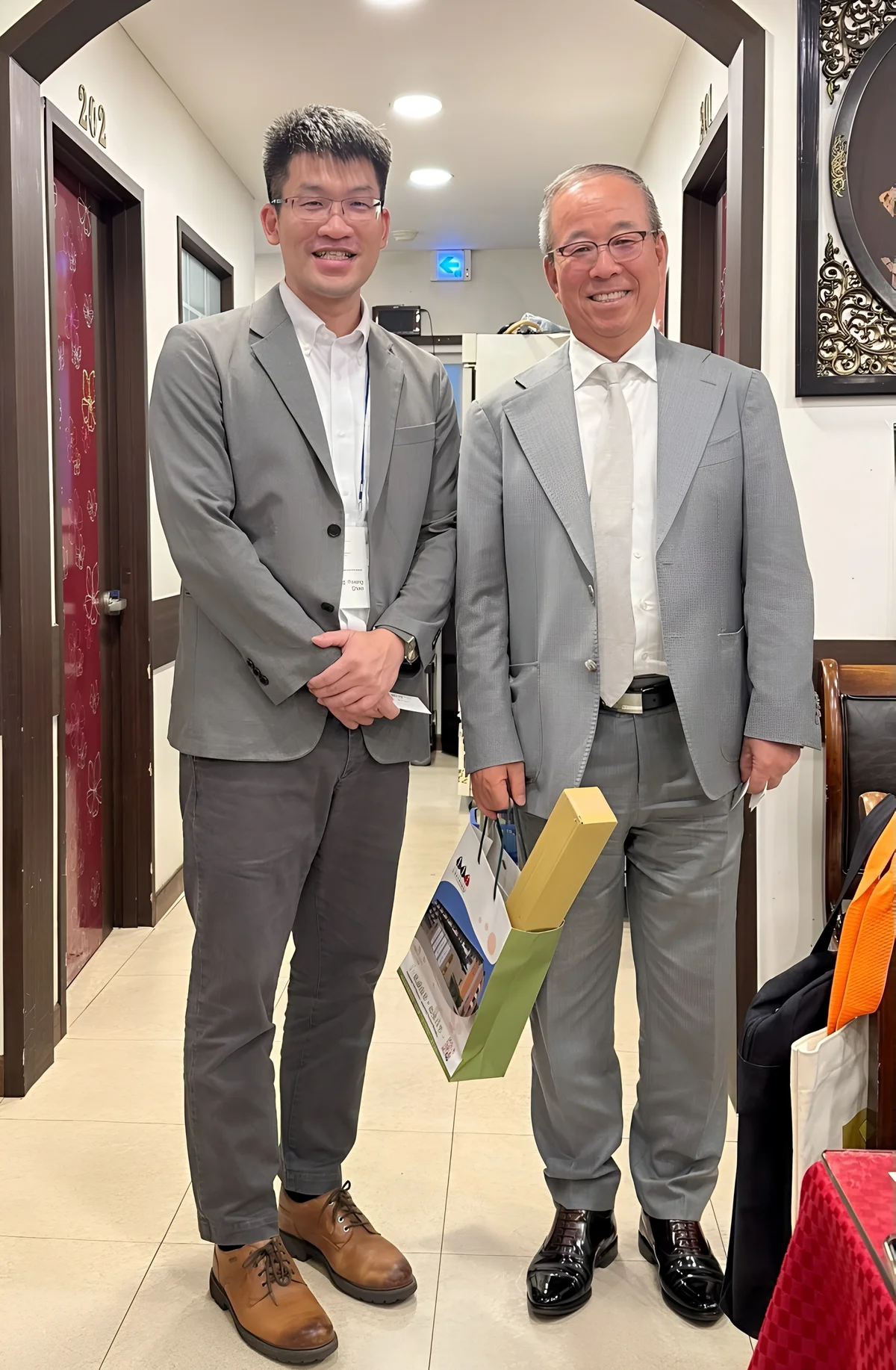
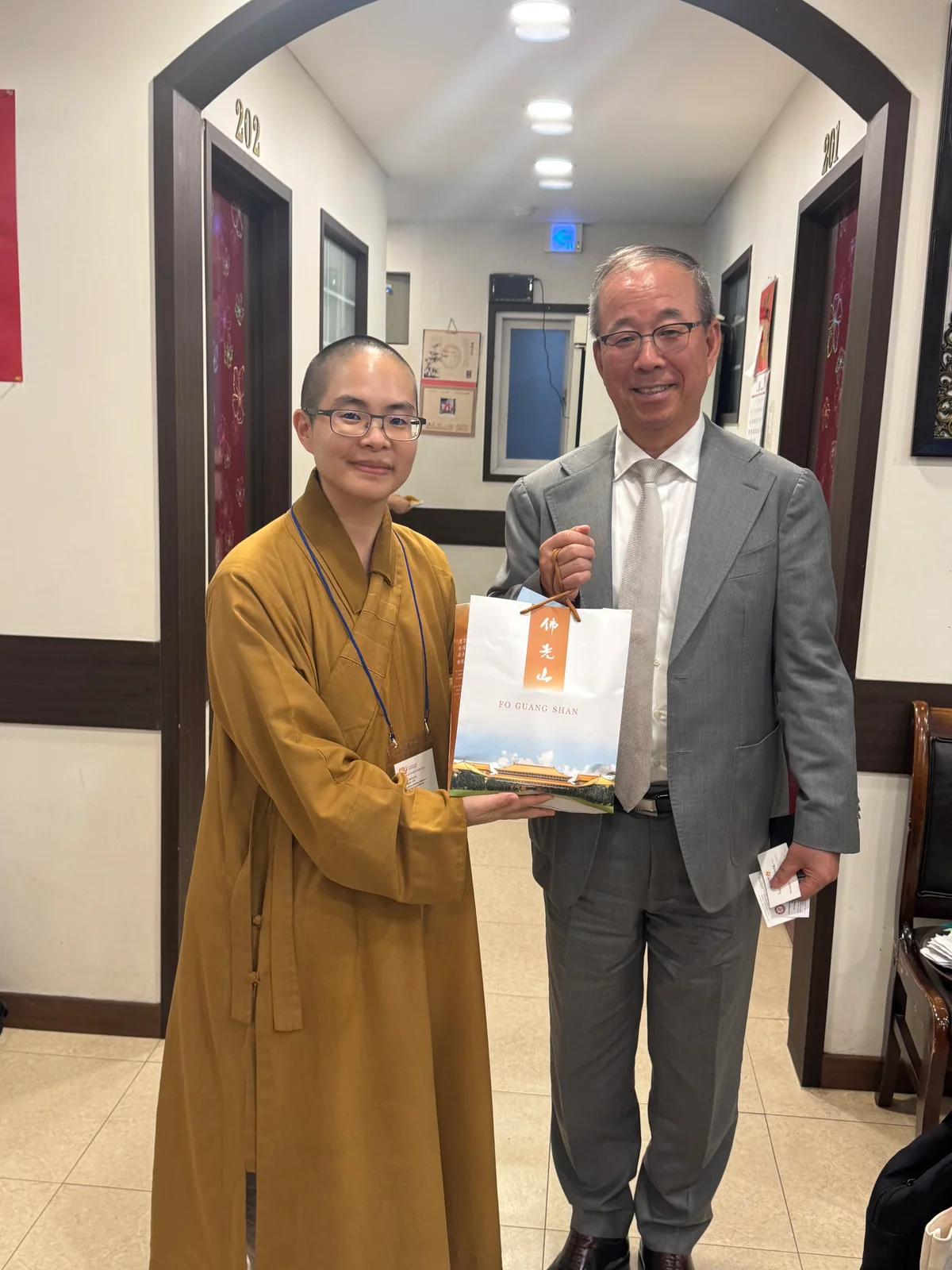
During the conference, Ven. Zhi Yue also engaged in academic exchanges with scholars from various universities. Prof. Mark L. Blum of the University of California, Berkeley, who serves as one of the academic advisors for the FGDB English Translation Project, expressed his willingness to help facilitate an FGDB gifting ceremony and academic exchanges at UC Berkeley. Prof. Paul Harrison of Stanford University expressed hope for his university to acquire the Chinese "Expanded and Revised Edition" of the Fo Guang Dictionary of Buddhism (as they currently only house the older version) and tentatively proposed hosting a gifting ceremony in the spring of 2027. Ven. Zhi Yue also engaged in in-depth exchanges with Prof. Juhn Ahn of the University of Michigan, who participated in the compilation of The Princeton Dictionary of Buddhism. At the welcoming banquet, Ven. Zhi Yue, on behalf of the Institute, presented the Studies on Humanistic Buddhism book series to Dongguk University President Yoon Jae-woong, and invited the attending scholars to visit Fo Guang Shan and its overseas propagation centers for further academic and cultural exchanges.
Prof. Teng-Hsiang Chen presented on the topic "The Mobilization of Compassion: Fo Guang Shan's Transnational Philanthropy in Europe." Grounded in Venerable Master Hsing Yun's philosophy of benefiting society through charity and the history of Fo Guang Shan's propagation in Europe, he analyzed how Fo Guang Shan mobilizes compassion through transnational and interreligious networks, as well as its interactions with immigrant communities and local societies. Prof. Chen currently leads the Institute's project on writing the "History of Fo Guang Shan's Dharma Propagation in Europe," and his relevant research findings were preliminarily presented at the "International Academic Conference Commemorating the Centennial of Venerable Master Hsing Yun's Birth" held at the end of August.
The participation in this conference not only shared the practical achievements of Buddhist digital humanities and AI-assisted English translation but also further facilitated the international collection of the Fo Guang Dictionary of Buddhism and academic exchanges, expanding the connection between Humanistic Buddhism and the international academic community.
評論(0)
目前沒有評論,歡迎分享您的看法。
登入會員後即可發表評論、回覆及讚。