


【Reported by FGSIHB in Taipei】
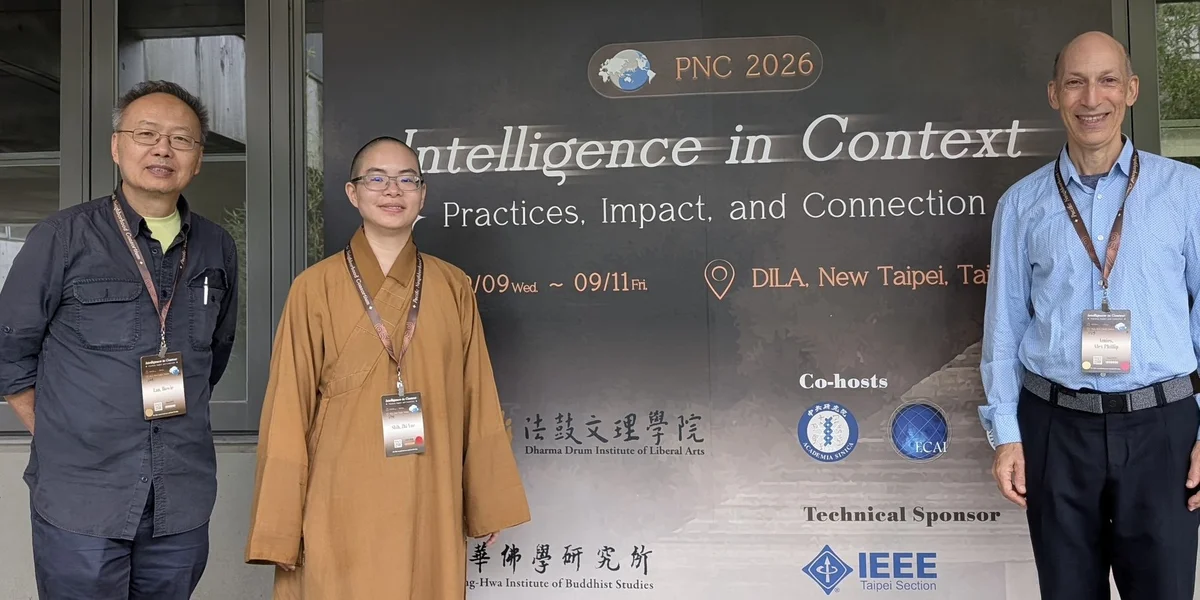
The 2026 Annual Conference and Joint Meetings of the Pacific Neighborhood Consortium (PNC) were held from September 9 to 11 at Dharma Drum Institute of Liberal Arts (DILA) in Jinshan, New Taipei City, marking the conference’s return to Taiwan after nearly nine years. The three-day event brought together more than 100 scholars from Taiwan, South Korea, Japan, the United States, the United Kingdom, Germany, Canada, the Netherlands, Vietnam, Hong Kong, Macao, Malaysia, and Indonesia.
Under the theme “Intelligence in Context: Practices, Impact, and Connection,” PNC 2026 continued the consortium’s longstanding engagement with technology and society. Through exchanges across countries, disciplines, and generations, the conference explored new possibilities for knowledge sharing and interdisciplinary collaboration in the age of artificial intelligence.
Academician Shin-Kun Peng, Chair of PNC and Vice President of Academia Sinica, noted at the opening ceremony that as AI increasingly participates in the collection, analysis, and even generation of knowledge, ensuring that technology genuinely serves people, research, and society has become a critical issue of our time.
In response to the conference’s focus on digital humanities and AI, PNC 2026 featured 124 research papers, 18 academic posters, and four workshops organized by the Electronic Cultural Atlas Initiative (ECAI).
On the morning of September 11, a Digital Humanities session chaired by Howie Lan, Technical Lead of ECAI at the University of California, Berkeley, featured presentations focusing on the digitization of Buddhist texts, database development, and multilingual research tools, highlighting diverse approaches to integrating digital technologies with Buddhist textual studies.
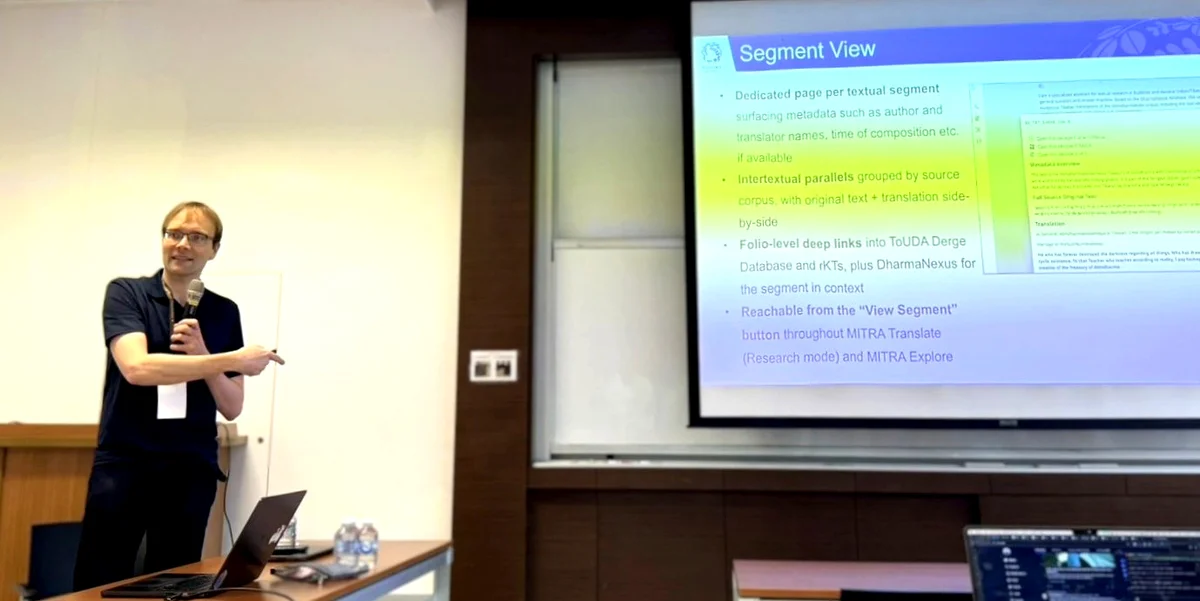
Sebastian Nehrdich, Distinguished Assistant Professor at the Center for Integrated Japanese Studies, Tohoku University, introduced the latest development of Dharmamitra: MITRA Dictionaries, a multilingual resource for Buddhist studies. The database currently contains approximately 17 million entries and enables researchers to examine lexical correspondences among Chinese, Sanskrit, Tibetan, and other languages alongside examples drawn from textual sources, providing a valuable digital tool for cross-linguistic Buddhist studies.
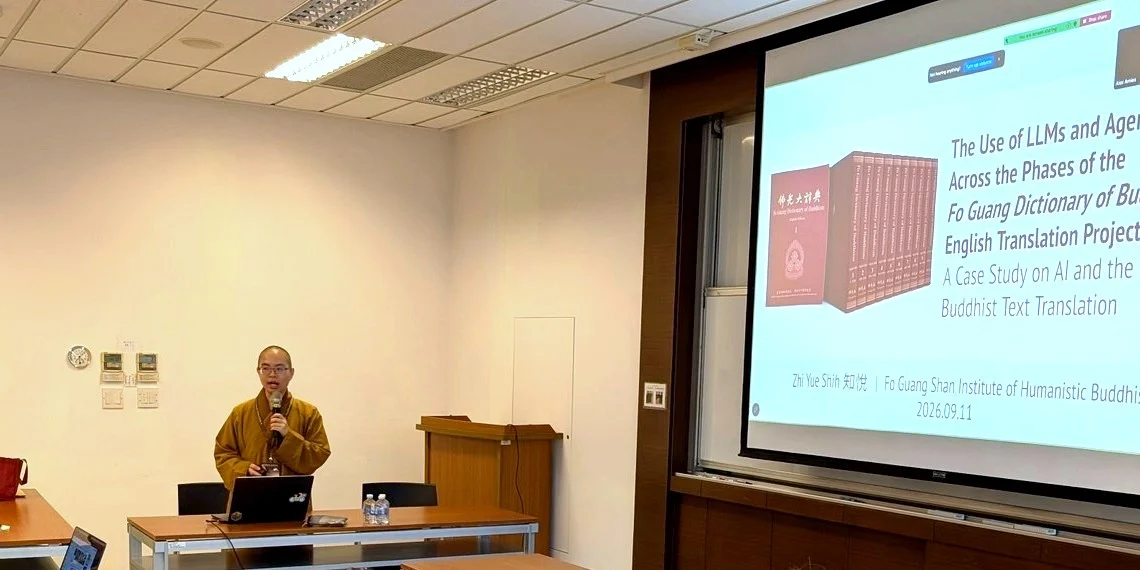
Venerable Zhi Yue, International Liaison at the Fo Guang Shan Institute of Humanistic Buddhism and an editor of the Fo Guang Dictionary of Buddhism English Translation Project, presented the dictionary’s English translation project, its application of AI technologies, and the development of FoGuangAI.
First published in Chinese in 1988, the Fo Guang Dictionary of Buddhism began its English translation project in late 2014. Following more than a decade of sustained scholarly collaboration, the English edition was published in 2026. Professor Lewis Lancaster, Senior Advisor to the translation project, is also a co-founder of PNC and the founding director of ECAI, and has long contributed to international collaboration at the intersection of Buddhist studies and digital humanities.
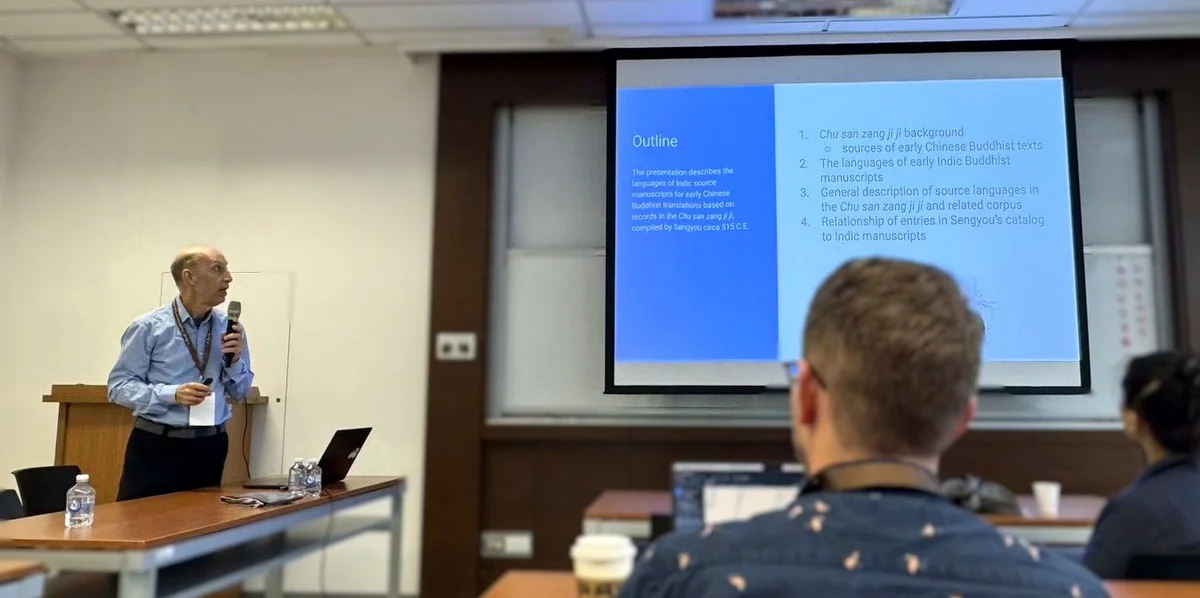
Alex Amies, Adjunct Professor at the University of the West, presented “Indian Language Source Manuscripts for Early Chinese Buddhist Translations in the Chu Sanzang Jiji,” examining the relationship between early Chinese Buddhist translations and Indic-language textual materials, as well as the possibilities offered by digital approaches to textual research.
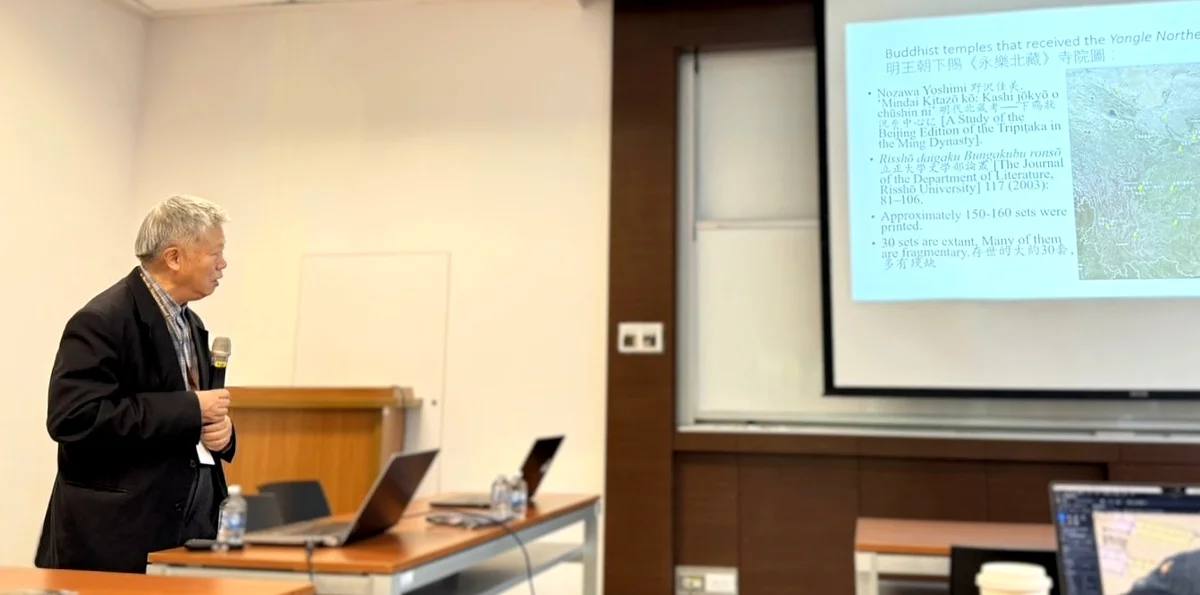
Darui Long, Professor Emeritus of Religious Studies at University of the West, focused his presentation on the Yongle Buddhist Canon, examining the canon, its editions, and related textual materials from the perspective of Buddhist textual studies.
From multilingual Buddhist dictionaries and research on early Chinese Buddhist translations and Buddhist canons to the Fo Guang Dictionary of Buddhism English Translation Project and the application of AI, the session demonstrated how digital tools are opening new possibilities for Buddhist textual scholarship, cross-linguistic research, and the dissemination of Buddhist knowledge.
Through its participation in this international forum on digital humanities, the Fo Guang Shan Institute of Humanistic Buddhism shared its experience in the digitization and international dissemination of Buddhist knowledge, particularly through the English translation of the Fo Guang Dictionary of Buddhism English Translation Project and the development of FoGuangAI. The Institute will continue to expand dialogue and collaboration between Humanistic Buddhism studies and the international academic community.
PNC 2026 was jointly organized by the Pacific Neighborhood Consortium at Academia Sinica and Dharma Drum Institute of Liberal Arts, with the Ministry of Education and the Electronic Cultural Atlas Initiative serving as co-organizers. The conference was jointly sponsored by the Chung-Hwa Institute of Buddhist Studies, the Chinese Buddhist Electronic Text Association (CBETA), and the Taiwan Association for Digital Humanities, with technical support from the IEEE Taipei Section and the Institute of Electrical and Electronics Engineers (IEEE).
評論(0)
目前沒有評論,歡迎分享您的看法。
登入會員後即可發表評論、回覆及讚。