


By Jeanne H. Tuan
Photos by Chao Chi-Chao
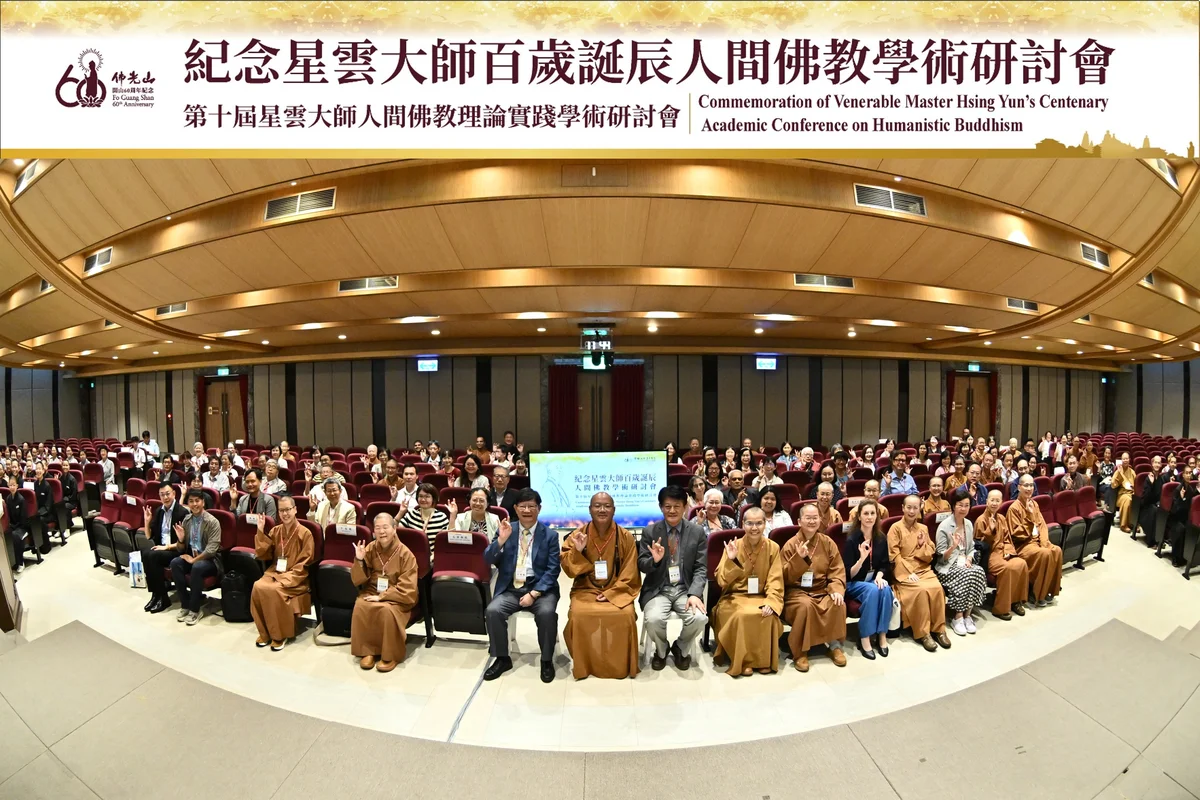
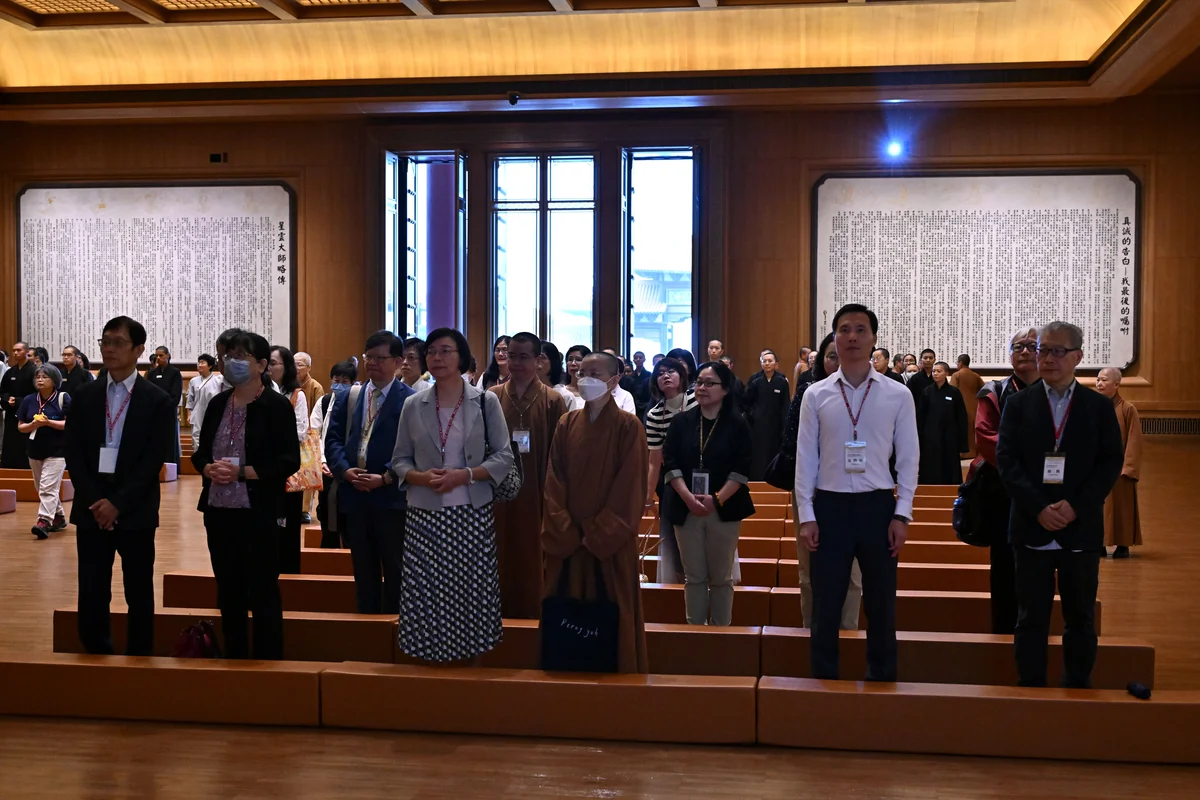
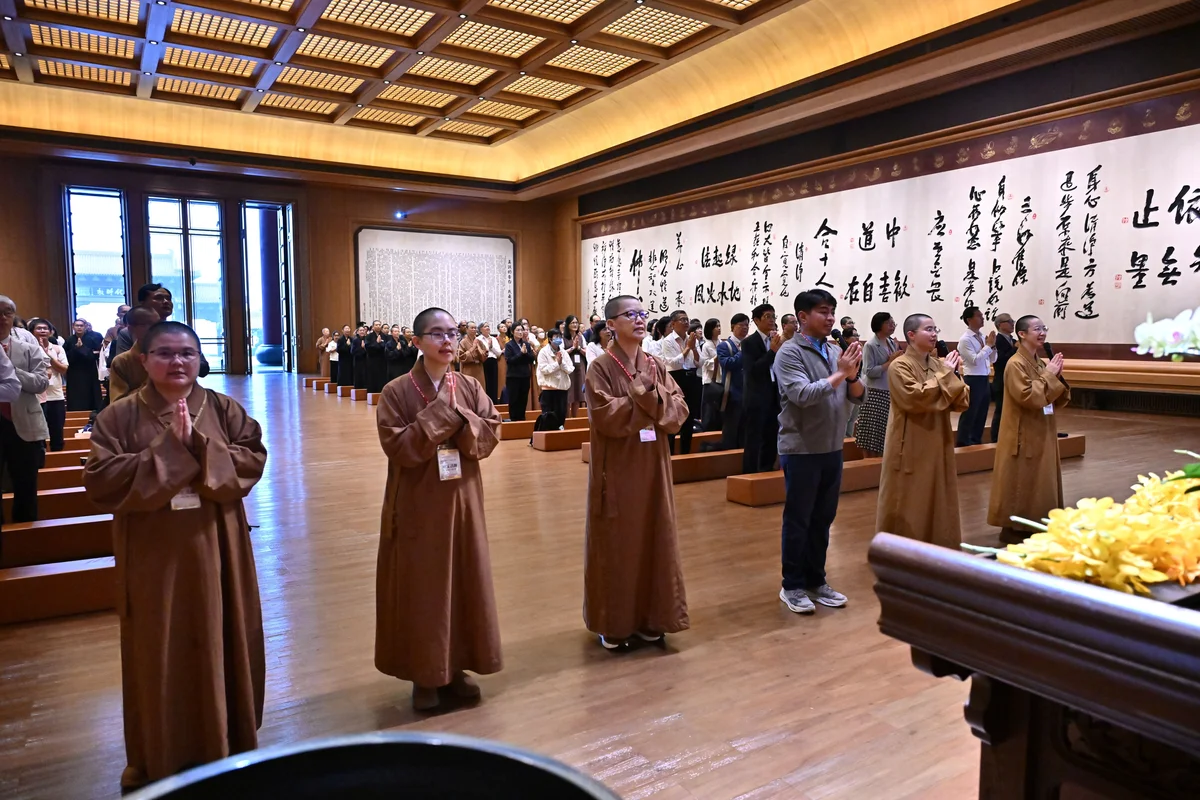
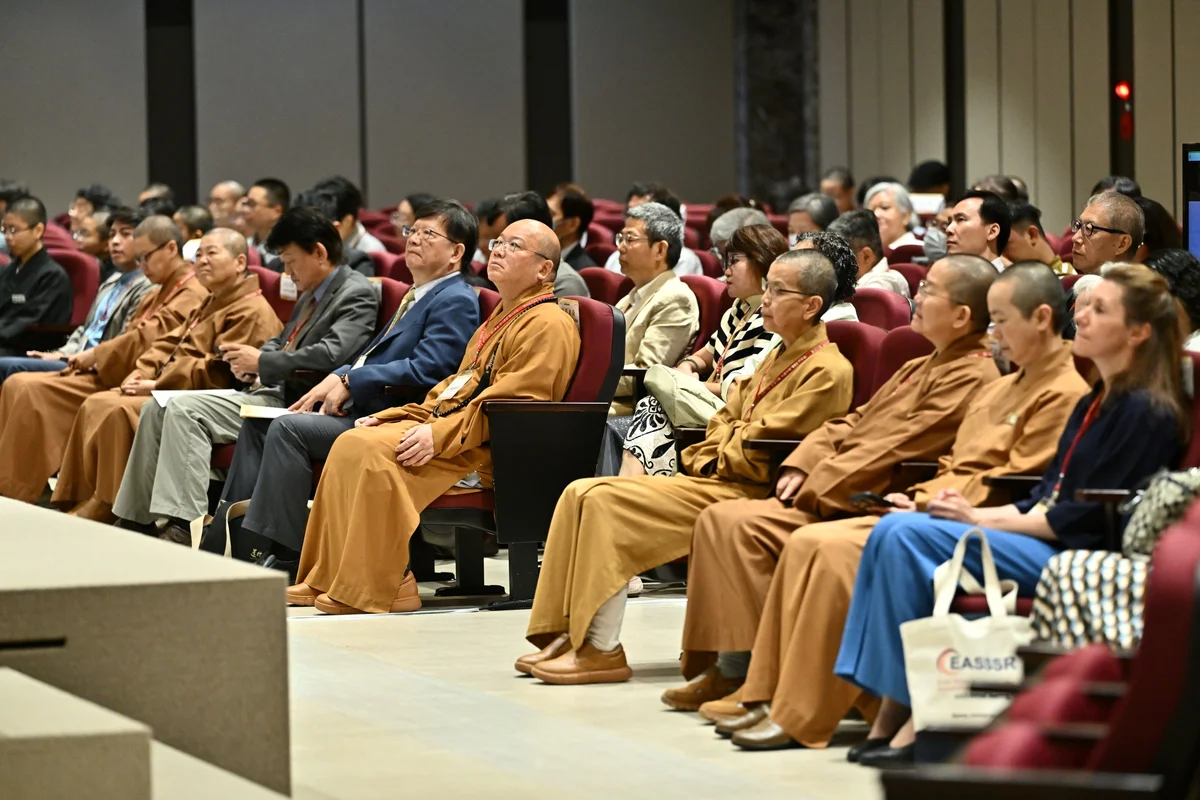
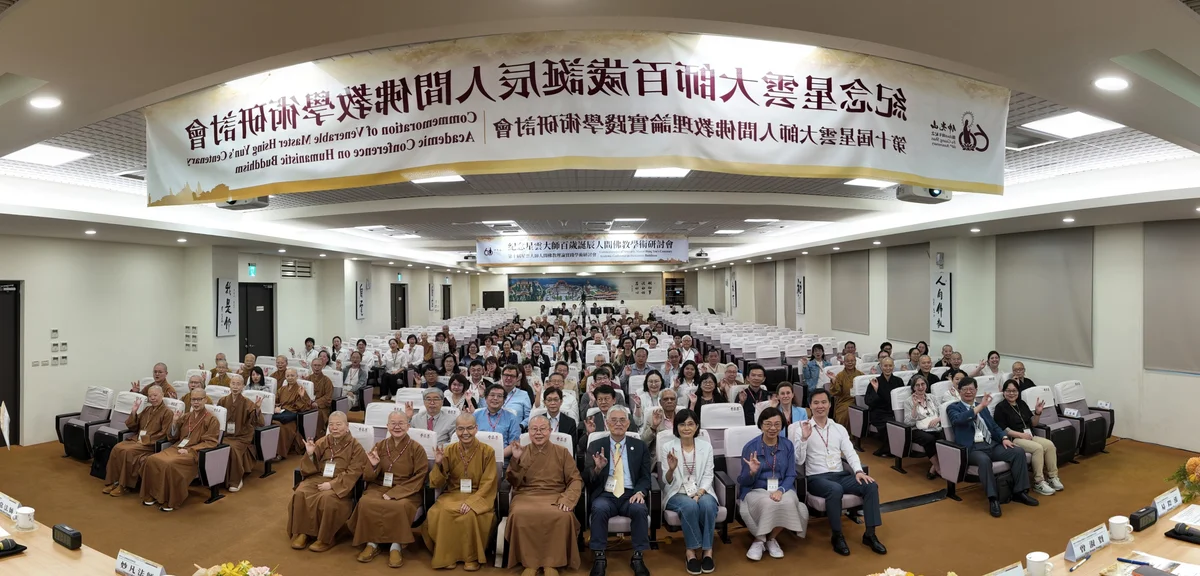
The Commemoration of Venerable Master Hsing Yun’s Centenary Academic Conference on Humanistic Buddhism, jointly organized by the Fo Guang Shan Institute of Humanistic Buddhism and 14 research centers in Taiwan and abroad, is being held in conjunction with the 10th Academic Conference on the Theory and Practice of Venerable Master Hsing Yun’s Humanistic Buddhism.
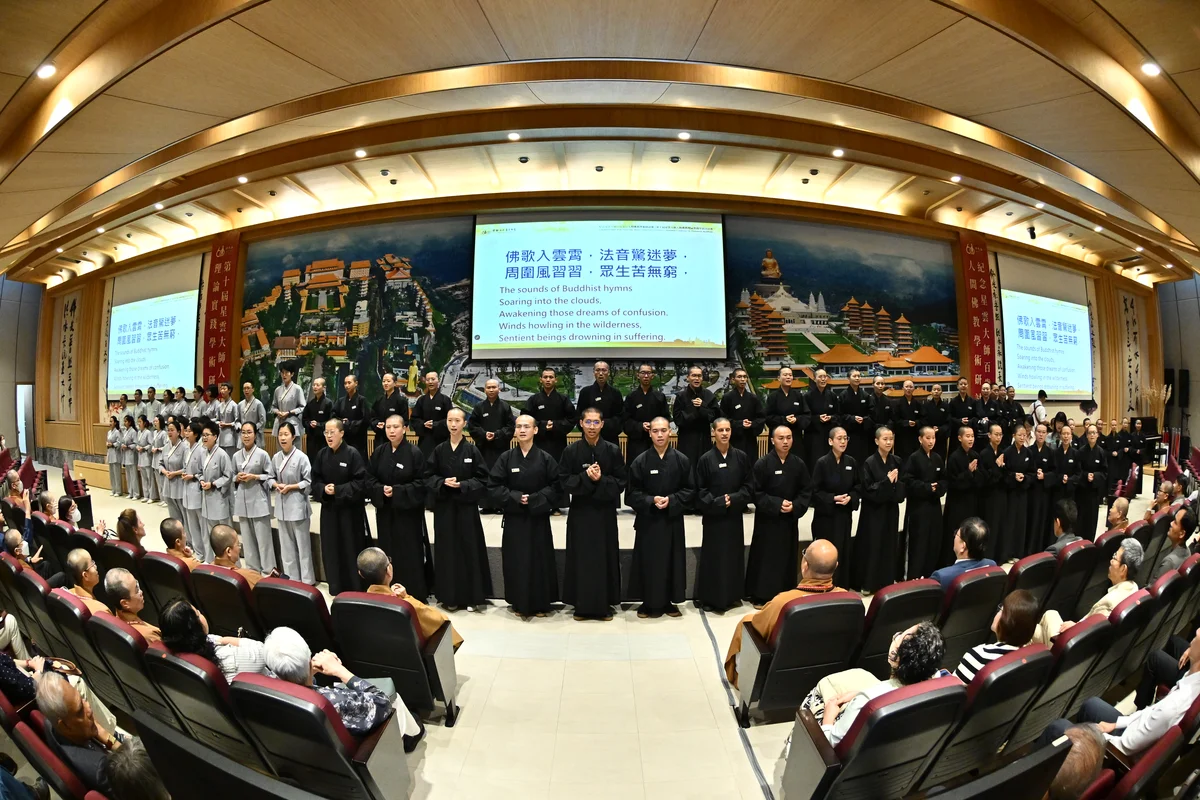
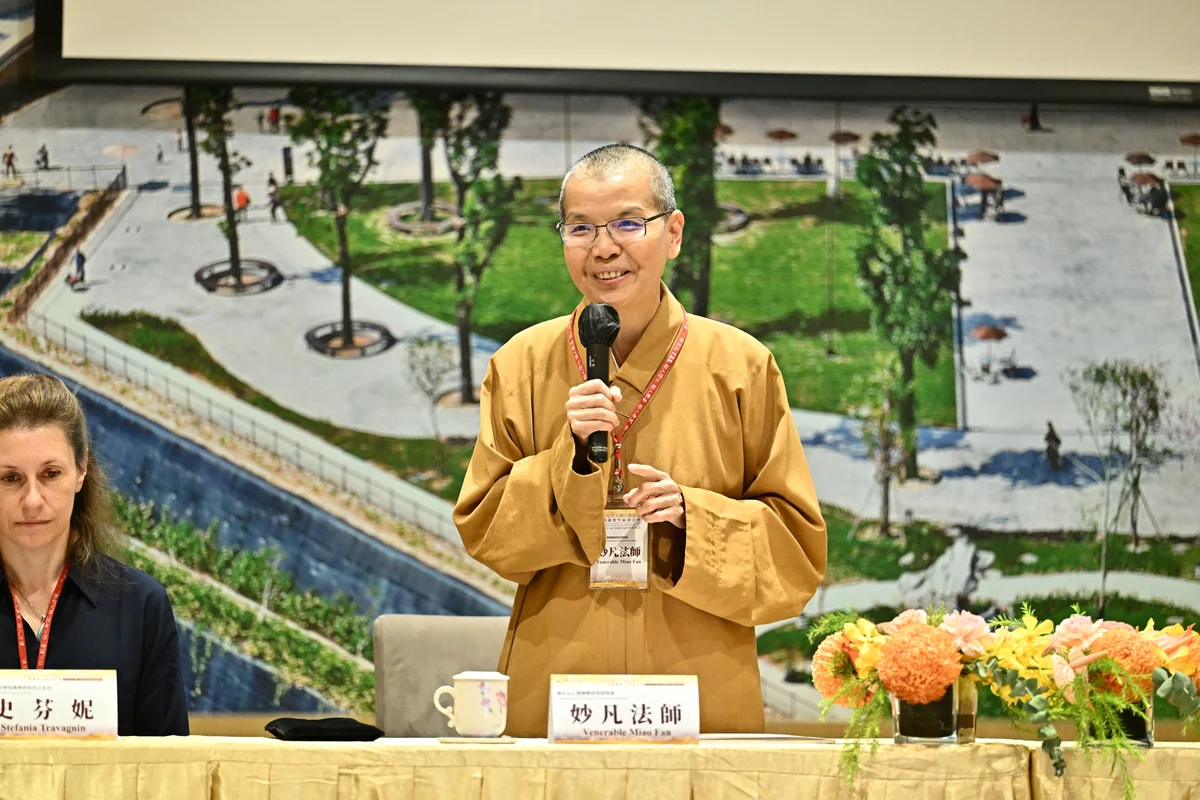
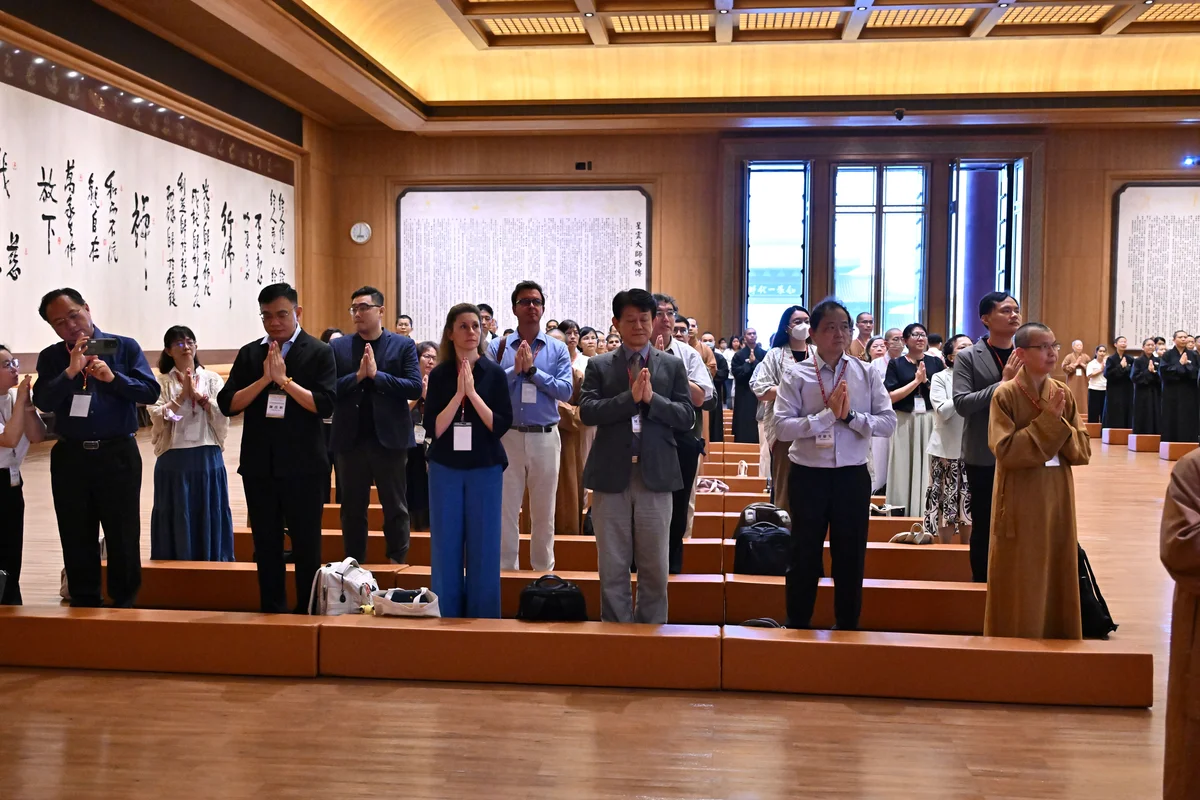
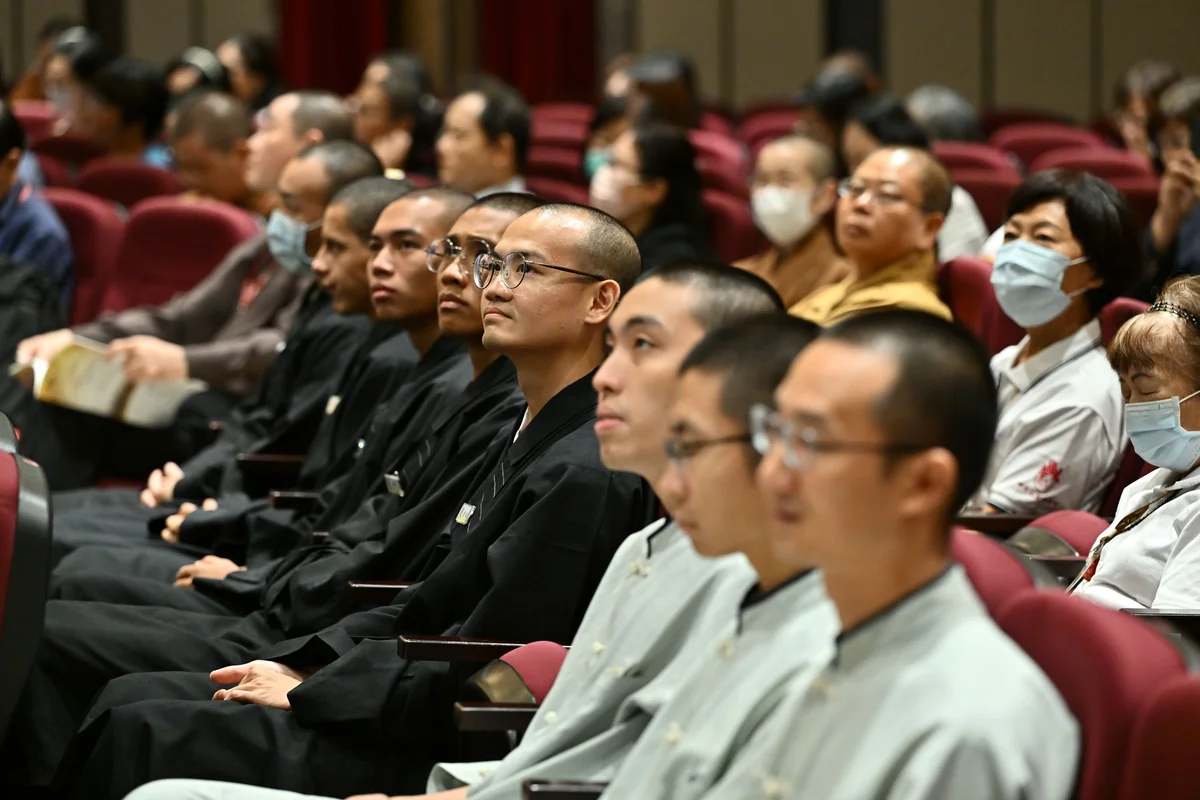
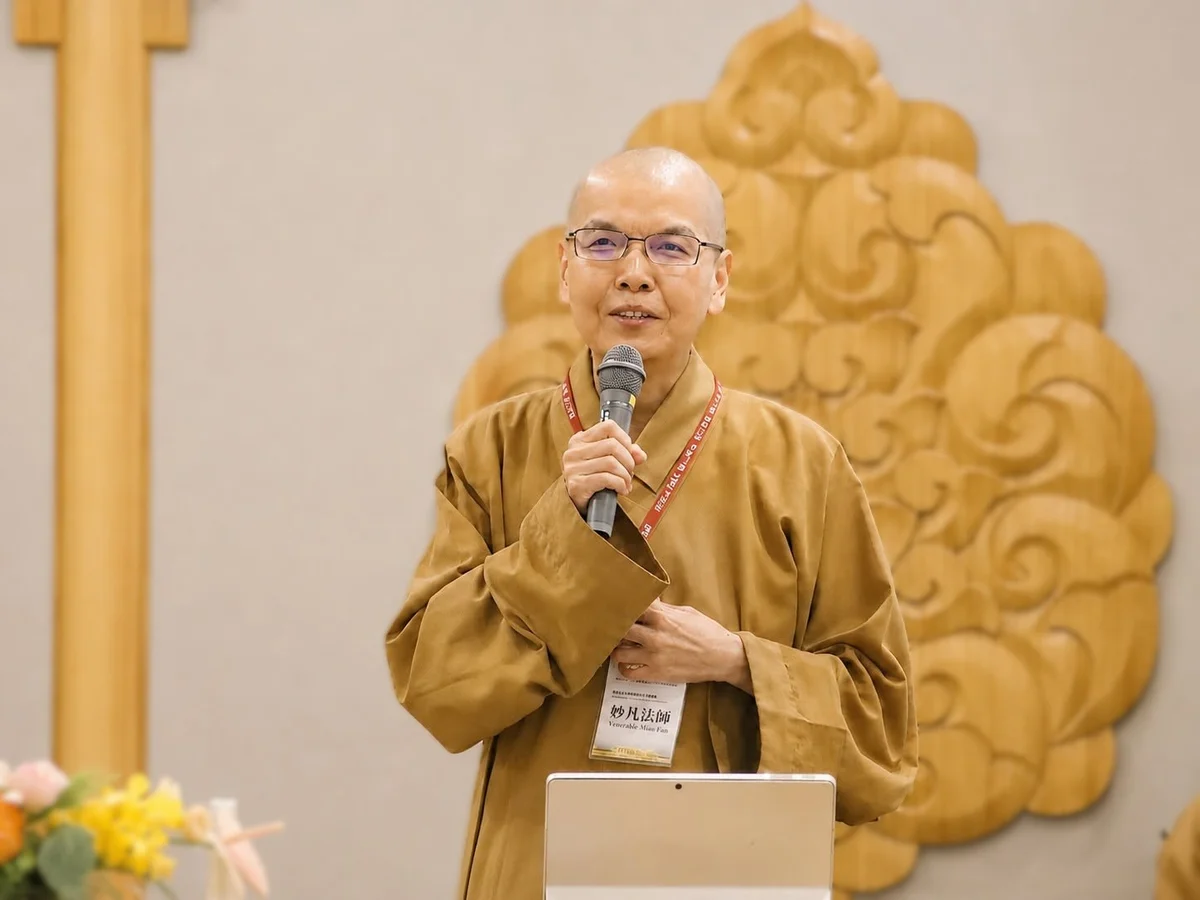
The conference officially opened on August 21 at the Dharma Gem Hall of the FGS Sutra Repository. Venerable Miao Fan, Chancellor of the FGS Institute of Humanistic Buddhism, began by introducing the origins and objectives of the conference. She noted that both the “10th” conference and the Master’s “centenary” carry the symbolism of fulfillment and completion. With favorable conditions coming together, this year’s conference has returned to Fo Guang Shan in Taiwan, centering on the theme of the global history of Fo Guang Shan’s Dharma propagation and bearing witness to the international development and achievements of Humanistic Buddhism.
The opening program continued with a video teaching by Venerable Master Hsing Yun, founding Master of Fo Guang Shan, titled “What Is Humanistic Buddhism?” In the talk, the Master emphasized that Humanistic Buddhism is concerned not only with one’s own well-being, but also with benefiting society at large, and that Buddhist practice involves awakening oneself while helping others awaken. His teaching highlighted the universal values that have enabled Buddhism to spread throughout the world.
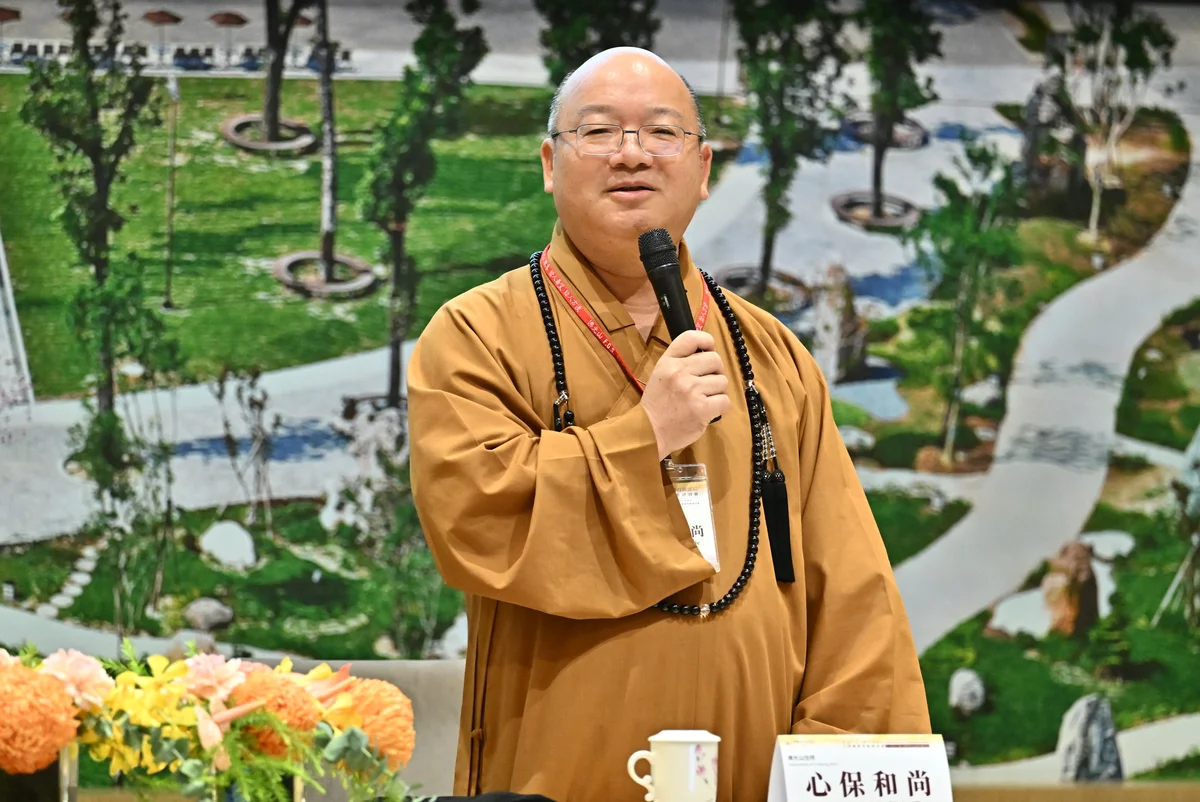
Most Venerable Hsin Bau, Head Abbot of Fo Guang Shan, delivered welcoming remarks on behalf of the organizers. Recalling his own assignment to serve at Hsi Lai Temple in 1990, he described how he personally witnessed Venerable Master Hsing Yun lead temples and communities around the world forward step by step, with an unwavering spirit of never giving up, bringing the Dharma to all five continents. He stressed that Buddhism is fundamentally about practice: by guiding one’s actions, speech, and thoughts with right understanding, the Dharma can naturally be shared with others.
Speaking on behalf of the participating scholars, Professor Jui-Teng Lee of National Central University observed that, in addition to tracing the Master’s “footsteps,” scholars must also study his “written traces” in order to gain a fuller understanding of his Dharma propagation. Taking Venerable Master Hsing Yun’s early years in Taiwan as an example, Professor Lee noted that every place the Master traveled to and stayed in enabled him to develop a profound understanding of Taiwanese society and the hardships of the times. As scholars and disciples, he said, there is a responsibility to examine each stage of the Master’s life and, through a wide range of documentary sources, reconstruct the full course of his Dharma propagation.
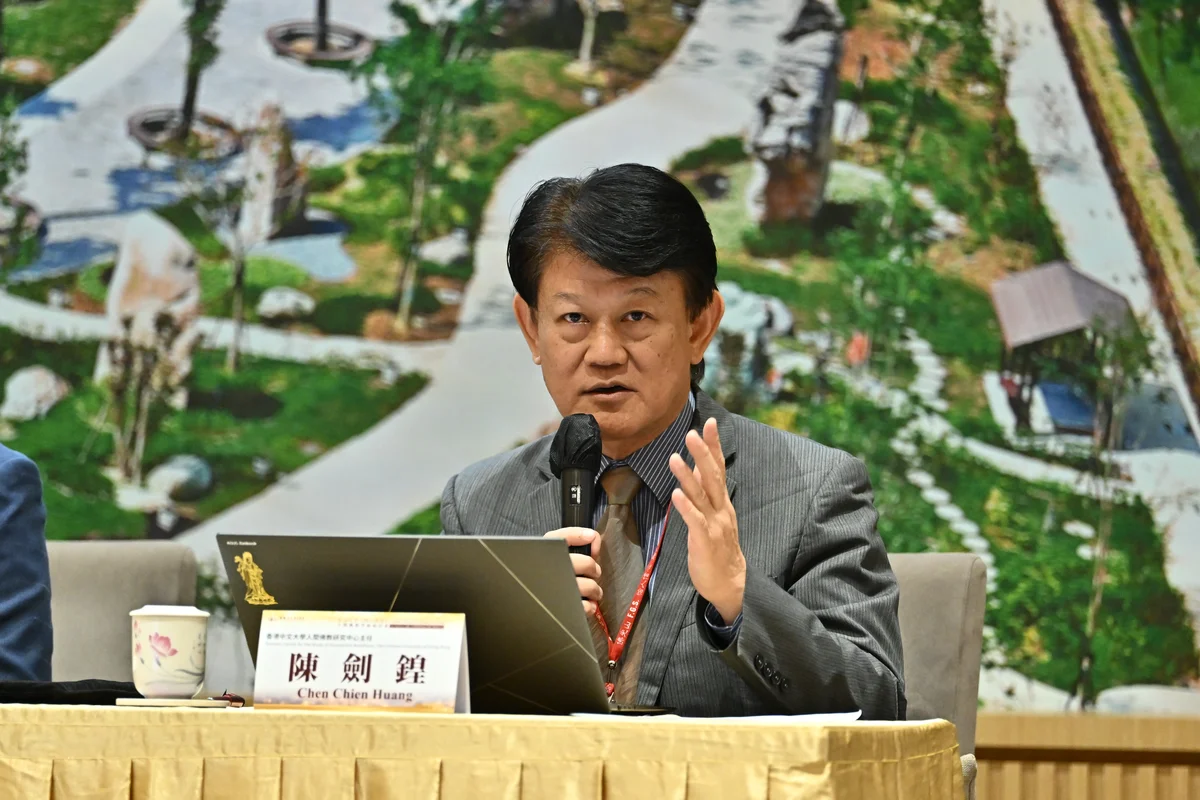
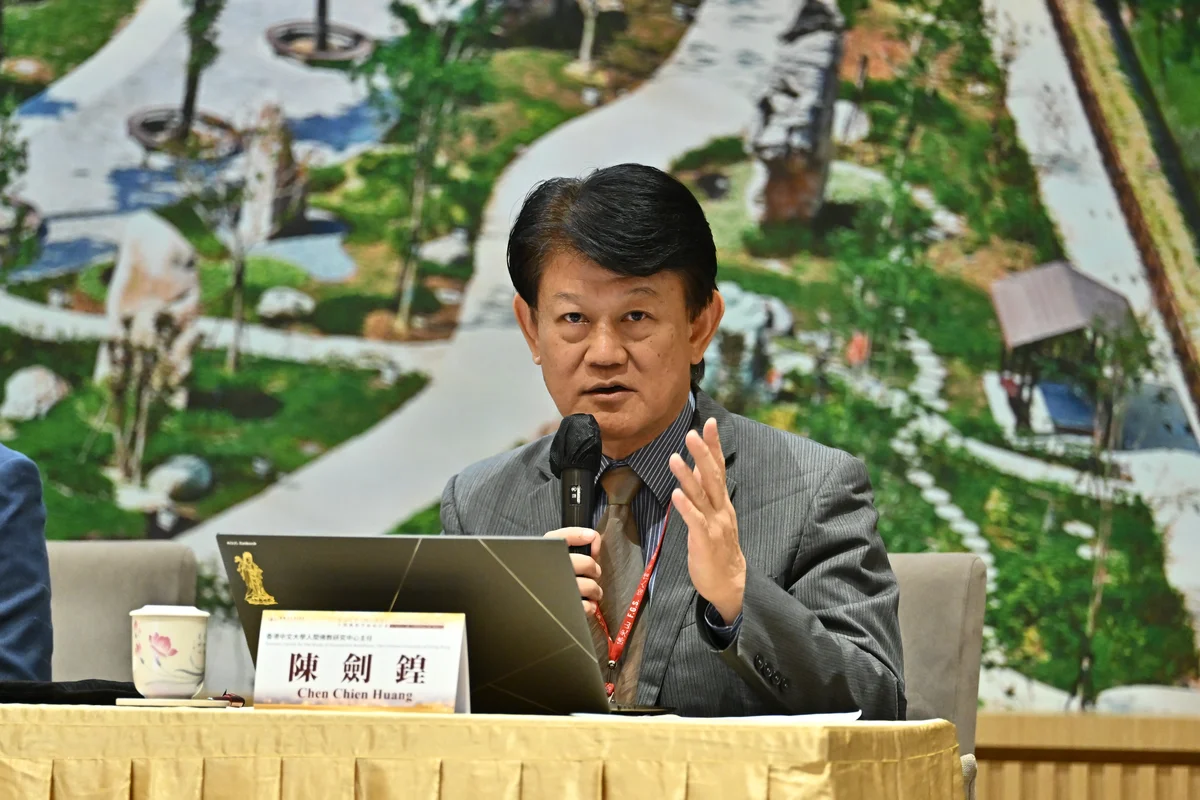
Professor Chien-Huang Chen of the Chinese University of Hong Kong stated that Venerable Master Hsing Yun was the first to bring Chinese Buddhism from a relatively marginal position in the international Buddhist landscape to a presence across all five continents. He summarized the Master’s achievements in three areas: establishing temples and institutions around the world, setting an exemplary model for monastic organization, and integrating tradition with modernity. Through the power of his vows, the Master brought together affinities across the globe; through compassion, he brought the Dharma to people of different countries and ethnic backgrounds.
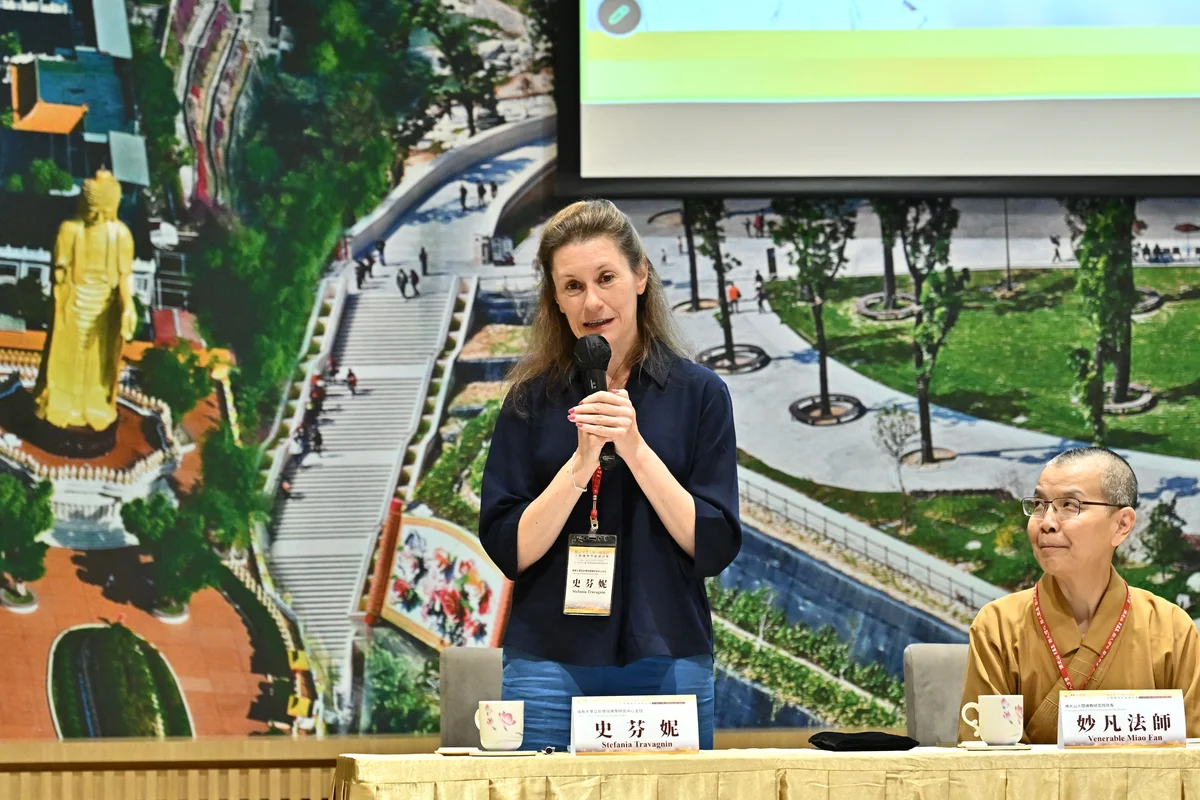
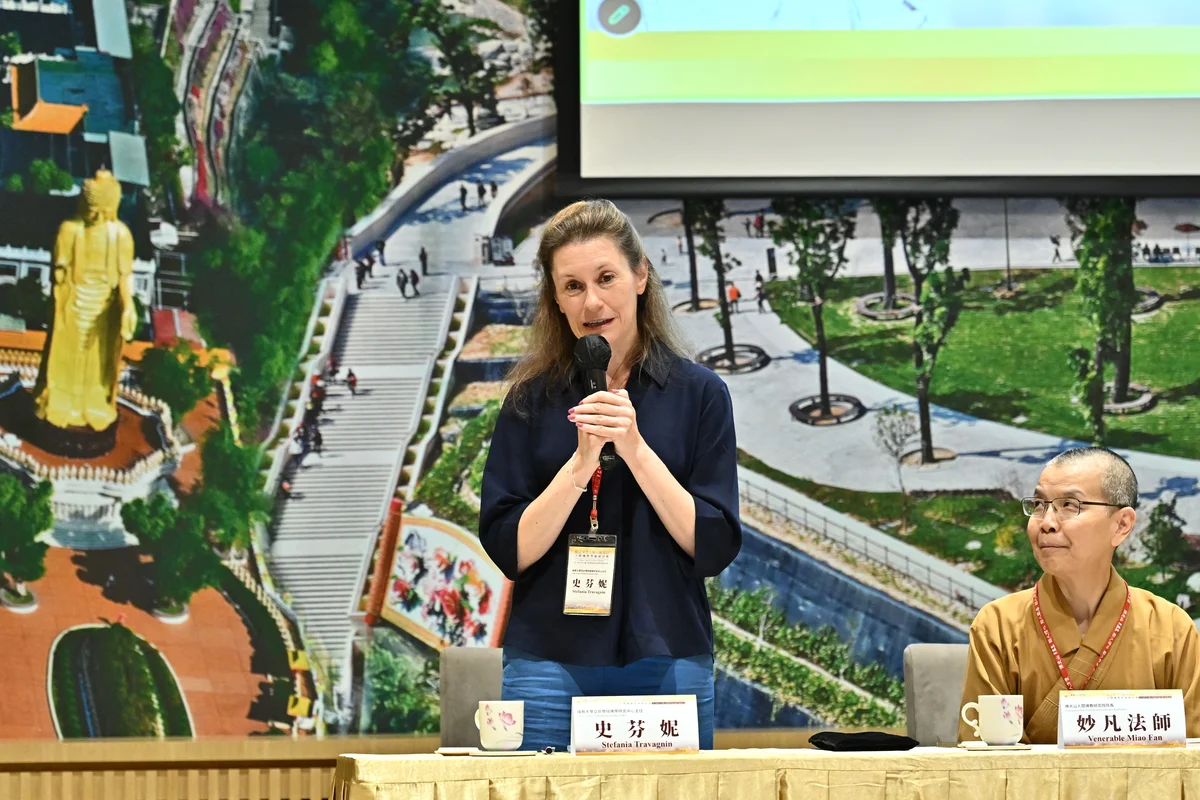
Professor Stefania Travagnin of the University of London recalled her first encounter with Venerable Master Hsing Yun and Fo Guang Shan in 1999, an experience that left her with a lasting sense of warmth and closeness. She remarked that without the causes and conditions created by that encounter, she would not be who she is today.
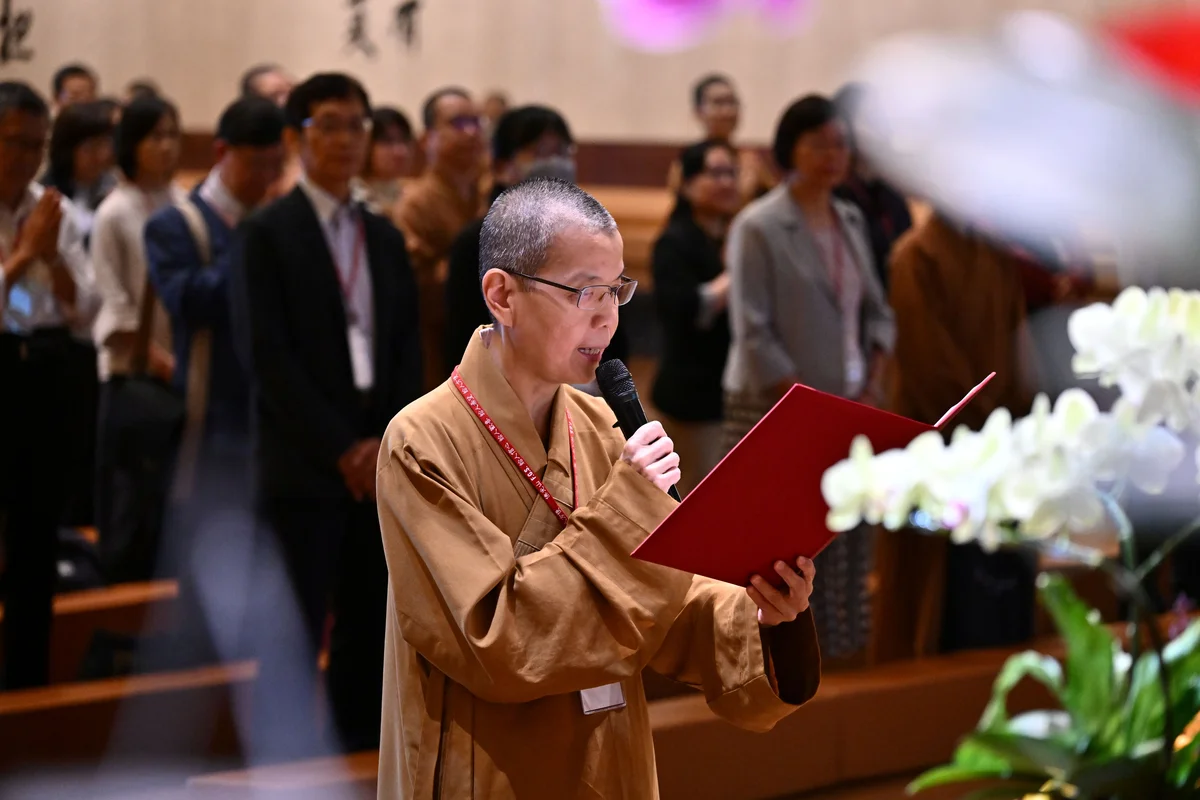
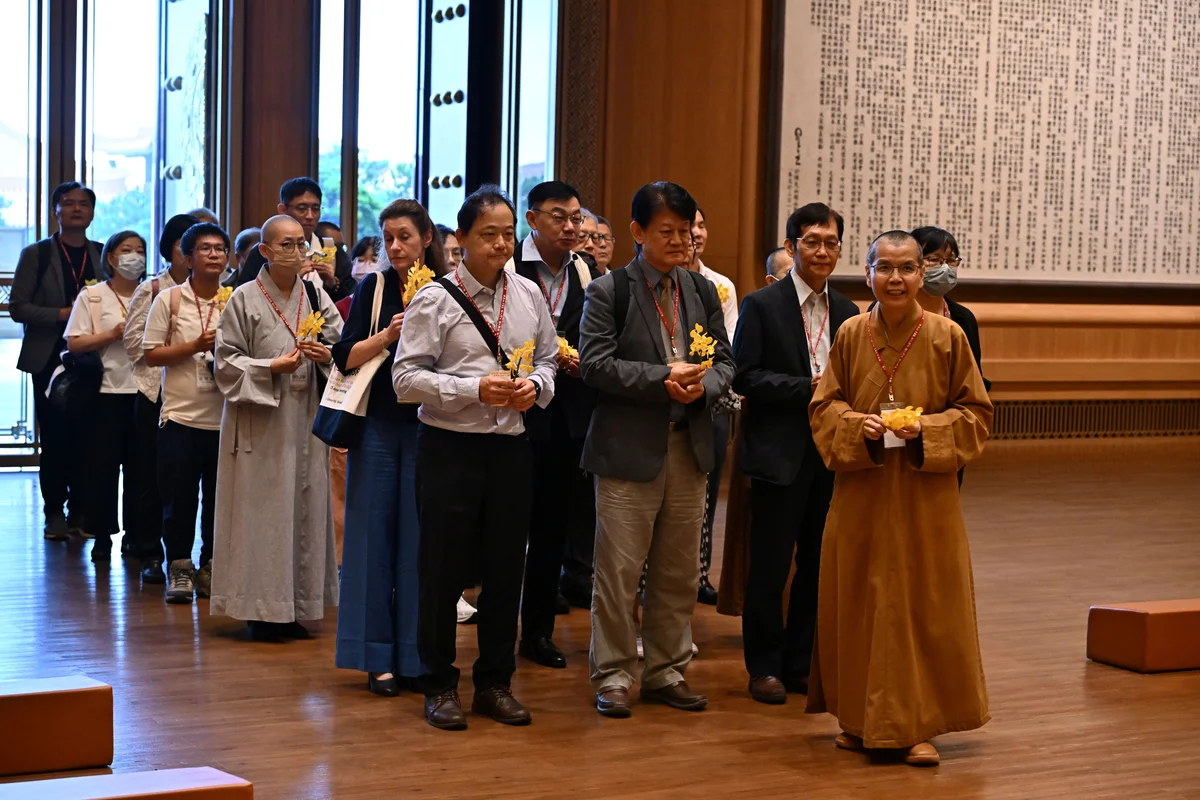
Following the opening ceremony, participants proceeded to the Patriarch Shrine for a special “Heart-to-Heart with Venerable Master Hsing Yun” ceremony. Representing the participating scholars, Venerable Miao Fan reported to Venerable Master Hsing Yun on the conference and expressed the hope that everyone would bring the Master’s ideas and aspirations back into their own research, teaching, and daily lives, allowing Humanistic Buddhism to continue flourishing throughout the world.
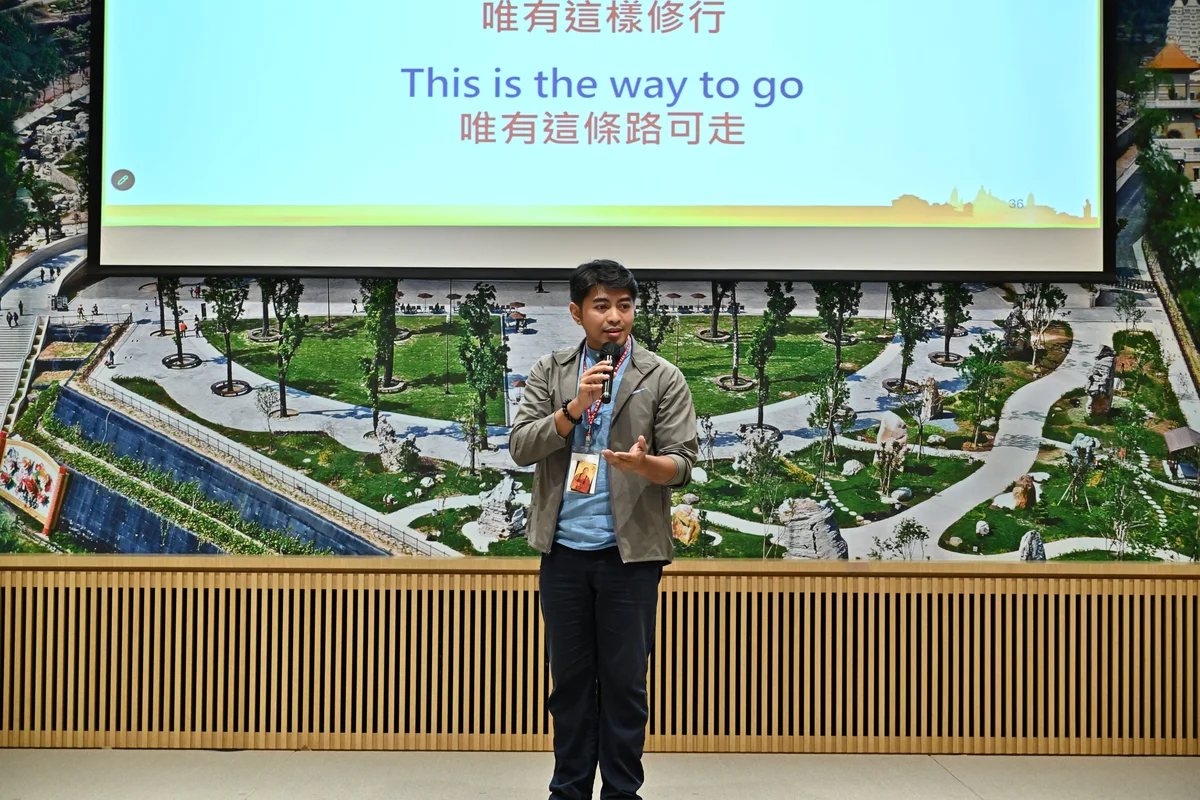
Fo Guang Shan Tsung Lin University and Junrey Alayacyac, Director of the Cebu Academy of Arts, were also invited to perform songs from the “Sounds of the Human World” repertoire, leading participants in commemorating Venerable Master Hsing Yun through music.
The three-day conference features two keynote addresses and eleven panels. More than 200 scholars and experts from over ten countries and regions are participating both in person and online.
Centenary Keynote Address — Cheng Gongrang: Venerable Master Hsing Yun as a Brilliant Beacon of Humanistic Buddhism
By Jeanne H. Tuan
Photos by Chao Chi-Chao
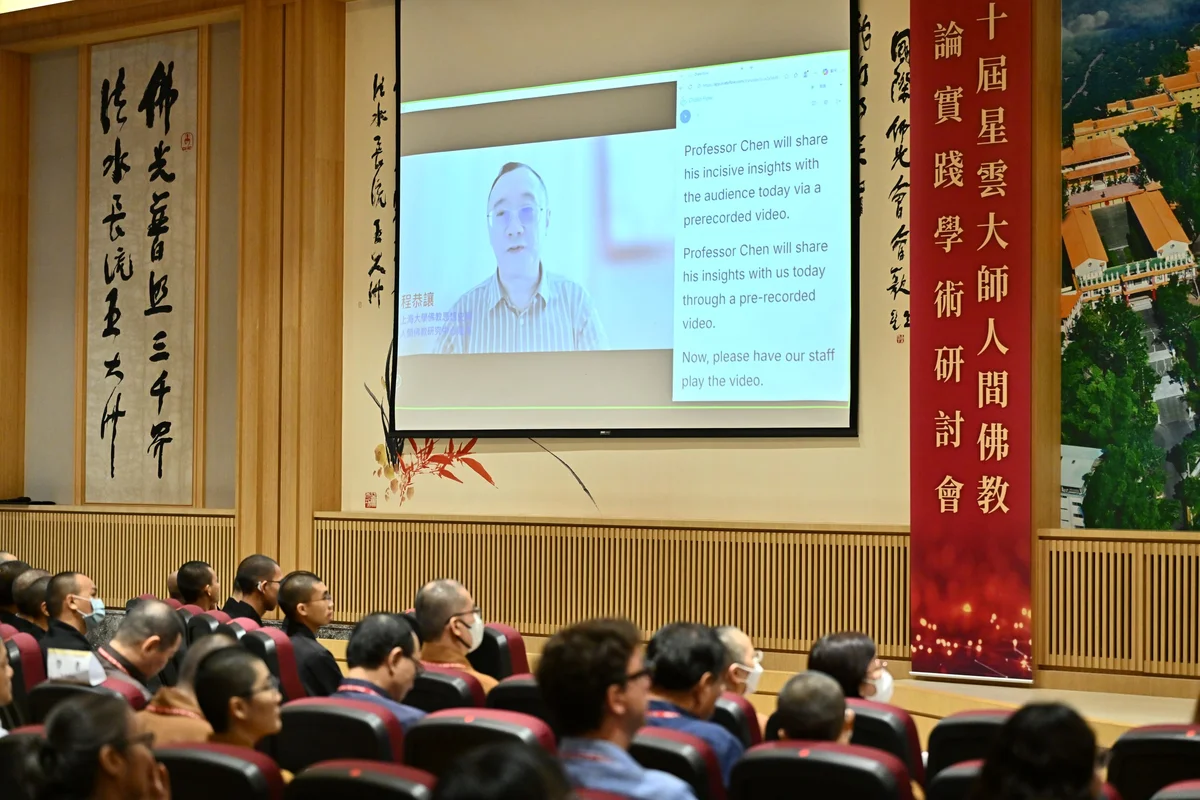
Professor Cheng Gongrang, Director of the Center for Buddhist Thought and Humanistic Buddhism Studies at Shanghai University, delivered the keynote speech, “Venerable Master Hsing Yun as a Brilliant Beacon of Humanistic Buddhism,” on August 21 at Dharma Gem Hall, Fo Guang Shan, highlighting Venerable Master Hsing Yun’s enduring influence on the development, modernization and globalization of Humanistic Buddhism.
The speech was part of the 10th Academic Conference on the Theory and Practice of Venerable Master Hsing Yun’s Humanistic Buddhism, a three-day international conference commemorating Venerable Master Hsing Yun’s centenary. Scholars and Buddhist monastics gathered to examine the theory, practice and future development of Humanistic Buddhism.
Using the image of a lighthouse as his central metaphor, Professor Cheng described Venerable Master Hsing Yun as a guiding light for modern Buddhism. Just as a lighthouse provides direction to ships navigating through darkness, the Master’s wisdom and lifelong efforts to propagate the Dharma have offered guidance and hope to countless people while illuminating a path for Buddhism in the contemporary world.
Professor Cheng also reflected on his longstanding connection with Venerable Master Hsing Yun. In the 1990s, while studying Chinese philosophy and Buddhist philosophy at Nanjing University, he became involved in the Selected Chinese Buddhist Classics in Modern Chinese project. He translated and annotated accessible editions of the Diamond Sutra and Heart Sutra, an experience that deepened his understanding of the Master’s emphasis on making Buddhist teachings accessible to contemporary readers.
In 1999, his connection with Fo Guang Shan deepened further when Venerable Master Hsing Yun entrusted him with planning the Fazang Library, a publication series featuring outstanding academic papers on Buddhism published in mainland China between 1978 and 2000.
Professor Cheng recalled that Venerable Master Hsing Yun closely followed the project and provided guidance on its editorial direction. One statement from the Master remained especially memorable: “For the good of both sides of the Taiwan Strait, leave a historical record.”
Professor Cheng said the experience demonstrated the Master’s concern for cultural preservation and peace across the Taiwan Strait. In 2011, while serving as a visiting professor at Huafan University, he had further opportunities to meet with the Master. By then, he observed, Humanistic Buddhism had completed important stages of modernization and globalization and was entering a critical period of “glocalization”.
A central part of the keynote was Professor Cheng’s framework of Venerable Master Hsing Yun’s “Ten Major Contributions,” which he first proposed in a 2015 academic paper. The framework was later incorporated into The Lamp Transmission Record of Venerable Master Hsing Yun’s Humanistic Buddhism as an important structure for understanding the Master’s thought and achievements.
These contributions encompass the systematic development of Humanistic Buddhist thought and practice, the establishment of a strong monastic community, the expanded role of lay devotees in propagating the Dharma, the integration of Buddhist knowledge and thought, and the modernization and internationalization of Buddhism. They also include promoting cross-strait peace and Chinese cultural exchange, providing direction for Taiwanese Buddhism, and emphasizing spiritual cultivation as an essential part of Humanistic Buddhism.
Professor Cheng organized these contributions into five broader areas: theory and practice; the roles of monastics and lay devotees; Buddhism’s relationship with tradition, modernity and globalization; cross-strait peace and cultural development; and personal spiritual cultivation. Together, these areas demonstrate that Humanistic Buddhism is not only a system of thought but also a way of putting the Dharma into practice in everyday life.
In the final section, Professor Cheng examined the continuity between Venerable Master Hsing Yun’s Humanistic Buddhism and traditional Mahayana Buddhism. He focused on the integration of prajna wisdom and skillful means, identifying this balance as a distinctive feature of the Master’s thought and personal cultivation.
He argued that the revitalization of Buddhism in the modern era requires it to engage with human life and society while remaining rooted in its fundamental teachings. The integration of wisdom and skillful means provides an important foundation for this process, allowing Buddhism to respond to contemporary needs without losing its doctrinal continuity.
Concluding his keynote, Professor Cheng returned to the image of the lighthouse and reaffirmed his central theme: Venerable Master Hsing Yun is a brilliant beacon of Humanistic Buddhism. His legacy not only illuminates the path of modern Buddhism but also demonstrates how the wisdom of traditional Mahayana Buddhism can continue to be realized and expressed in the contemporary world.
Commemorating Venerable Master Hsing Yun’s Centenary: Dr. Lewis R Lancaster on Venerable Master Hsing Yun
- From Compassion and Resilience in Times of Turmoil to a Global Buddhist Movement
Written by Venerable Zhi Mu
Photos by Venerable Hui He and Chang Fu-Chieh
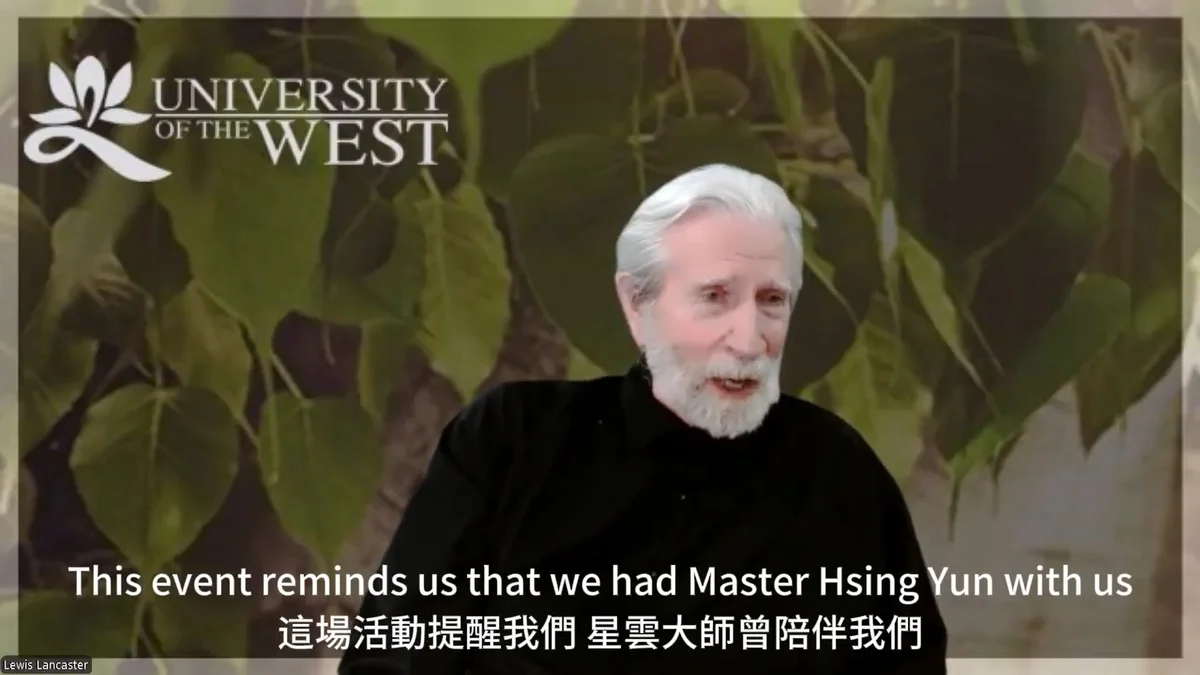
Leading the second day of the Commemoration of Venerable Master Hsing Yun’s Centenary Academic Conference on Humanistic Buddhism, Dr. Lewis R Lancaster, Professor Emeritus at the University of California, Berkeley, delivered a compelling keynote address on August 22 examining the historical upheavals, personal adversity, and extraordinary resilience that shaped Venerable Master Hsing Yun’s life and the subsequent global development of Humanistic Buddhism. Tracing the Master’s journey from the turmoil of the late 1930s to the founding of Fo Guang Shan in 1967, Dr. Lancaster offered a distinctive psychological and historical perspective on how suffering could be transformed into empathy, creativity, and religious action.
Dr. Lancaster began by situating Venerable Master Hsing Yun’s childhood within a period of profound social and political upheaval. Following his father’s disappearance amid the turmoil surrounding the 1937 Nanjing Massacre, the twelve-year-old Master entered Qixia Temple, where he later received monastic ordination under Venerable Zhi Kai. Dr. Lancaster suggested that the discipline and structure of monastic life provided an important framework through which the young Master could respond to the instability and loss of his early years. Rather than allowing these experiences to define him through suffering alone, Venerable Master Hsing Yun gradually transformed adversity into a heightened sensitivity toward the suffering of others and an enduring capacity for resilience.
That resilience would be tested repeatedly. Amid the Chinese Civil War, Venerable Master Hsing Yun made the perilous journey to Taiwan in 1949, narrowly avoiding passage on the ill-fated "Taiping" steamer. Yet arrival in Taiwan brought further hardship. He was detained for twenty-three days during a period of intense political uncertainty and later spent extended periods guarding mountain timberlands in relative isolation.
Dr. Lancaster emphasized that these circumstances did not lead Venerable Master Hsing Yun toward withdrawal. Instead, periods of hardship became occasions for reflection and creative expression. During this time, he wrote his first book, "Bells, Gongs, and Wooden Fish". Through the imagined voices of Buddhist ritual and monastic objects—including the wooden fish, the kasaya, and monastic shoes—the work questioned mechanical approaches to religious practice and articulated a vision of Buddhism grounded in compassion, human relationships, and active engagement with society. Dr. Lancaster regarded these early writings as important indications of ideas that would later become central to Venerable Master Hsing Yun’s understanding of Humanistic Buddhism.
These ideas took increasingly concrete form after Venerable Master Hsing Yun arrived in Yilan in 1953. Working from the modest Lei Yin Temple, he developed innovative approaches to Dharma propagation that reached beyond conventional temple settings. He organized the Yilan Buddhist Youth Choir, made use of radio broadcasting, and brought lectures and Buddhist activities into communities through mobile and outdoor programs. By combining Buddhist teachings with music, education, culture, and new forms of communication, he attracted a younger generation and cultivated a group of disciples who would later participate in the development of Fo Guang Shan.
The founding of Fo Guang Shan in 1967 represented, in Dr. Lancaster’s account, not simply the establishment of a monastery but the culmination of decades of adaptation, perseverance, and experimentation. Experiences of displacement, uncertainty, and hardship had not diminished Venerable Master Hsing Yun’s commitment to Buddhism; rather, they contributed to a religious vision deeply attentive to the needs of ordinary people and responsive to changing social conditions.
Dr. Lancaster concluded that Venerable Master Hsing Yun’s remarkable resilience lay in his ability to transform personal and historical adversity into empathy and constructive action. His keynote offered scholars a humanistic and psychological lens through which to reconsider the emergence of Humanistic Buddhism: not merely as an institutional or doctrinal development, but as a lived response to the upheavals of the twentieth century. Through this perspective, the trajectory from a young monk confronting war and displacement to the founder of a worldwide Buddhist movement revealed how suffering, when transformed through compassion and purposeful action, could become a powerful source of religious innovation and global engagement.
Centenary Conference Concludes at Fo Guang Shan, Charting the Global Future of Humanistic Buddhism
By Chen Tao
English translation by FGSIHB
Photos by Venerable Hui He and Chang Fu-Chieh
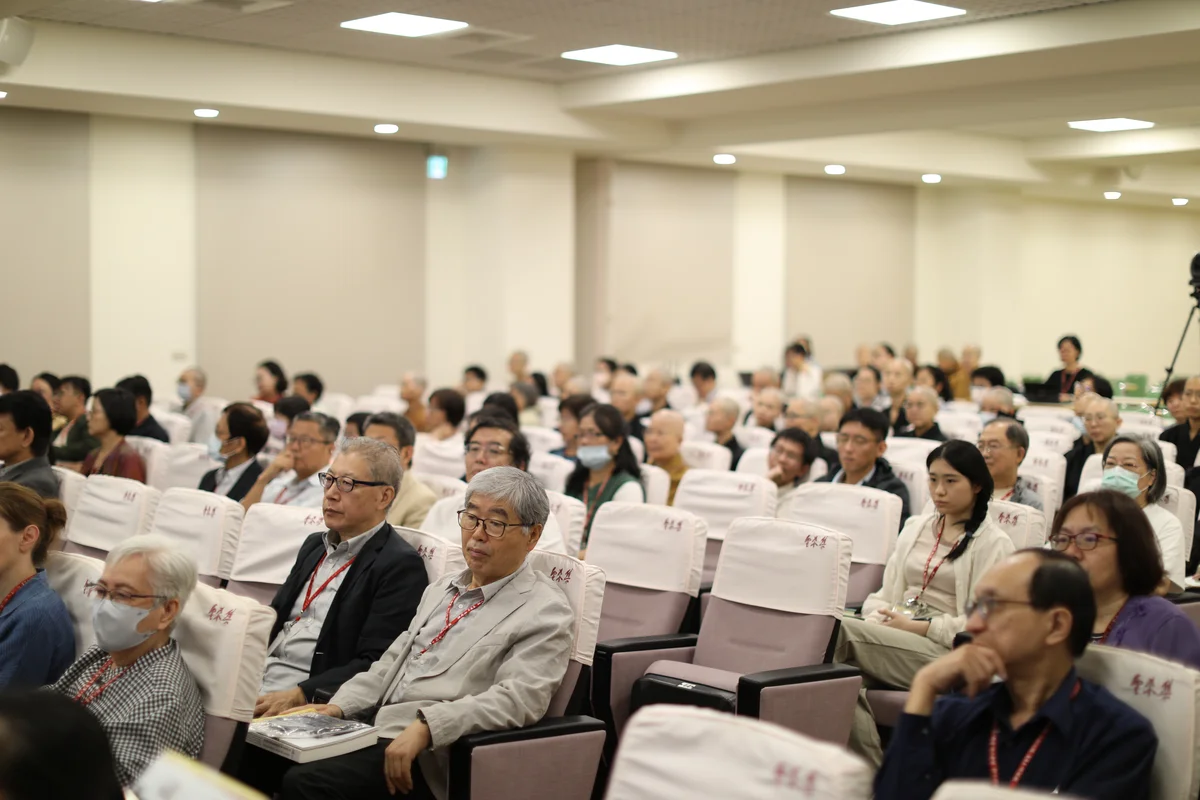
The three-day Commemoration of Venerable Master Hsing Yun’s Centenary Academic Conference on Humanistic Buddhism — The 10th Academic Conference on the Theory and Practice of Humanistic Buddhism concluded on the morning of August 23 with the General Discussion and Closing Ceremony at Convention Lodge (雲來集), Fo Guang Shan. Nearly 200 participants attended the conference in person and online.
The ceremony opened with Junrey Alayacyac, Performing Arts Director of the Philippine Center for Humanistic Buddhism, leading participants in singing “The Noble Path.” Through music, the gathering expressed a shared resonance with the Dharma. A three-day conference retrospective video was then screened, revisiting highlights from the opening ceremony, keynote speeches, panel presentations, and scholarly discussions, as well as the solemn moment when participants offered flowers before Venerable Master Hsing Yun at the Founding Master’s Hall. Together, the scenes reflected both the academic depth and spiritual significance of the conference.
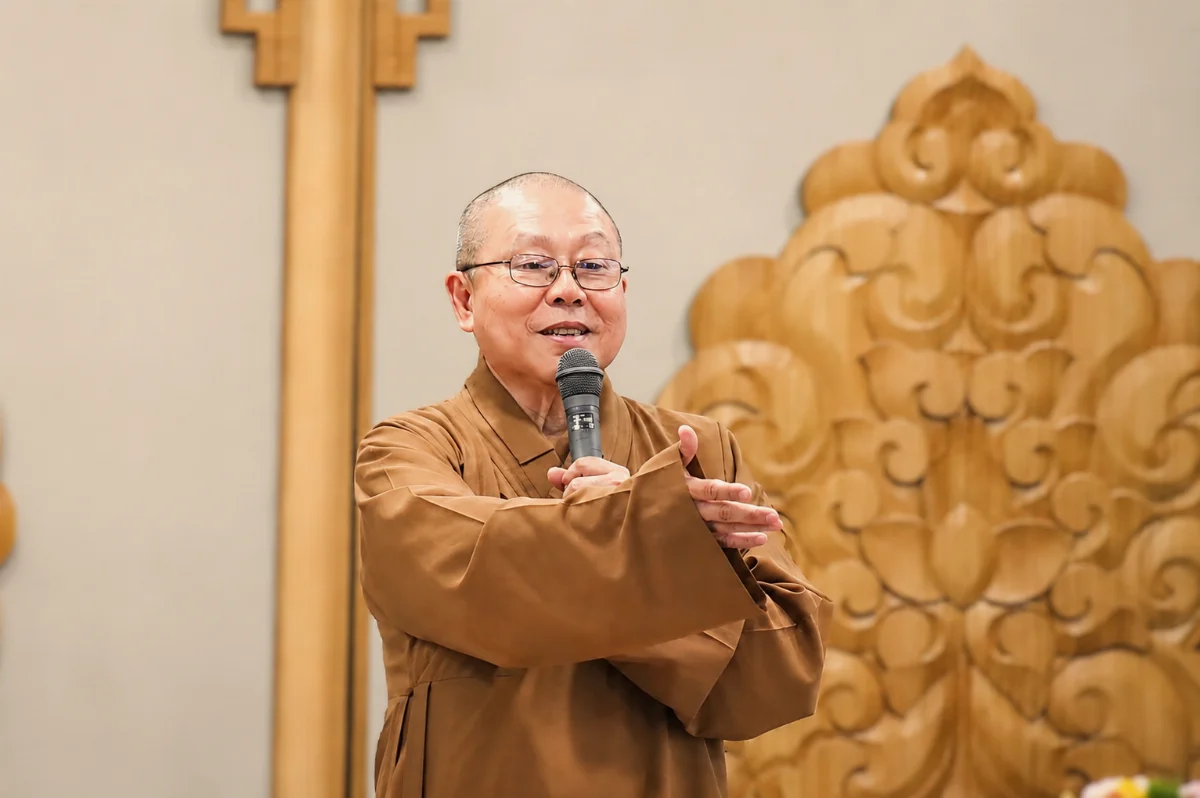
Venerable Hui Kai, Vice Abbot of Fo Guang Shan and Director of the Center for Studies on Venerable Master Hsing Yun at Nanhua University, said the conference fully embodied the Sixth Patriarch Huineng’s teaching, “The Dharma is in the world; enlightenment is not apart from the world.” From the globalization of Dharma propagation to localized practice, he said, the discussions centered on how Buddhism can be realized in the world and in everyday life.
Venerable Hui Kai emphasized that the Dharma belongs to all humanity and the entire Dharma realm. He encouraged participants to bring the academic achievements of the three-day conference back to their respective fields and communities, enabling Humanistic Buddhism to continue taking root around the world.
Five representatives from the academic and Buddhist communities were invited to share their reflections.
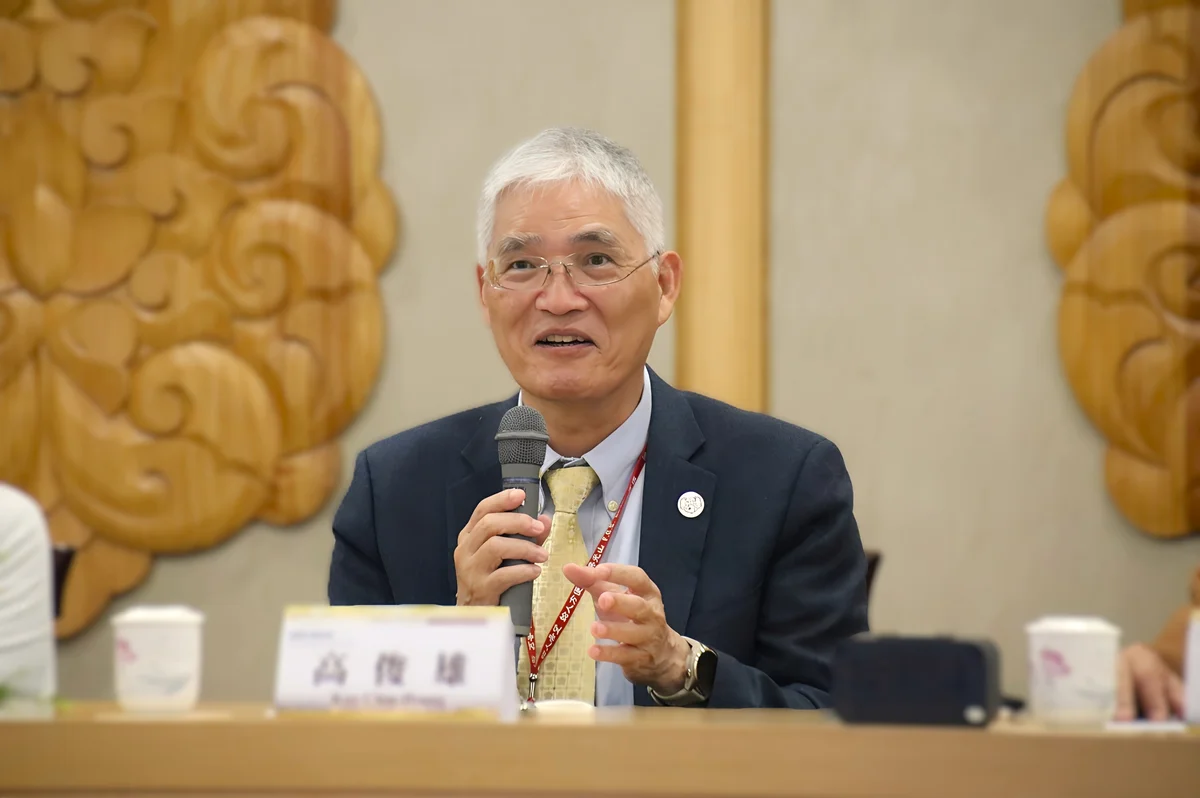
Dr. Kao Chin-Hsung, President of Nanhua University, said academic conferences offered him a welcome opportunity to step away from administrative responsibilities and immerse himself in learning. He summarized his experience through four dimensions—“Know What, Know Who, Know How, and Know Why”—which, he said, helped deepen his understanding of Humanistic Buddhism.
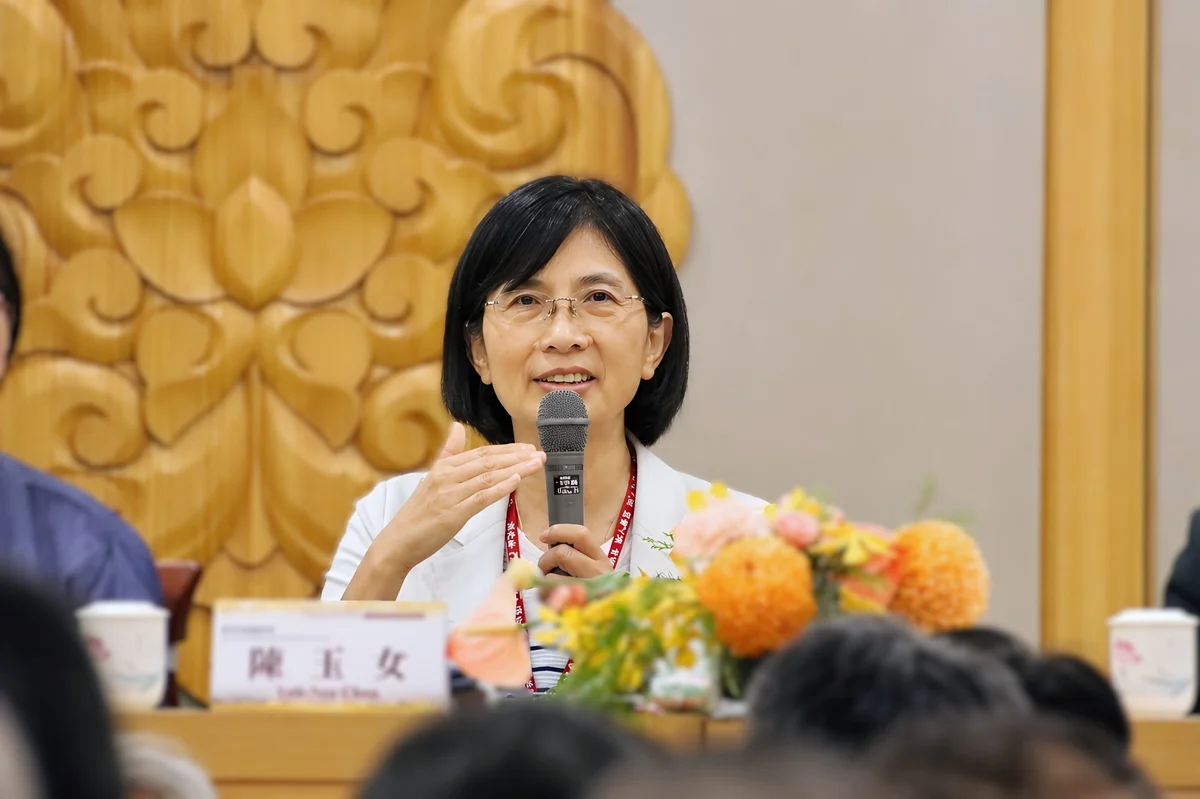
Dr. Yuh-Neu Chen, Vice President of National Cheng Kung University, reflected on how Venerable Master Hsing Yun transformed a life shaped by adversity and ultimately brought his great vows into practice across five continents. She encouraged participants to transform hardship into inner strength and to become leaders of their own lives.
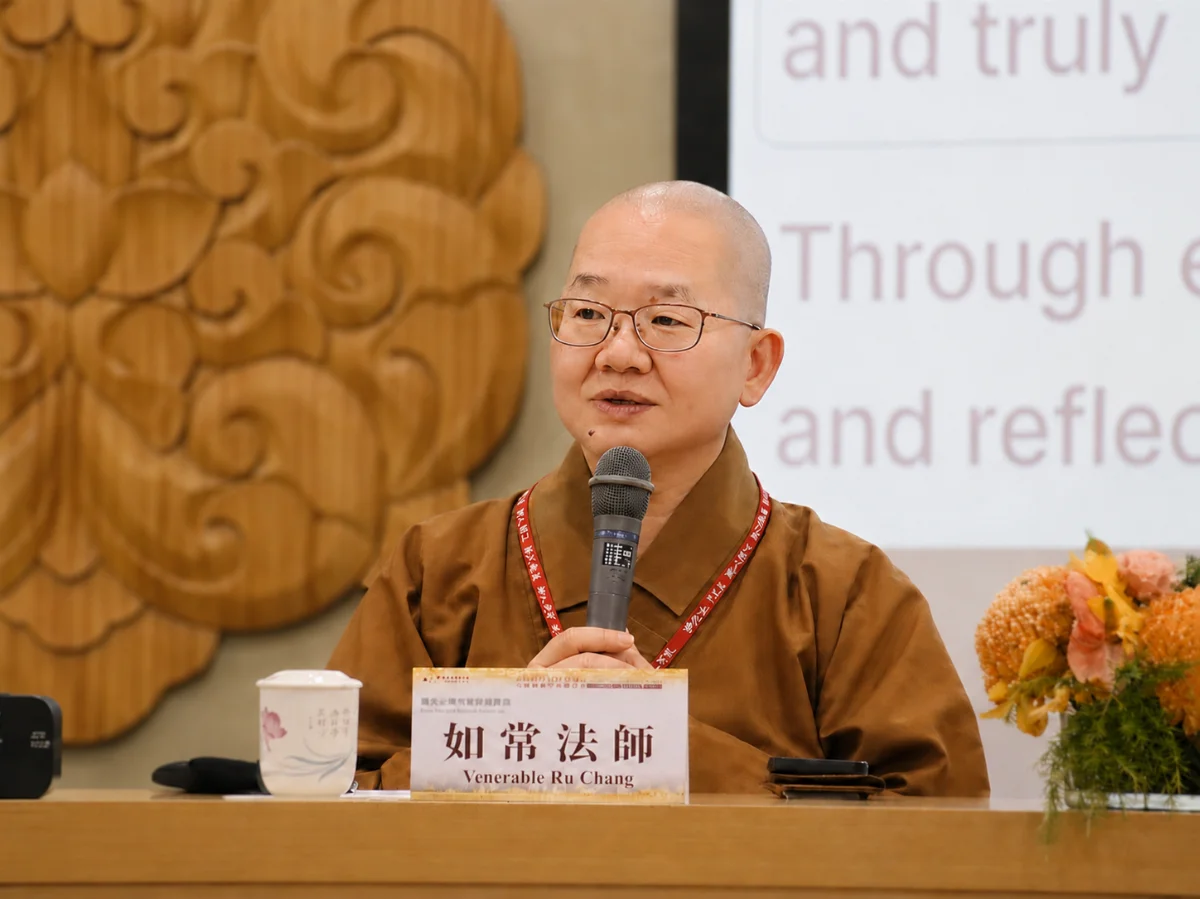
Venerable Ru Chang, Director of the Fo Guang Shan Buddha Museum, recalled that beginning in 1971, Venerable Master Hsing Yun devoted ten years to creating the immersive Pure Land Cave experience. She observed that this innovative approach anticipated by nearly half a century many of the experiential possibilities now associated with the age of artificial intelligence, demonstrating the timeliness and creativity of Humanistic Buddhist Dharma propagation.
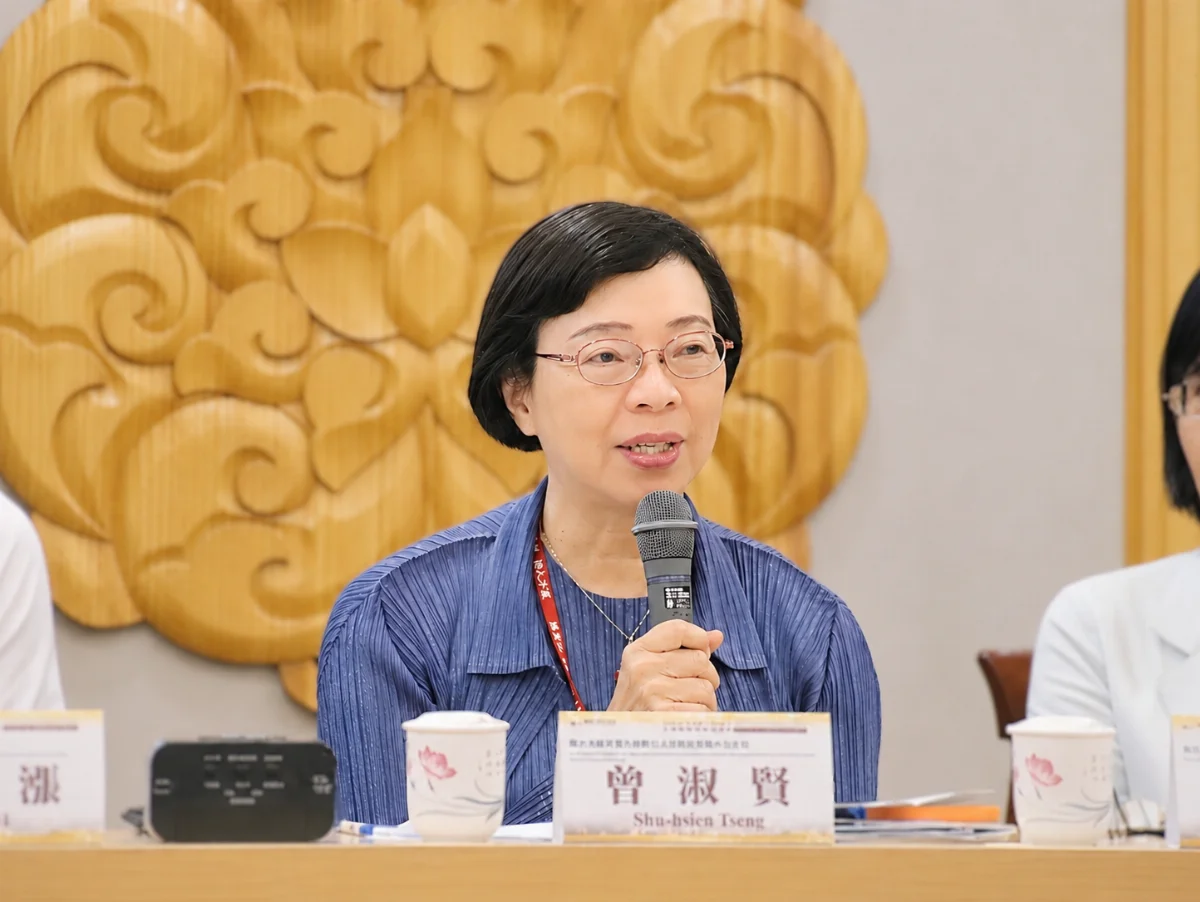
Dr. Shu-hsien Tseng, Director of the Venerable Master Hsing Yun Digital Humanities Research and Development Center at Fo Guang University, announced that Fo Guang University will launch the Venerable Master Hsing Yun Digital Humanities Platform on September 23. Incorporating digital archives, a Dharma propagation map, and an AI-assisted question-and-answer system, the platform will provide richer digital resources for the study of Humanistic Buddhism.
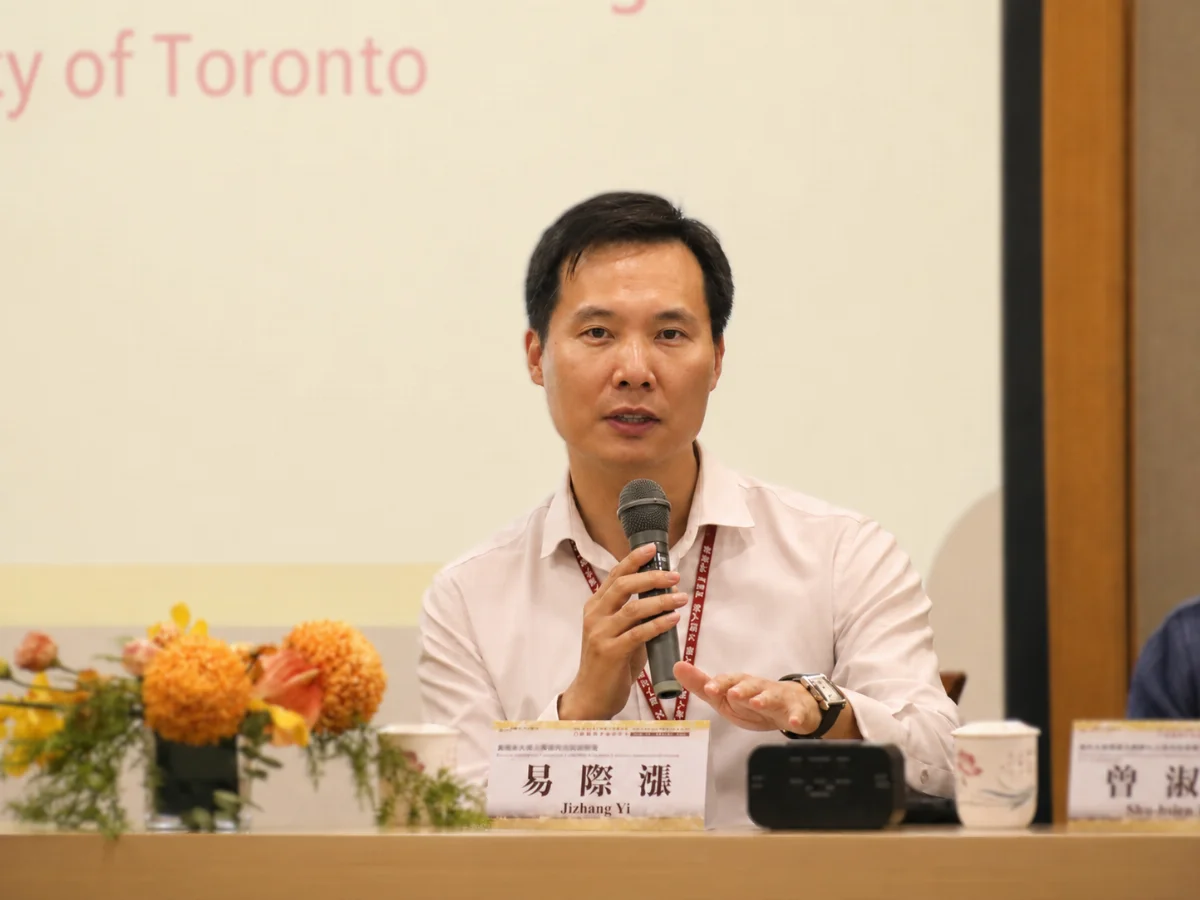
Dr. Jizhang Yi, Director of the Institute for Humanistic Buddhist Thought and Practice at the University of Toronto, approached Venerable Master Hsing Yun’s declaration “I am Buddha” through the perspective of the non-duality of sudden and gradual cultivation. He explained that this teaching complements the practices of the Three Acts of Goodness, Four Givings, and Five Harmonies. Awakening and practice, he said, are ultimately inseparable, reflecting the integration of theory and practice at the heart of Humanistic Buddhism.
In her concluding remarks, Venerable Miao Fan, Director of the Fo Guang Shan Institute of Humanistic Buddhism, identified three major meanings of the conference.
First, the conference bore witness to a century of practice. From Venerable Master Taixu’s advocacy of Buddhism for human life a century ago to Venerable Master Hsing Yun’s six decades of work bringing Buddhism fully into human society and everyday life, the presentations on the global history of Dharma propagation offered compelling testimony to this development.
Second, the conference responded to the challenges of the times. Across eleven panel sessions, scholars examined how Humanistic Buddhism continues to develop amid the interconnected forces of globalization, localization, and digitalization, offering concrete examples of its contemporary practice.
Third, the conference demonstrated the importance of collective creation and transmission. Venerable Miao Fan noted that throughout his life, Venerable Master Hsing Yun advocated collective creation over competition and placed learning and reflection at the center of life. Recalling his words, “As vast as the mind is, so vast is the world,” she encouraged participants to continue expanding the horizons of Humanistic Buddhism.
Looking ahead, Venerable Miao Fan also expressed hope for the establishment of a Humanistic Buddhism Association, providing a platform through which scholars and practitioners around the world who are inspired by Humanistic Buddhism can participate together in advancing a Buddhism that is increasingly human-centered and integrated into everyday life.
At the conclusion of the ceremony, all participants joined in singing the “Song of Farewell,” bringing the three-day academic gathering to a warm and fulfilling close. The conference formally concluded with a group photograph, as scholars and observers exchanged farewells and looked forward to meeting again in the coming year.
評論(0)
目前沒有評論,歡迎分享您的看法。
登入會員後即可發表評論、回覆及讚。